Eltz Castle: The Fortress 34 Generations Never Left
September 27, 2026 · HistoryBytes Team
A fairy-tale castle that isn't a fairy tale
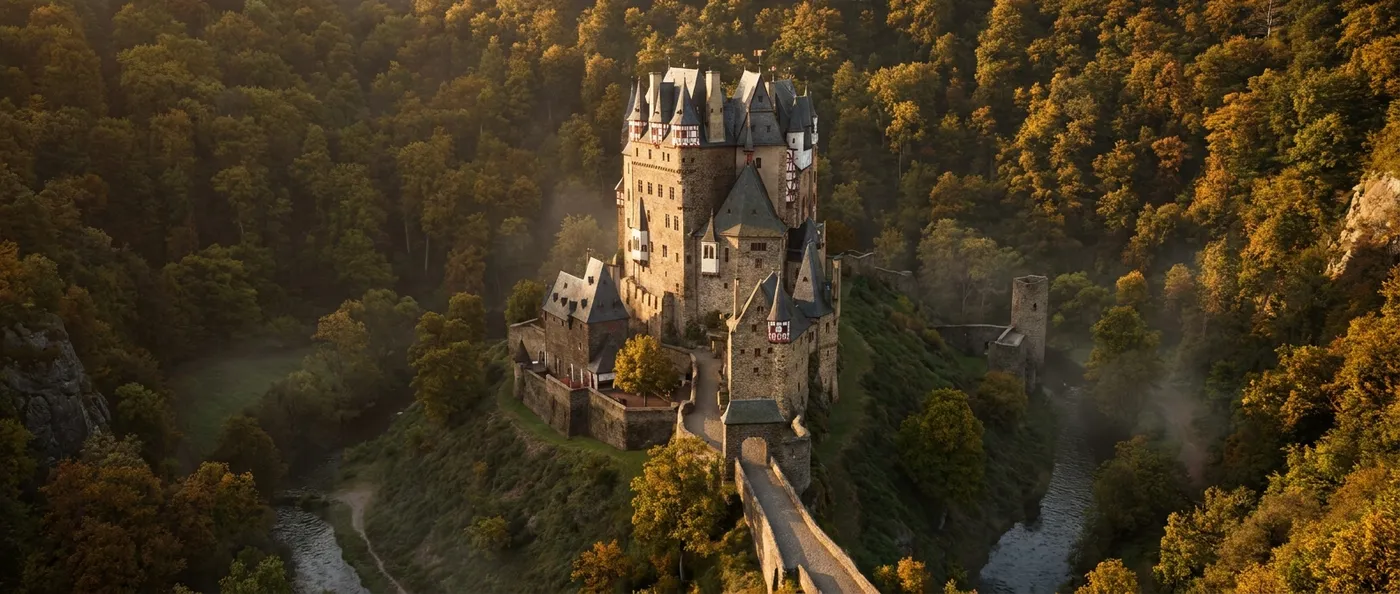
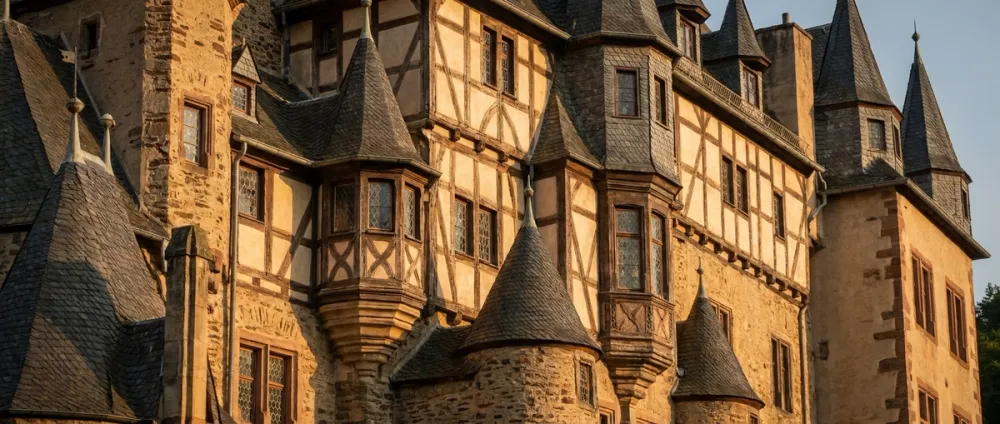
Hidden in a forested valley along the Moselle, on a rock surrounded on three sides by the Elzbach stream, stands a castle that looks like it stepped straight out of a storybook: eight towers, crammed tightly together, rising up to 40 meters, with no modern road or building in sight for miles. Eltz Castle looks like pure fantasy set design — but it's actually one of the longest continuously inhabited noble castles in Europe.
Since its first documented mention in 1157, Eltz Castle has remained in the unbroken possession of the same family — now in its 34th generation. In nearly 900 years, it was never taken by force, never destroyed, and even survived World War II unscathed. But "never conquered" doesn't mean "never attacked" — the real story behind it is far more dramatic than the fairy-tale looks suggest.
How a family feud created a one-of-a-kind building
Eltz Castle was likely founded around 1157 along an important trade route between the Moselle and the fertile Maifeld region — a strategic position that secured toll income from passing merchants for the Eltz knights. Toward the end of the 13th century, though, a consequential family dispute broke out: three brothers, Elias, Wilhelm, and Theoderich, divided the property among themselves, founding three separate lines — Eltz-Kempenich (golden lion), Eltz-Rübenach (silver lion), and Eltz-Rodendorf (buffalo horns).
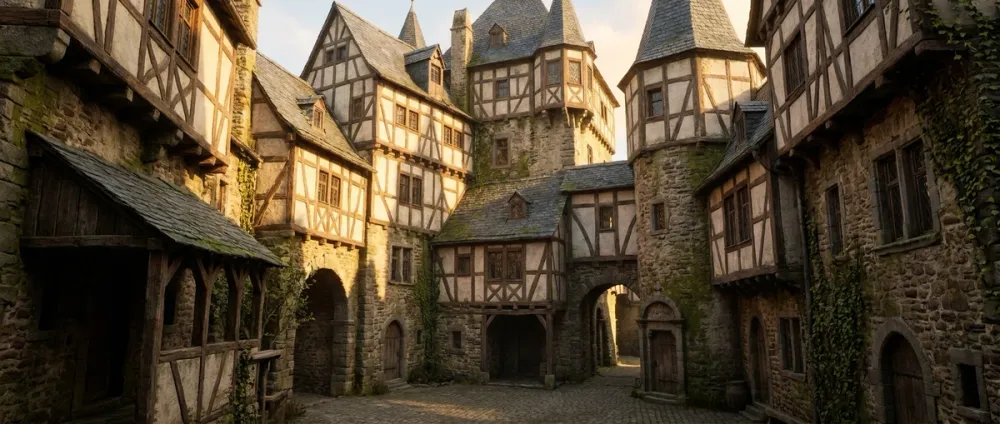
Instead of separating, all three lines kept living together on the same rock — a so-called Ganerbenburg, a "joint-heir castle." Each family built its own residential tower on the same foundation, creating exactly the dense, irregular ensemble of towers that still makes Eltz Castle so unmistakable today. Three independent noble families sharing such tight quarters was governed by a so-called Burgfriedensbrief (castle peace deed) from 1323, later renewed in 1430, 1481, and 1556 — one of the few such medieval contracts to survive to this day, while comparable documents from other castles were almost universally lost.
A siege that made military history
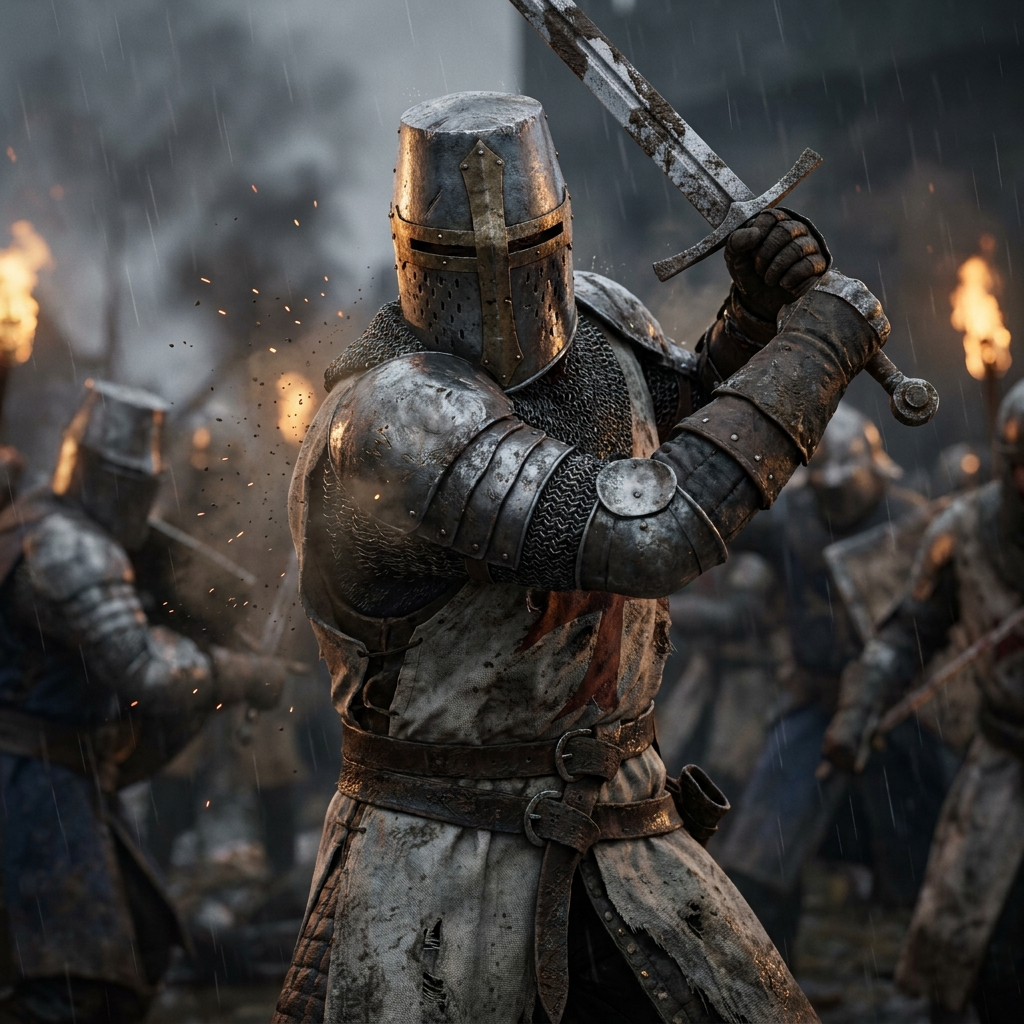
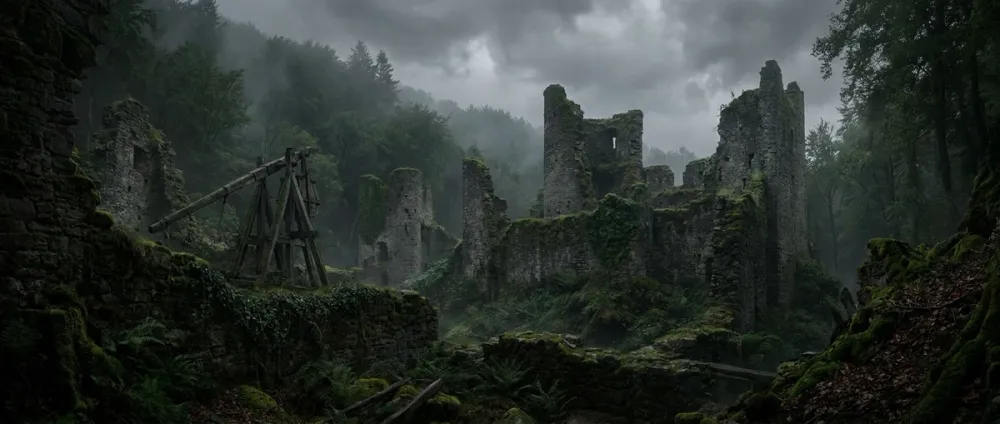
The only serious military challenge in the castle's nearly 900-year history took place between 1331 and 1336. The powerful Archbishop-Elector Balduin of Trier sought to enforce his authority over the region — the free knights of Eltz, allied with neighboring castle lords, resisted in what became known as the "Eltz Feud." Balduin responded by building his own siege castle roughly 230 meters from Eltz Castle, the "Trutzeltz," whose ruins are still visible today.
From there, he bombarded Eltz for years with catapults and trebuchets — and with something historically extraordinary: a so-called pot-de-fer, a very early form of cannon. Its use in 1331 is considered the first documented use of a cannon north of the Alps — Eltz Castle unwittingly became the setting for a military-technology milestone.
After five years of siege, the Eltz knights finally relented — but not because the castle itself fell. They politically acknowledged Balduin's overlordship and became his vassals instead of free imperial knights. The castle itself, despite years of cannon fire, was never taken — a crucial, often overlooked distinction: the family gave in politically; the walls held.
The story of Agnes
To this day, castle guides tell a particular story tied to the siege years in the so-called Comtessen-Zimmer (Countess's Room): the legend of Agnes of Eltz. According to tradition, a woman of the family wore a breastplate during an attack that still bears a clearly visible hole from an arrow — displayed on the room's wall today as a silent witness to that era. Whether every detail of the story holds up historically can no longer be established with certainty, but the breastplate itself genuinely exists and is still kept by the family as a symbol of the castle residents' steadfastness — a tangible relic that turns the abstract siege history into one single, very human image.

This is HistoryBytes.
Short lessons, real duels, and immersive visuals from a world of history — download it now.
Luck, seclusion, and a contract that became a lifeline
While many other Rhine and Moselle castles crumbled, were looted, or were destroyed in war over the centuries, Eltz Castle survived not only the 14th-century siege but also World War II essentially unscathed — one of the few castles in the region to manage that. Its hidden location deep in the forest, far from significant military targets, likely played a decisive role.
But the family's own history mattered too: the Burgfriedensbrief contractually obligated every owning line to preserve and maintain the castle — an obligation many comparable noble estates lacked in the 18th century, which is why countless such buildings were left to decay. In 1815, the Kempenich line finally took sole ownership after the Rodendorf line died out in 1786 — and to this day, that exact same line, now in its 34th generation, owns the castle.
Crowned heads and a 21st-century restoration
Over the centuries, Eltz Castle welcomed a remarkable string of guests — crowned and elected heads of state as well as significant thinkers, poets, and artists of their time visited the site, far beyond the family itself. Even today, maintaining the castle remains an active task, not just an inheritance: starting in 2009, a comprehensive general restoration was carried out, supported by the State Office for the Preservation of Monuments in Mainz and the German Foundation for Monument Protection, restoring roof structures, timber framing, masonry, windows, and historic wall paintings — the most extensive preservation work since Count Karl's efforts in the 19th century.
From knight's residence to German cultural landmark
Eltz Castle never became a pure museum piece — it remained an actual family home, whose residents actively kept shaping the place's history themselves. Between 1961 and 1995, it even appeared on the German 500-Deutsche-Mark banknote, making it one of the country's most recognized buildings long before photos of it circulated online.
Today, the von und zu Eltz-Kempenich family opens the castle to visitors between April and November, guiding them through the armory, the original living quarters, and the treasury — eight centuries of architecture and family history, in one single place that never had to change owners in order to survive.
Buildings that tell the stories of real people
Places exactly like this sit behind every season in HistoryBytes — buildings that aren't just backdrop, but carry real, often centuries-long family stories within them. In the Tales of Chivalry season, you'll keep encountering settings like Eltz Castle, where political power, family bonds, and military reality collided in tight quarters. That's exactly what makes history tangible: not just knowing a castle is old, but understanding which people and conflicts actually stood behind its walls.
One family, one rock, nearly 900 years
In the end, Eltz Castle tells a story rarer than its fairy-tale looks suggest: not a ruin, not a building that repeatedly changed hands, but an unbroken, nearly nine-century-long thread of the same family staying on the same rock — through siege, feud, wars, and centuries of decay everywhere else. The first cannon north of the Alps couldn't take it. World War II passed it by. In the end, it wasn't military strength alone that kept Eltz Castle standing to this day, but something far less dramatic: a family that, across 34 generations, simply chose to stay.