The Athens Temple That Carried the Wrong Name for 2,500 Years
September 29, 2026 · HistoryBytes Team
A temple that had lost its own god
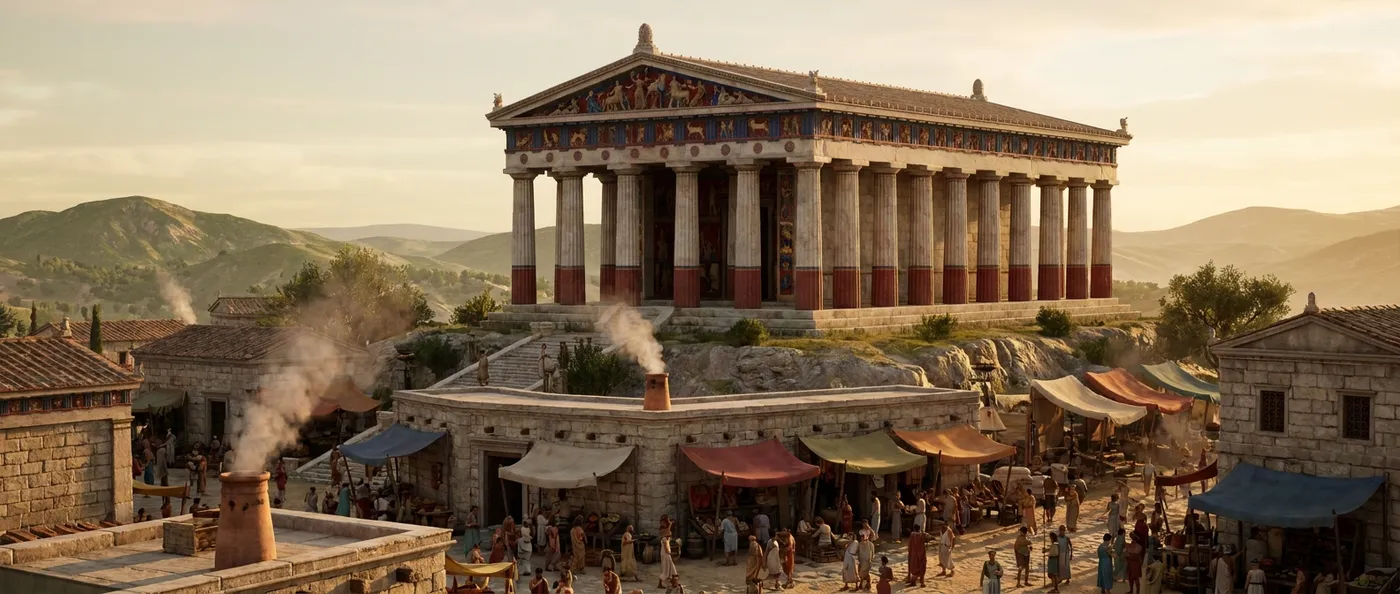
On a hill above the ancient Agora of Athens stands a temple so well preserved that visitors often mistake it for a modern reconstruction. Its 34 columns stand complete, its roof survives in large sections, its reliefs are still legible after nearly 2,500 years. It is better preserved than the Parthenon, better than anything at Delphi or Olympia, and yet most visitors to Athens don't even know its name.
Part of the reason is that, for centuries, the temple was simply mislabeled. From roughly the Middle Ages until the 19th century, scholars and travelers called it the "Theseion," the shrine of the hero Theseus. Only archaeological finds set the record straight: the temple never belonged to Theseus. It belonged to a god few people today associate with temples of his own, the limping smith of Olympus, Hephaestus.
A god who lived next to his own workshops
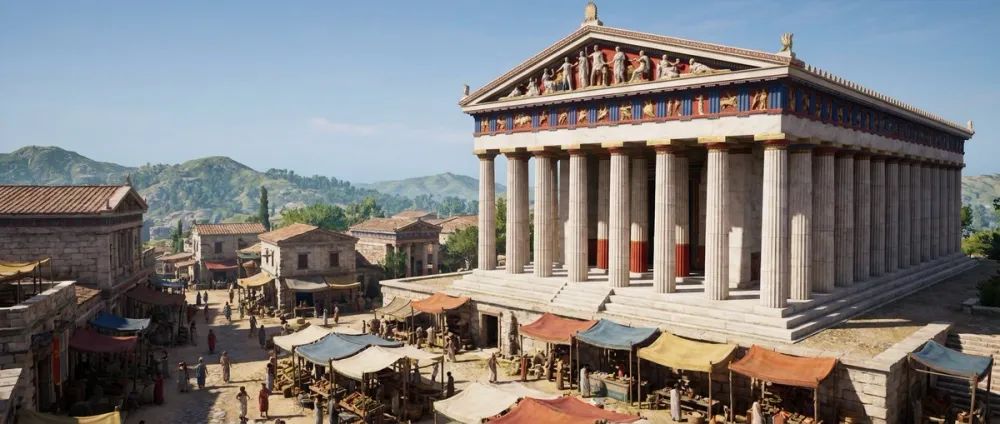
The temple was built between 449 and 415 BCE, around the same time as the Parthenon, likely even by the same unnamed architect. But unlike the Parthenon, which sits high on the Acropolis above the whole city, the Temple of Hephaestus was deliberately placed in the middle of everyday life: on the hill of Kolonos Agoraios, right above the Agora, Athens' market and craftsmen's district.
The location was no accident. Hephaestus was the god of fire and metalworking, worshipped alongside Athena Ergane, patroness of craft. The workshops surrounding the hill belonged to exactly these two deities: bronze and iron foundries, plus the nearby Kerameikos potters' quarter. Athens' craftsmen didn't have to travel far to pray, their temple stood literally above their own workshop.
Once a year, on the last day of the month Pyanepsion in late autumn, Athenians even celebrated a dedicated festival for this unusual pair of gods, the Chalkeia, a joint craftsmen's feast honoring both Hephaestus and Athena. Few other temples in Athens were so directly built around one specific profession as this one.
How a few reliefs renamed an entire temple
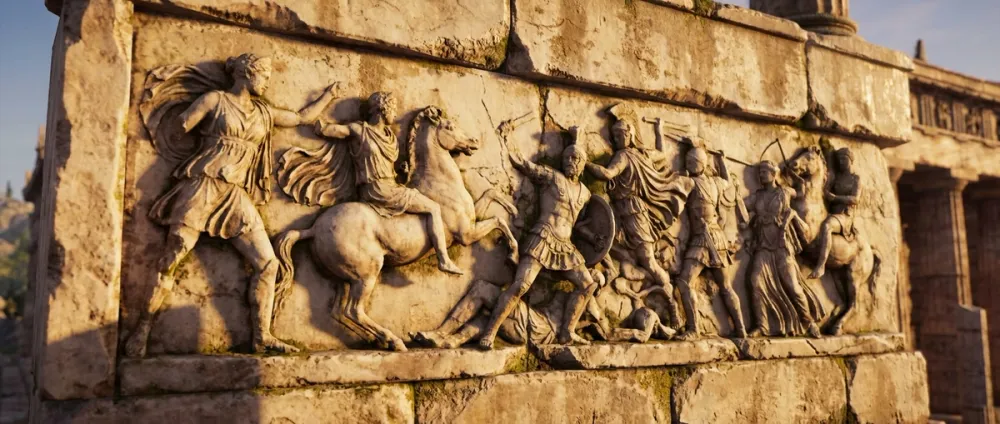
The real cause of the centuries-long confusion sits right on the building itself. Ten metopes on the east side depict the labours of Heracles, and further reliefs on the sides show scenes from the life of Theseus, Athens' legendary founding hero. Late antique and medieval viewers, long removed from the original cult, drew an understandable but wrong conclusion: a temple full of Theseus scenes must surely belong to Theseus himself.
The name "Theseion" stuck so stubbornly that it still appeared in travel accounts, and even in scholarly literature, well into the 19th century. Only excavations around the temple, which uncovered metalworking workshops right on the hill, together with inscriptions and the remains of the original cult statues of Athena and Hephaestus from inside the temple, finally set the record straight. The temple was never named for the hero whose deeds it depicted, it just happened to carry his image on its walls.
Anyone looking at the metopes today is, in any case, only seeing a fraction of what ancient Athenians actually saw. Like almost every Greek temple, the Hephaisteion was originally painted in bold colors, reds, blues, and gold across the frieze and figures, not the pale, pure white we associate with "classical" architecture today. The image of pristine white marble actually only dates back to 18th-century scholars who mistook faded, weathered ruins for the original state.
This is HistoryBytes.
Short lessons, real duels, and immersive visuals from a world of history — download it now.
Why the temple looks like the Parthenon
The Hephaisteion and the Parthenon are built from the same material, Pentelic marble from the nearby Mount Penteli, the same quarry that supplied the Acropolis buildings. Both temples follow the same Doric order, both were built during the same short, intense building period under Pericles in the 5th century BCE, when Athens reinvented its entire cityscape.
That shared origin makes the Hephaisteion an underrated key to understanding the Parthenon itself. Anyone wanting to know what a fully intact Doric temple of this era actually looked like won't find the answer on the Acropolis, where centuries of destruction, explosion, and restoration have left their mark, but on the quiet hill across from it.
Why the temple looks like the Parthenon
The Hephaisteion and the Parthenon are built from the same material, Pentelic marble from the nearby Mount Penteli, the same quarry that supplied the Acropolis buildings. Both temples follow the same Doric order, both were built during the same short, intense building period under Pericles in the 5th century BCE, when Athens reinvented its entire cityscape.
That shared origin makes the Hephaisteion an underrated key to understanding the Parthenon itself. Anyone wanting to know what a fully intact Doric temple of this era actually looked like won't find the answer on the Acropolis, where centuries of destruction, explosion, and restoration have left their mark, but on the quiet hill across from it.
Tortoises, a cemetery, and a neighborhood that was never corrected
However thoroughly archaeology set the record straight, the error never fully disappeared. The Athens neighborhood surrounding the temple is still called Thiseio today, named after the exact wrong name scholars abandoned long ago. Anyone arriving by metro literally gets off at a station carrying a 19th-century mistake in its name.
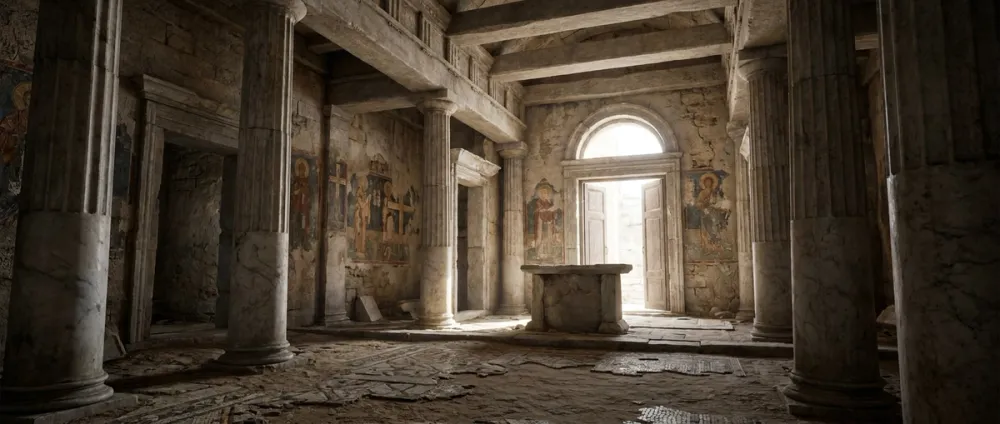
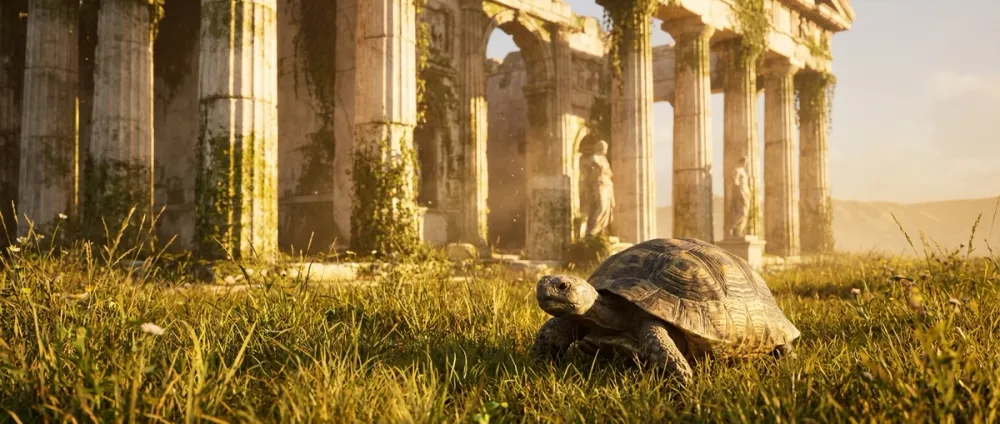
Beyond the naming question, the site has more to tell. In the 19th century, the church grounds served as a burial place for Protestants and for European philhellenes who died fighting in the Greek War of Independence starting in 1821, foreigners who died for a country not their own and found their final rest in a repurposed pagan temple. And anyone walking across the lawn in front of the temple today will very likely run into its most unexpected permanent residents: several Greek tortoises, wandering freely among tourists and marble columns, seemingly unaware of the whole centuries-long mix-up.
Details that explain an entire city
Details exactly like this sit behind every season in HistoryBytes: a building that looks, at first glance, like just another well-preserved temple turns out to reveal something about craft, cult, and the mistakes later centuries made about antiquity. In the Echoes of Olympus season, you'll keep running into places exactly like this, where everyday life and myth overlap.
The underrated neighbor
The Temple of Hephaestus is, in the end, a story about how easily meaning can shift without a single stone moving. A building dedicated to the god of craft was named after a hero for centuries, one who was never worshipped inside it, simply because its sculptors happened to carve his deeds in marble. Today it stands, correctly labeled and better preserved than almost anything else from its era, in the shadow of the more famous Parthenon, even though it outclasses it in nearly every way except fame. Sometimes the most important temple isn't the one everyone knows, it's the one everyone walks past.