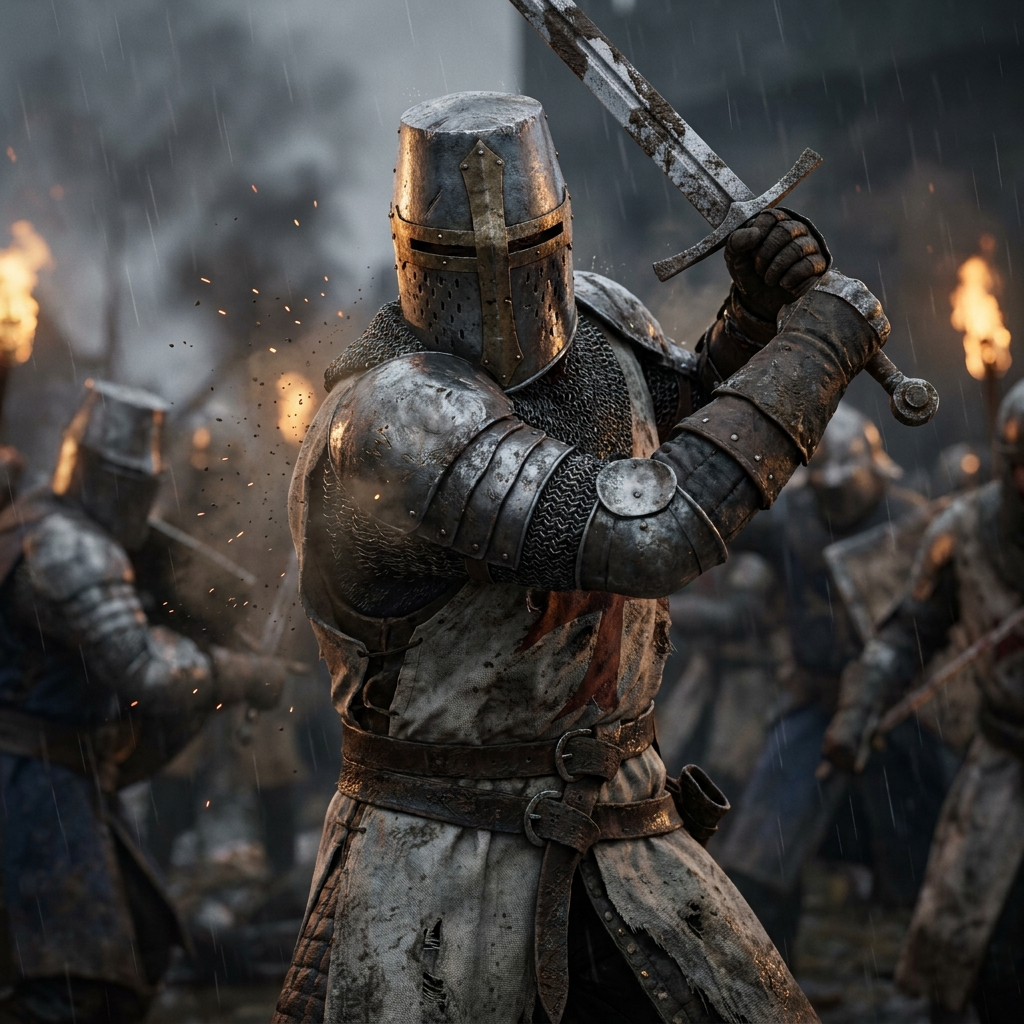
12 Everyday English Words With Surprising Medieval Origins
August 29, 2026 · HistoryBytes Team
Words don't just appear out of nowhere. Some of the most ordinary English words you use today — words that have nothing to do with knights or castles on the surface — were born in the exact same world you can explore in the Tales of Chivalry season: a world of horses, feudal loyalty, sworn oaths, and medieval warfare. Here are 12 of them, and the surprisingly literal stories behind where they came from.
1. "Chivalry" wasn't originally about manners.
It comes from the Old French chevalerie, rooted in cheval ("horse") — it originally just meant "skill on horseback." The whole code of politeness, honor, and courtly conduct came later.
2. "Knight" used to just mean "boy."
The Old English word cniht meant a young male servant or attendant, nothing noble about it. It only came to mean "armored horseman of rank" centuries later.
3. "Villain" originally meant "farmer."
It comes from the Latin villanus, someone who lived and worked on a villa (a country estate). Peasant, not evildoer — the sinister meaning crept in later, as medieval nobility looked down on rural folk.
4. "Curfew" comes from a fire-safety law.
From the Old French cuevrefeu, literally "cover fire" — a medieval regulation requiring people to extinguish or bank their hearth fires at a set hour each evening, to stop house fires from tearing through wooden towns.
5. "Marshal" started out as a stable hand.
It traces back to a Germanic word combining "horse" and "servant" — someone who cared for horses. Over centuries, it climbed all the way up to one of the highest military ranks in Europe.
6. "Assassin" comes from a real medieval group.
The word is linked to the Hashashin, a secretive sect active during the Crusades, associated with carrying out targeted killings against political and religious rivals.
This is HistoryBytes.
Short lessons, real duels, and immersive visuals from a world of history — download it now.
7. "Checkmate" traveled from Persia through the medieval Islamic world into Europe.
It comes from the Persian/Arabic phrase shah mat, meaning "the king is helpless" — arriving in Europe alongside the game of chess itself during the Middle Ages.
8. "Fee" didn't always mean money.
It comes from feudum — the medieval word for a fief, land granted in exchange for service or loyalty, not a cash payment at all.
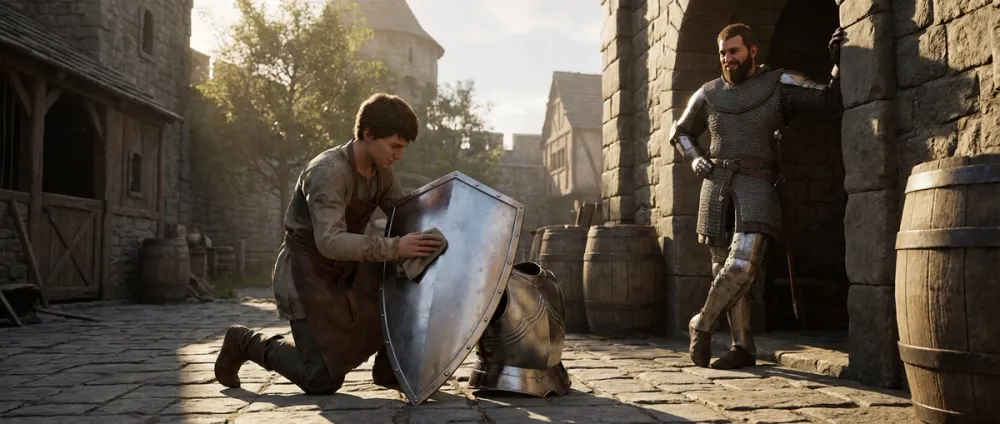
9. "Squire" literally meant "shield carrier."
From the Latin scutarius, it described the young attendant whose job was to carry a knight's shield and armor, years before earning knighthood himself.
10. "Constable" is another stable-to-nobility story.
It comes from comes stabuli, Latin for "count of the stable" — originally in charge of horses, the title eventually became one of the highest offices in medieval royal households.
11. "Herald" started as a battlefield announcer.
Rooted in a Germanic word for "army commander," it evolved into the person responsible for announcing knights, relaying messages, and organizing medieval tournaments.
12. "Companion" literally means "with bread."
From the Latin com ("with") and panis ("bread") — someone you shared bread with, tracing back to the close bonds of medieval war bands and households.
The Pattern Hiding in Half These Words
Notice something? Knight, marshal, constable, and squire all follow the exact same arc: humble servant or stable hand at the bottom, one of the highest titles in the land centuries later. That's not a coincidence — it's a window into how medieval society actually worked. Proximity to horses, to the household, to the people in power, was itself a path upward. Loyalty and service, not birth alone, could climb.