Erik the Red: Greenland's Most Famous Marketing Trick
September 20, 2026 · HistoryBytes Team
A name that still confuses people today
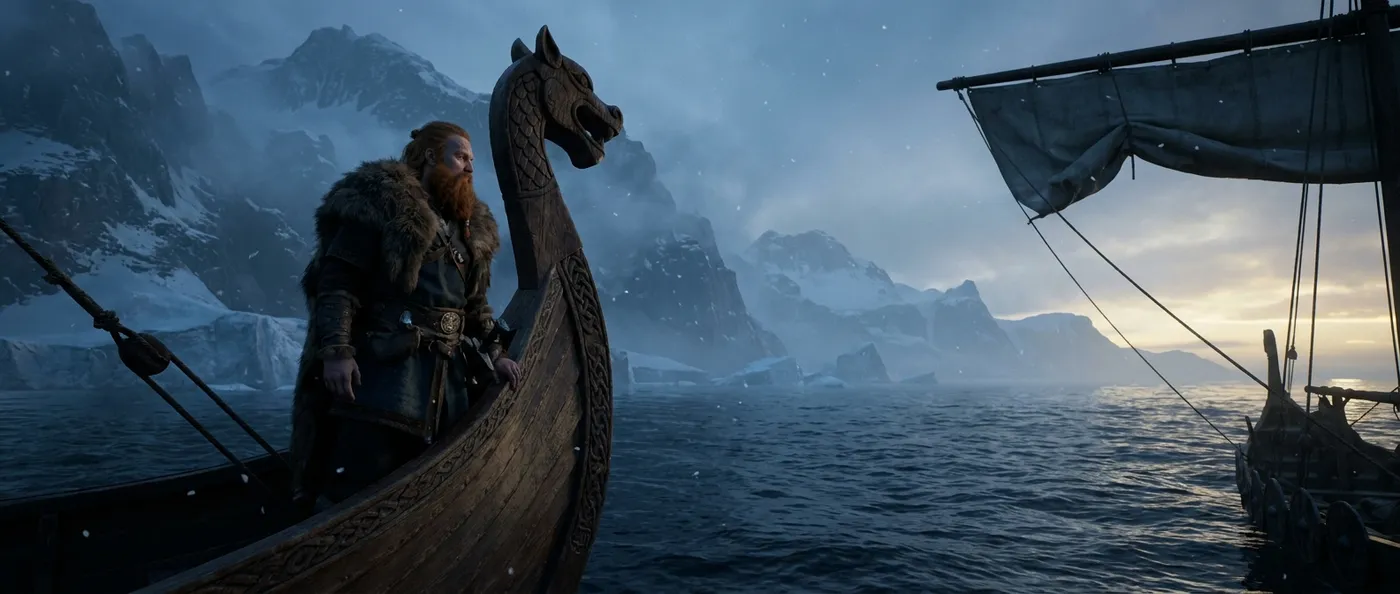
Over 80 percent of Greenland is buried under a mile-thick ice sheet. Hear the name for the first time, and you'd expect lush meadows, not an Arctic glacier wasteland — and that confusion isn't an accident. It traces back to a single man: Erik Thorvaldsson, better known as Erik the Red, a twice-exiled, hot-tempered Viking who, around 985 CE, launched one of the boldest advertising campaigns in human history — centuries before the word "marketing" even existed. But his story is more complicated than the viral "he lied to everyone" myth suggests. It doesn't start with a clever idea. It starts with two violent crimes and the desperation of a man who, quite literally, had nowhere left to go.
From Norway to Iceland — banished before Erik was even born a wanderer
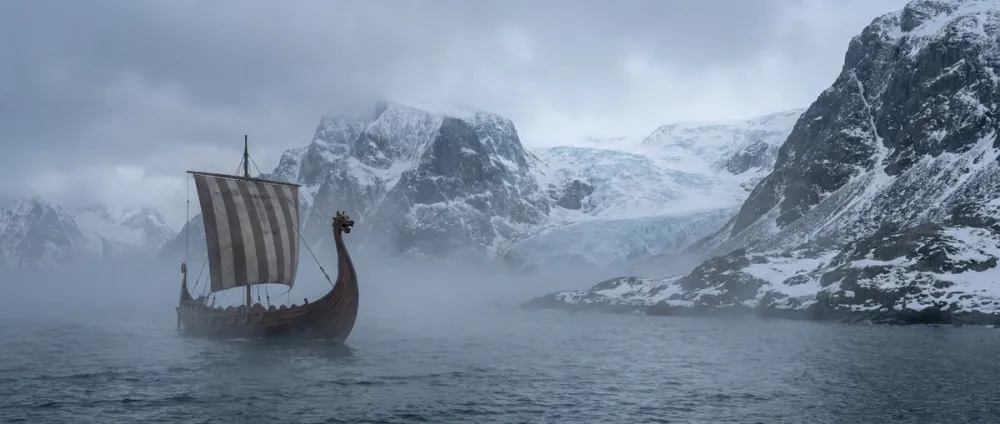
Erik Thorvaldsson was born around 950 CE in Rogaland, Norway, with strikingly red hair and beard — the source of his nickname, likely reinforced by an equally fiery temper. When Erik was about ten years old, his father Thorvald Asvaldsson was banished from Norway for manslaughter. The entire family fled and settled in northwestern Iceland — itself still relatively young territory at the time, colonized by Norse settlers less than a century earlier. Many of these early settlers had themselves fled the political centralization under kings like Harald Fairhair, who first united Norway under a single crown and in doing so stripped power from numerous independent chieftains — Iceland became a refuge for anyone who didn't fit into the new order, whether by choice or not.
Erik grew into a capable seafarer and married Thjodhild Jorundardaughter, with whom he had several children — including Leif Eriksson, who decades later would become the first European to set foot on North American soil, roughly 500 years before Christopher Columbus. Yet the family history repeated itself with almost eerie precision: where the father had lost his home to violence, the son was about to walk the exact same path.
A landslide, dead servants, and his own exile
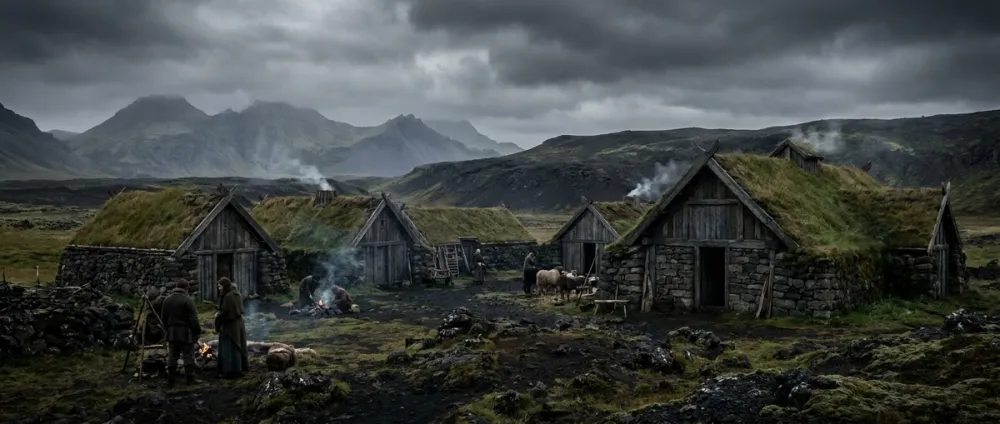
Around 980, a neighborhood dispute turned deadly. A landslide on Erik's land — caused by his enslaved workers — had apparently damaged the property of a neighbor named Valthjof. A friend of Valthjof's killed Erik's enslaved men in response; Erik retaliated by killing the man responsible. As punishment, he was banished to the island of Oxney.
But the real escalation came afterward, and it sounds almost trivial: Erik had lent a man named Thorgest a set of elaborately carved wooden pillars, so-called setstokkr, which had belonged to his father and were considered to hold mystical significance. When Erik finished building his new house, he wanted the pillars back — Thorgest refused to return them. Erik took them back by force; Thorgest gave chase with armed men, and in the fight that followed, Erik's side killed Thorgest's two sons along with several other men. The dispute was ultimately settled at the Thorsnes Thing, the Icelandic legal assembly of the time — with the result that Erik and his allies were banished from all of Iceland for three years.
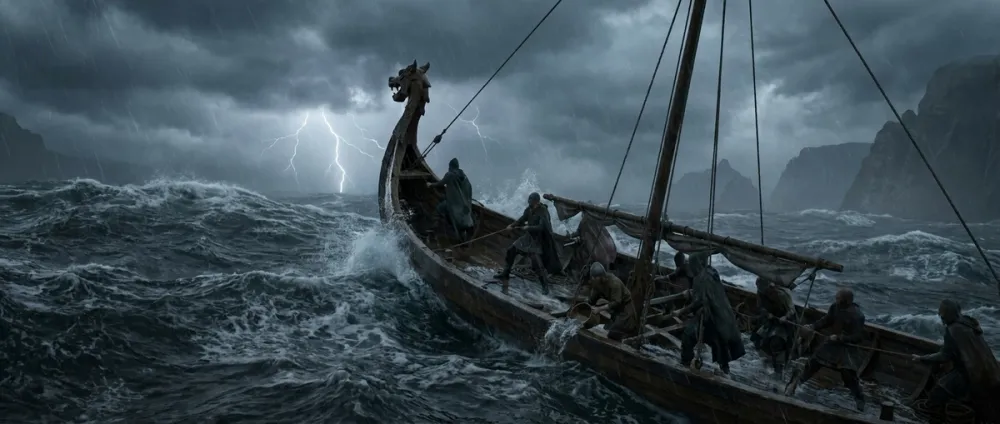
For most people, that would have been a devastating setback: no home, no community, no future in sight. Erik instead chose something that looks almost reasonable in hindsight, but was pure gamble at the time: he sailed west, into the open, uncharted North Atlantic, chasing a rumor. A century earlier, the seafarer Gunnbjörn Ulfsson had reported sighting a distant landmass after being blown off course. Nobody had found it again since. Erik set out to change that.

This is HistoryBytes.
Short lessons, real duels, and immersive visuals from a world of history — download it now.
Not entirely a lie, but certainly an exaggeration
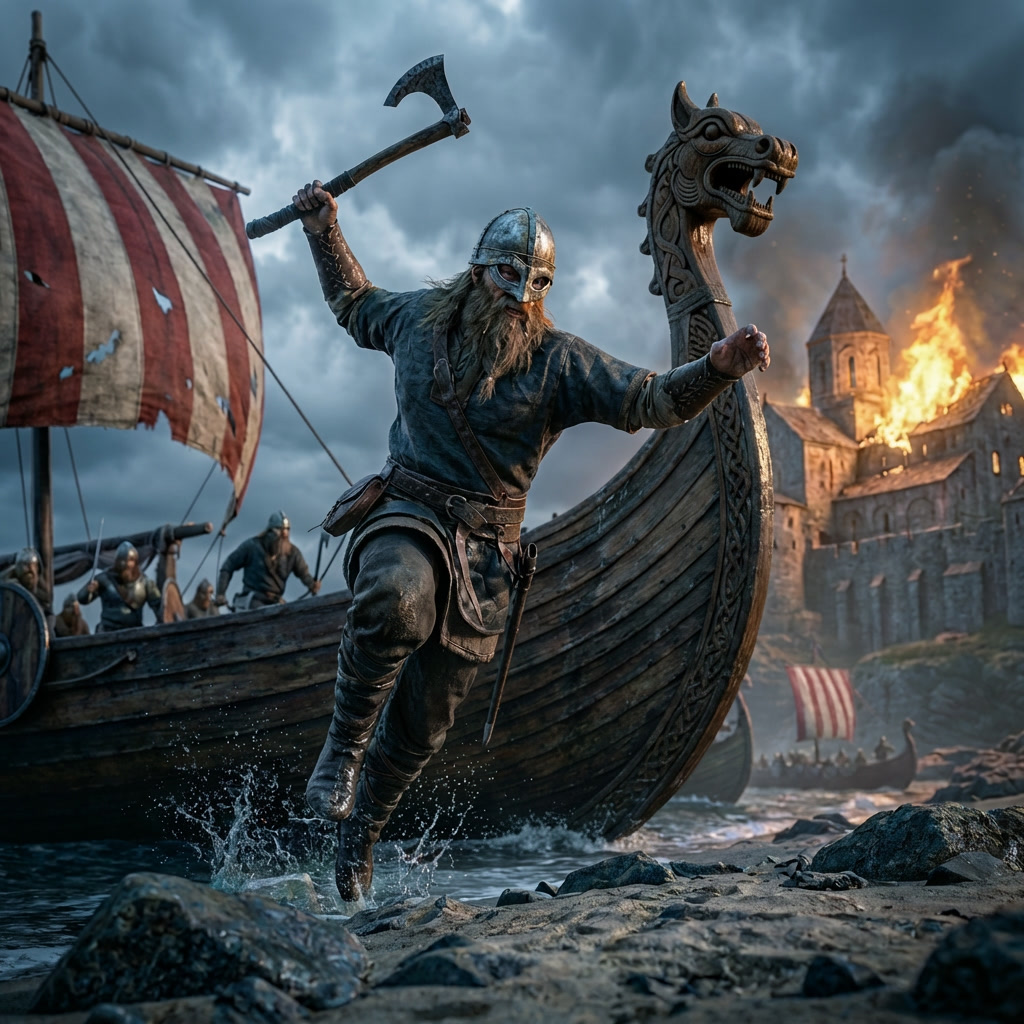
Erik reached Greenland's southwestern coast in 982 CE and spent the next three years of his exile exploring the coastline and identifying suitable settlement sites. When his sentence expired in 985, he returned to Iceland — not as a broken exile, but as a man with a plan. He actively recruited settlers for the newly found coast, and according to the Icelandic sagas (the Landnámabók and Eiríks saga rauða), he deliberately chose an inviting name: Greenland, "the green land" — reasoning that a good name would encourage people to follow him.
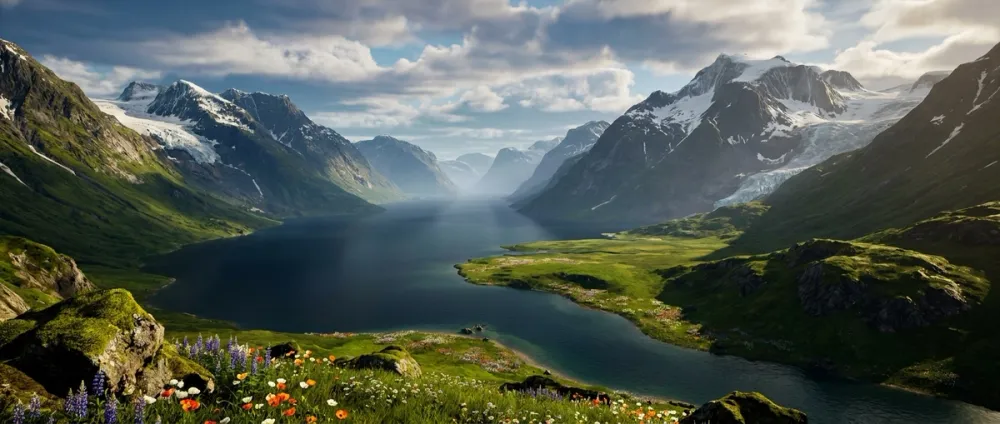
The popular version of this story, which today circulates as the viral "first example of fake marketing in history," is actually a simplification. In reality, the southwestern coasts of Greenland where Erik landed genuinely did have green, fertile fjord valleys in summer — just not across the whole island, roughly 80 percent of which lies under ice. There's another argument against the pure "lie" version too: Erik himself chose to return there voluntarily once his exile ended, and spent the rest of his life there — strange behavior for someone who knew he was luring people into a wasteland.
The most honest reading probably sits somewhere in the middle: Erik used a real, if unrepresentative, green corner of Greenland as a selling point for the whole island — less an outright lie, more what we'd today call "selective truth in marketing." The result was impressive regardless: in 985 CE, 25 ships carrying settlers left Iceland bound for Greenland. Only 14 actually made it — the rest turned back or were lost on the perilous Atlantic crossing.
Chieftain, family man — and a religious rift at home
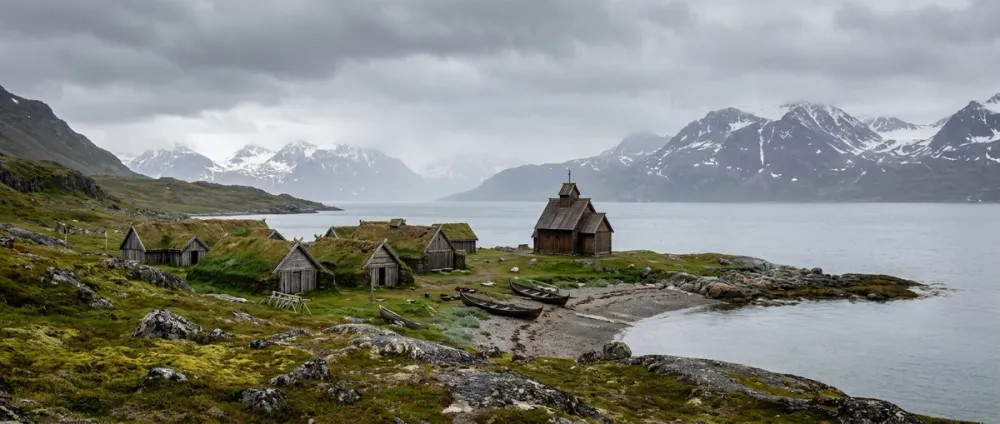
The 14 ships that arrived founded Greenland's first successful European settlement under Erik's leadership, with his own farmstead at Brattahlíð as the center of what became known as the Eastern Settlement. Erik became the undisputed chieftain of the new colony — a remarkable rise for a man who, just a few years earlier, had been a twice-banished outlaw with literally nowhere left to go.
Yet even in Greenland, his life wasn't free of conflict — this time not through violence, but through faith. His wife Thjodhild converted to Christianity, which was increasingly taking hold across Scandinavia at the time, and had Greenland's very first church built. Erik himself refused to renounce his old Norse gods, creating visible tension between the couple — the pagan founder and leader living next to a church his own wife had built, whose faith he never adopted.
Walrus ivory: the colony's real lifeline
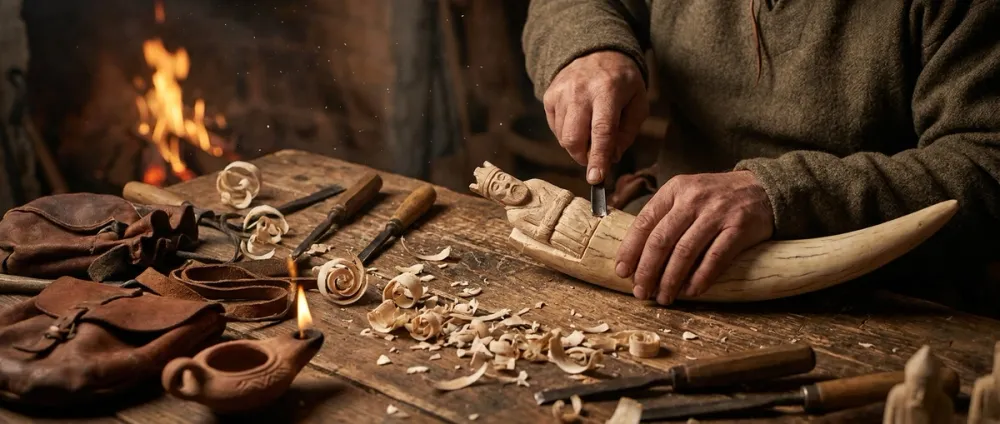
One question often goes unanswered in the whole "Greenland" story: how did a colony in such a barren environment survive for nearly 500 years at all? The answer has surprisingly little to do with farming, and everything to do with a resource almost nobody associates with Vikings today: walrus ivory. For over 200 years, the Greenlandic Norse held something close to a monopoly on Europe's ivory market — carved into church crucifixes, elaborately worked chess pieces (the famous "Lewis Chessmen" are among the best-known examples), and playing pieces for the popular Viking board game hnefatafl. Some historians now suspect that the prospect of this valuable trade good was the real economic driver behind Erik's colonization effort — not just the clever name.
That same prosperity ultimately became the colony's undoing: when African elephant ivory began flooding the European market in the 13th century and buyer tastes shifted, this central income source collapsed — right around the time centuries of overhunting had already severely depleted walrus populations. A society that had once thrived on a single luxury commodity lost exactly the foundation that had carried it for generations.
The father who paved the way the son would finish
Years later, when Leif Eriksson was planning an even bolder voyage further west — the trip that would make him the first known European to set foot on North American soil — he explicitly invited his father along. Erik agreed. But on the way to the ship, he fell off his horse. The otherwise fearless man took it as a bad omen and turned back, while his son set sail without him and made history. Some sources suggest Erik was injured in the fall and died shortly after as a result; others date his death to a winter epidemic that struck the colony around 1003. What's certain is that he never lived to see his son's most famous discovery.
A disappearance that remains unsolved to this day
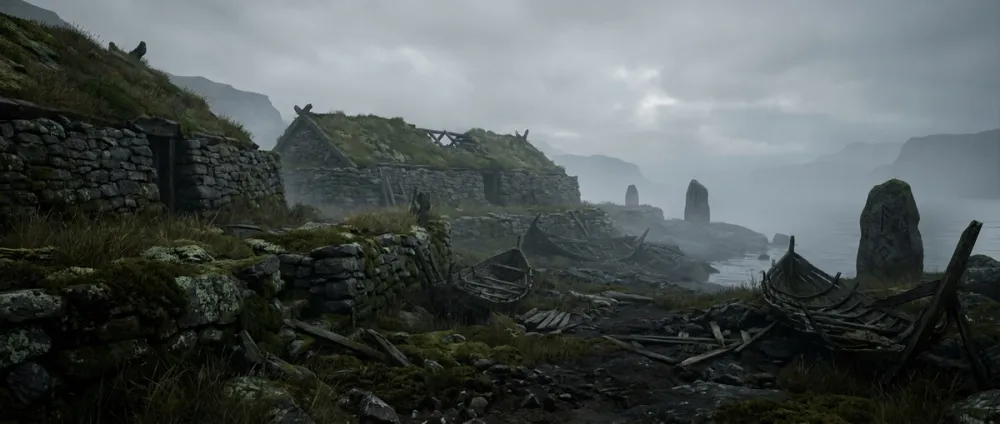
The colony Erik founded endured for roughly 500 years, growing to an estimated 5,000 people at its peak. Then, around 1450, all trace of it vanishes — the settlement disappeared without any European source recording exactly what happened. Historians still debate several possible causes: a noticeable cooling of the climate, escalating conflict with the indigenous Inuit, overgrazing of the already poor soil, European pirate raids, or waves of plague. It was likely a combination of several of these factors — a fittingly mysterious ending for a story that began with a double exile and an exaggerated sales pitch.
People exactly like this are behind every season
HistoryBytes was never about memorizing dates — it's about understanding how people like Erik actually lived: how they handled conflict, how they built communities, how they dealt with loss, exile, and starting over. In the Viking Sagas season, you'll meet figures exactly like this — not as a bare date to memorize, but woven into stories that show why people did what they did. Erik's story is especially instructive here, because it shows just how much nuance hides behind a seemingly simple "the Vikings lied to us" anecdote, once you actually look closer.
Between legend and truth
Erik the Red was neither the outright con artist he's often portrayed as in viral posts, nor a flawless explorer-hero. He was a man twice driven from his homeland, who used and experienced violence, and who — out of sheer necessity — undertook one of the most consequential voyages of the Viking Age. The name "Greenland" still carries the trace of his exaggeration today — but also a genuine grain of truth. That exact mix of fact and exaggeration, of chance and determination, makes his real story more interesting than any simplified version circulating as a meme.