Bushido: The Samurai Code Invented in 1900
September 11, 2026 · HistoryBytes Team
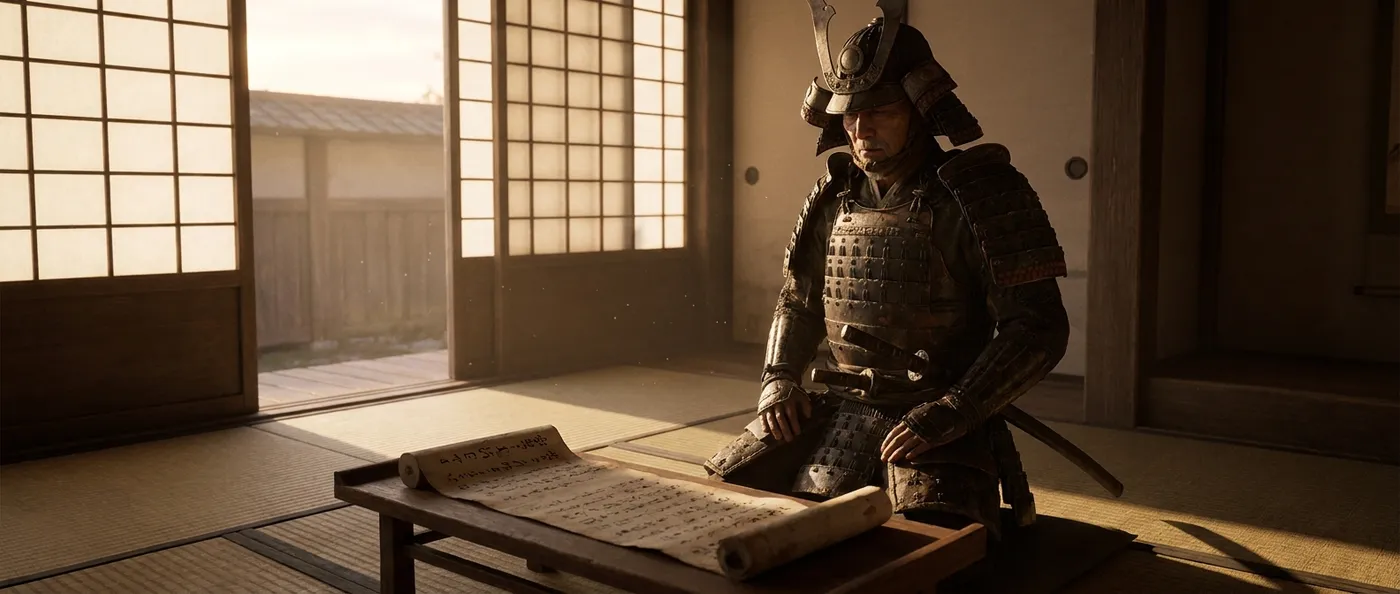
Honor above all. Death before dishonor. Absolute loyalty to the last breath. That's how most people know Bushido, the samurai code of honor — an ancient, unchanging law that Japanese warriors supposedly followed since the medieval era. The problem: that image is largely an invention. And a fairly recent one.
What Bushido was supposedly
The term "Bushido" (武士道, literally "way of the warrior") today describes a set of seven virtues: rectitude, courage, benevolence, respect, honesty, honor, and loyalty. In films, video games, and countless self-help books, it's presented as a centuries-old, unified code of honor followed by all samurai — comparable to European chivalry, only stricter and more absolute.
One man, one book, 1900
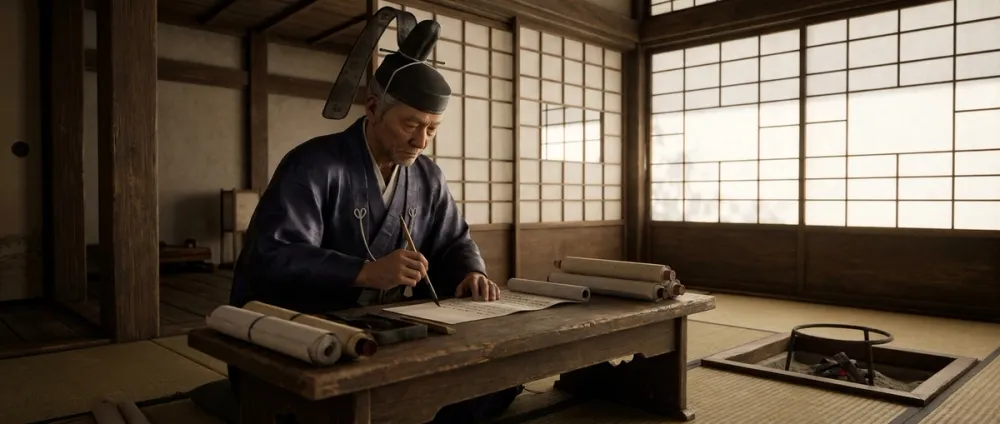
The reality: the Bushido code as we know it today was largely shaped by a single person — Nitobe Inazō, a Japanese scholar and Christian who published the book "Bushido: The Soul of Japan" around 1900 (first edition 1899, widely circulated from 1900 onward). He wrote it in English, explicitly for a Western audience, to make Japanese values comparable to European chivalry and Christian morality. The book wasn't a rediscovered ancient manuscript — it was a modern interpretation, written more than 30 years after the samurai class had officially ceased to exist as a distinct social order.

This is HistoryBytes.
Short lessons, real duels, and immersive visuals from a world of history — download it now.
No unified code, just many house rules
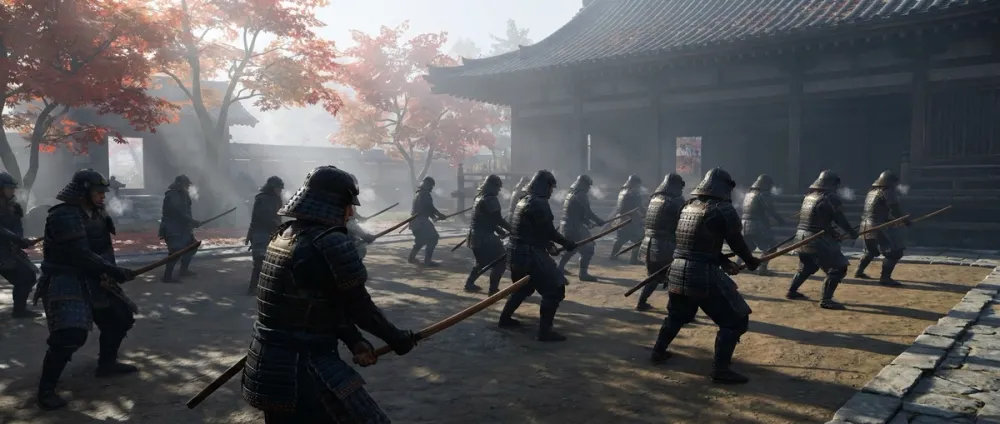
Over the roughly 700 years the samurai class existed, there was no single, universally followed code of honor. Instead, warriors followed a mix of Confucian ethics, Zen Buddhist practice, Shinto beliefs, feudal obligations to their particular lord, and plain practical military necessity. Different families and clans had their own, often written house rules ("kakun") — but these were regional and individual, not a nationwide law. Historical sources also show that samurai regularly switched sides, fought over land, and pursued very concrete self-interest — hardly the picture of unconditional, romanticized honor.
A code with a political purpose
Nitobe's book struck a nerve — both in the West, fascinated by "noble Eastern warriors," and in Japan itself. During the Meiji era, the country was searching for a national identity amid growing Western influence. The Bushido concept was picked up, standardized, and increasingly used over the following decades to redirect loyalty — originally owed to one's own feudal lord — toward the emperor and the state. Over time, a literary work of comparison became an instrument with real political weight.
That doesn't mean courage, loyalty, or honor were meaningless to real samurai — those values undoubtedly existed. But the "ancient, unified code of honor" still shown in films and games today is younger than the automobile. What other "ancient tradition" you know might be more modern than you think?