Frederick Barbarossa: The Emperor Buried in Three Countries
September 10, 2026 · HistoryBytes Team
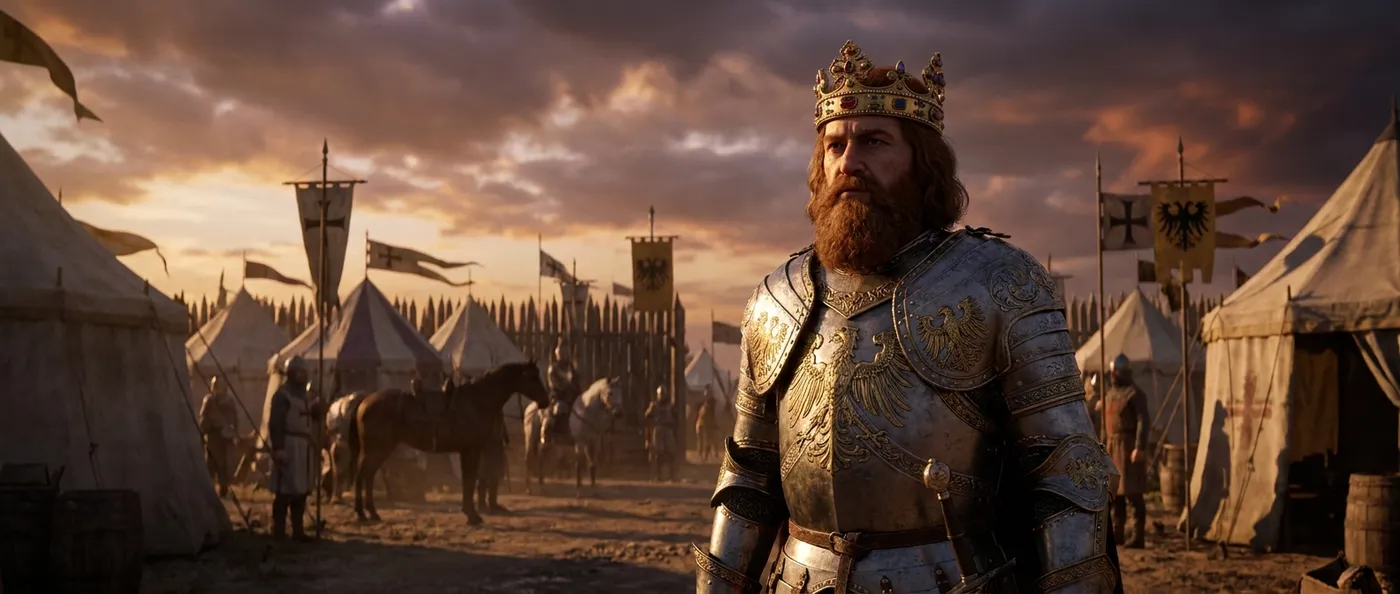
Europe's most powerful man didn't die in battle, by poison, or at an assassin's hand. He drowned in a river so shallow a child could wade across it. Emperor Frederick I, nicknamed Barbarossa for his reddish beard, led one of the largest armies ever assembled for a Crusade — and died from something so mundane his own soldiers could barely believe it. What happened to his body afterward is even stranger.
The most powerful ruler of his time
Frederick I became Holy Roman Emperor in 1155 and ruled much of Central Europe for over 35 years. He led six campaigns into Italy, survived excommunication by the Pope, and forged one of the great empires of the European Middle Ages. At nearly 68 — a remarkably old age for the period — he set out on the Third Crusade in 1189, joining Richard the Lionheart of England and Philip II of France to reclaim Jerusalem from Saladin.
A death that gave no one a chance
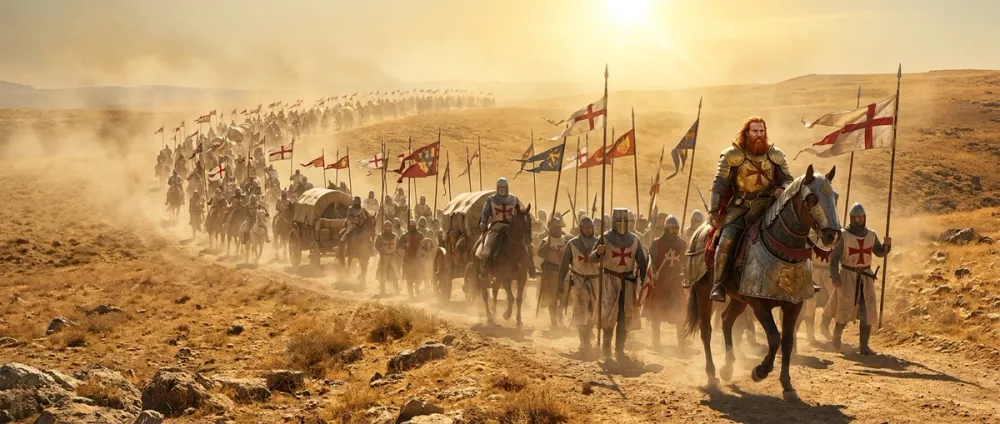
In June 1190, Barbarossa's army reached the Saleph River in Asia Minor. After crossing the hot Anatolian plateau, the sight of water reportedly delighted the emperor so much that he rode or waded into it — accounts differ on the exact circumstances. Minutes later, he was dead. The elderly man, likely still in full armor, probably suffered a heart attack or went into shock in the cold water. His army disintegrated almost instantly: some soldiers deserted, others reportedly died of grief. Saladin never had to fight him.
This is HistoryBytes.
Short lessons, real duels, and immersive visuals from a world of history — download it now.
An emperor buried in three pieces
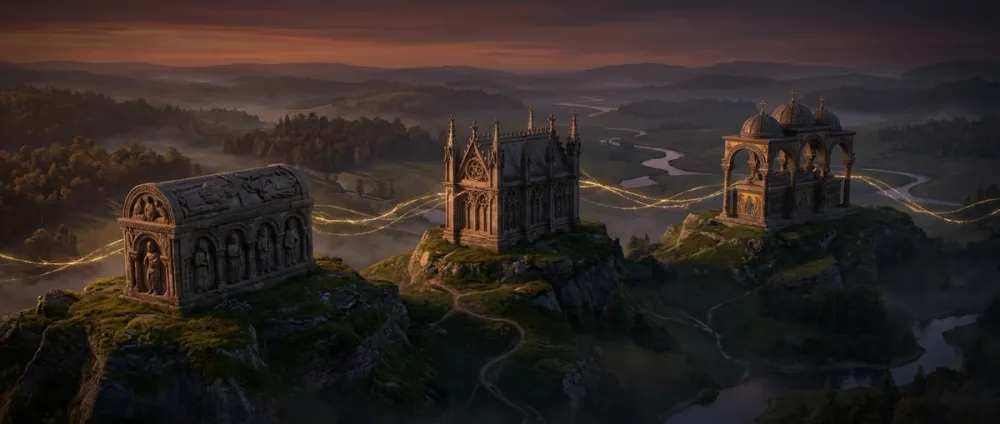
What happened to Barbarossa's body is hard to believe. His men first tried preserving him in vinegar to carry him to Jerusalem — one last symbolic triumph. It didn't work. In the end, the emperor was literally divided: his flesh was buried in a cathedral in Antioch (modern-day Turkey), his bones in a church in Tyre (modern-day Lebanon), his heart and inner organs in Tarsus (also Turkey). One man, three countries, three graves — and to this day, it isn't even entirely certain all these sites still hold what remains of him.
The legend of the sleeping emperor
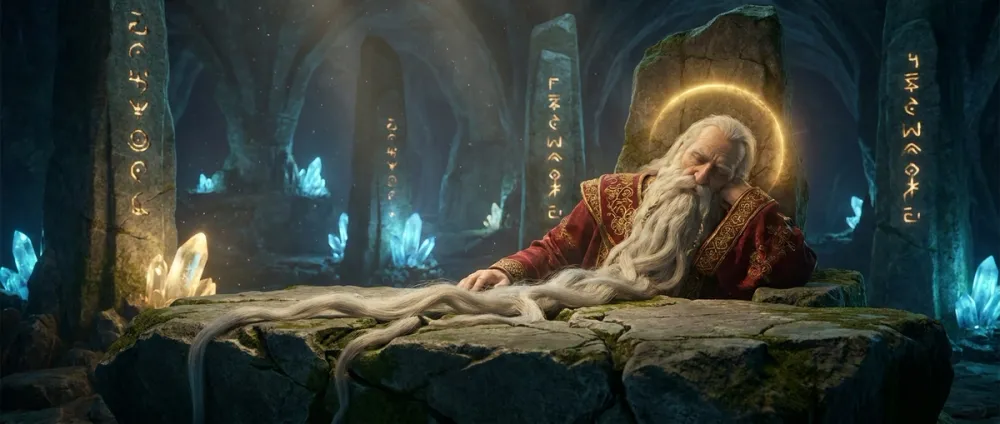
For centuries, Germany refused to fully accept his death. A legend took hold: Barbarossa wasn't dead at all, but sleeping deep within the Kyffhäuser mountains in Thuringia, his beard grown so long it wound through a stone table. One day, the story went, he would wake and return to lead his people to renewed unity and greatness. The legend was so powerful that, over the centuries, several impostors appeared claiming to be the returned Barbarossa — especially during times of crisis, when people longed for a strong savior to appear.
An emperor buried in three countries, whose death broke an entire crusading army, and around whom legends grew for centuries afterward — this isn't a fantasy story, it's real European history. What other rulers left behind a similar legend after their death?