The Real Story Behind Homer's Odyssey (What the Movie Won't Tell You)
August 27, 2026 · HistoryBytes Team
Every time a new retelling of Homer's Odyssey hits the big screen, the internet does the same thing: it argues about accuracy. Was Troy real? Did Helen actually look like that? Were the ships even remotely correct? It's a fair set of questions — Homer's epic is nearly 2,800 years old, sitting at the exact blurry line between myth and history, and almost nobody agrees where that line actually falls.
So instead of arguing about a movie, let's look at what we actually know. Not the legend as pop culture remembers it — the real archaeology, the real text, and the real mysteries historians still haven't solved. Some of it will surprise you. None of it is what you'll see in a trailer.
Was the Trojan War Even Real?
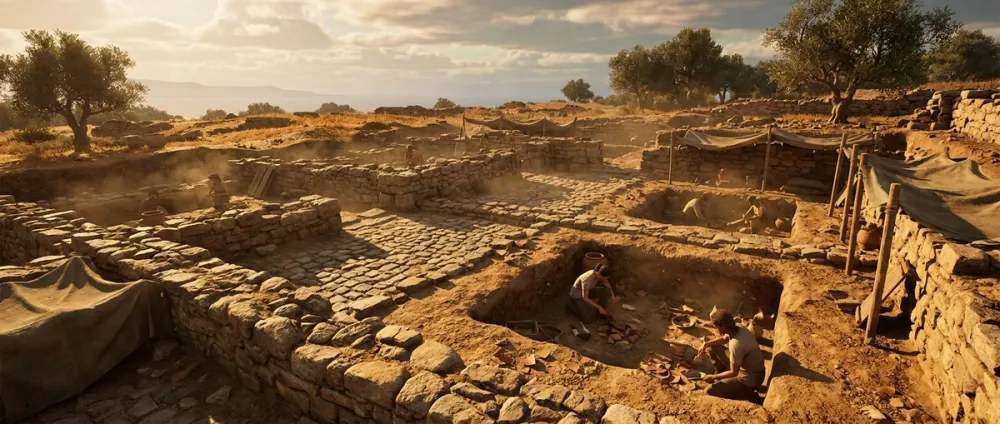
For most of modern history, the Trojan War was treated the same way we'd treat a superhero origin story — a good tale, definitely not history. That changed in the 1870s, when amateur archaeologist Heinrich Schliemann started digging at a mound called Hisarlik, in modern-day Turkey, based on a hunch that it matched Homer's description of Troy's location.
He found something real. Not proof that Achilles or Helen existed, but a city — actually several cities, stacked on top of each other across thousands of years of rebuilding — showing genuine destruction layers consistent with warfare, roughly around the time period the Trojan War is traditionally dated to (about 1200 BCE).
Most historians today land somewhere in the middle: there probably wasn't one single ten-year war fought exactly the way Homer describes it, with gods intervening and a wooden horse full of soldiers. But there's a reasonable chance the story preserves a folk memory of real, repeated conflicts around a real city at a real strategic chokepoint — retold, exaggerated, and eventually turned into legend over the centuries before Homer ever wrote it down.
Who Was Helen, Really — According to Homer Himself?
Here's something that surprises a lot of people: Homer never actually calls Helen "the most beautiful woman in the world." That's a phrase that got attached to her over centuries of retelling, not something in the original text.
What Homer actually uses are recurring epithets: "white-armed," "lovely-haired," "daughter of Zeus," "godlike." Poetic, certainly flattering — but notably different from the single, absolute claim pop culture eventually settled on. Ancient epic poetry worked in fixed descriptive phrases like this for almost every major character, more like a formula than a specific physical description.
It's also worth remembering that Helen herself is one of the more debated figures in the whole epic tradition — later Greek writers couldn't even agree on whether she went to Troy willingly, was kidnapped, or, in one stranger version from the poet Stesichorus, never went to Troy at all and spent the war safely in Egypt while a phantom double took her place. The "true" Helen was already being argued about in antiquity, long before anyone had a camera or a casting call.
What Bronze Age Greek Armor Actually Looked Like
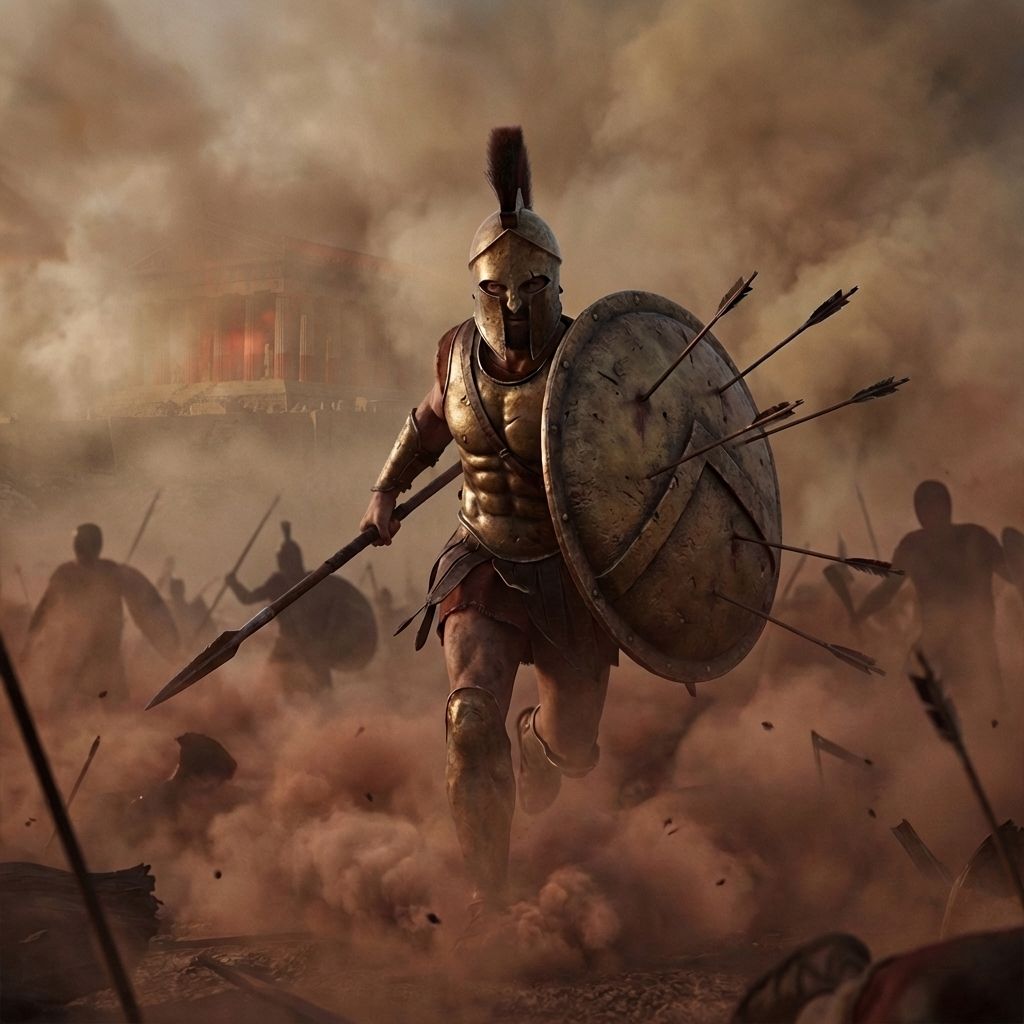
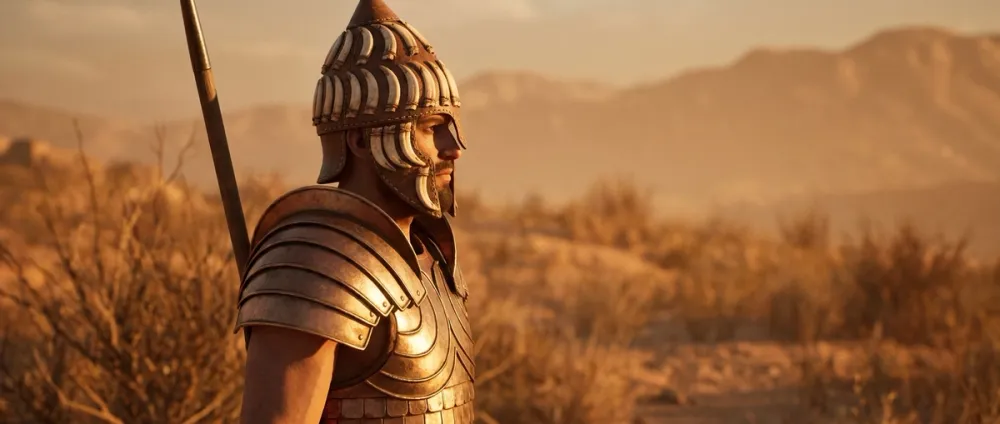
Homer describes warriors in gleaming bronze, with distinctive helmets made from rows of boar's tusks — a detail so specific that for a long time, scholars assumed it was pure poetic invention. Then archaeologists actually found one. Boar's-tusk helmets have turned up at real Mycenaean-era burial sites, confirming that this wasn't decorative flourish — it was a real, if labor-intensive, piece of period armor, and Homer's description matches the actual objects with startling precision.
Even more striking is the Dendra panzer, a complete suit of bronze plate armor discovered in Greece, dating to roughly the same era the Trojan War is set in. It's heavy, rigid, and startlingly different from the more flexible leather-and-bronze look most films default to — more closely resembling later medieval plate than the leather-skirt-and-breastplate combo that's become the default Hollywood shorthand for "ancient Greek warrior."
The real Bronze Age Aegean, in other words, looked less like a toga epic and more like something closer to early armored warfare than most adaptations bother to show.
This is HistoryBytes.
Short lessons, real duels, and immersive visuals from a world of history — download it now.
Where the Cyclops Myth Might Really Come From
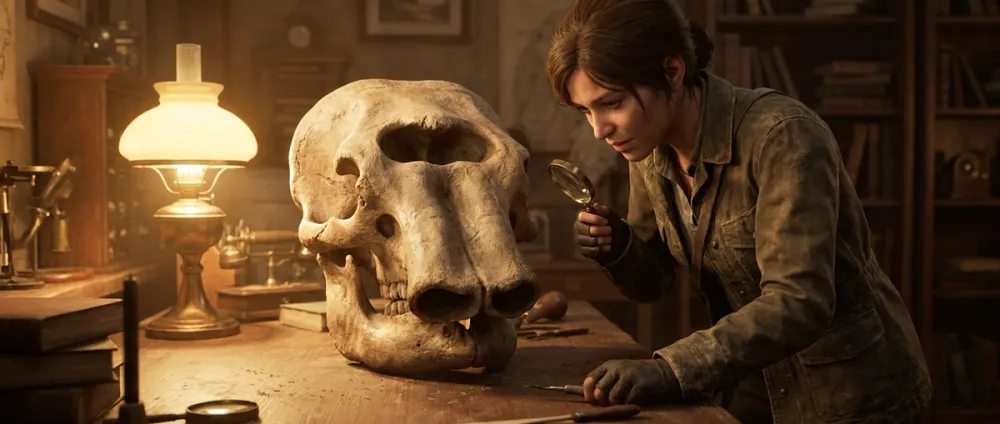
One of the more compelling theories in classical scholarship has nothing to do with literature and everything to do with paleontology. Ancient Greeks living on islands like Sicily and Crete would occasionally dig up skulls from an extinct species of dwarf elephant — animals that once roamed the Mediterranean and were roughly the size of a large pony.
Those skulls have one feature that looks startlingly strange out of context: a large central nasal cavity, positioned where a single eye socket would be on a face. Without any concept of elephant anatomy, someone finding one of these skulls centuries later could reasonably conclude they'd found the remains of a one-eyed giant.
It's a theory, not a proven fact — we can't run a definitive test on a myth's origin — but it's one of the more widely cited explanations among classicists for where the cyclops legend may have actually come from. A real fossil, misread by people without the paleontological context to understand what they were looking at, slowly turning into one of Greek mythology's most famous monsters.
Where Is the Real Ithaca?
This one is still genuinely unresolved. The island called Ithaca today, off the west coast of Greece, has been assumed to be Odysseus's home since antiquity — but its geography doesn't cleanly match the very specific description Homer gives of Ithaca's location relative to its neighboring islands.
That mismatch has fueled real, ongoing academic debate. One notable theory, popularized by researcher Robert Bittlestone in the 2000s, argues that a peninsula on the neighboring island of Kefalonia — which may once have been a separate island before geological changes joined it to the mainland — actually fits Homer's description far better than modern-day Ithaca does.
It's not a settled question. Geologists, archaeologists, and Homeric scholars still disagree, and probably will for a while longer. But that's part of what makes this specific mystery so interesting: unlike the Trojan War question, this isn't ancient history that got resolved by a shovel in the 1870s. It's an active, unfinished argument happening in academic journals right now.
Odysseus Probably Wasn't Real. His World Was.
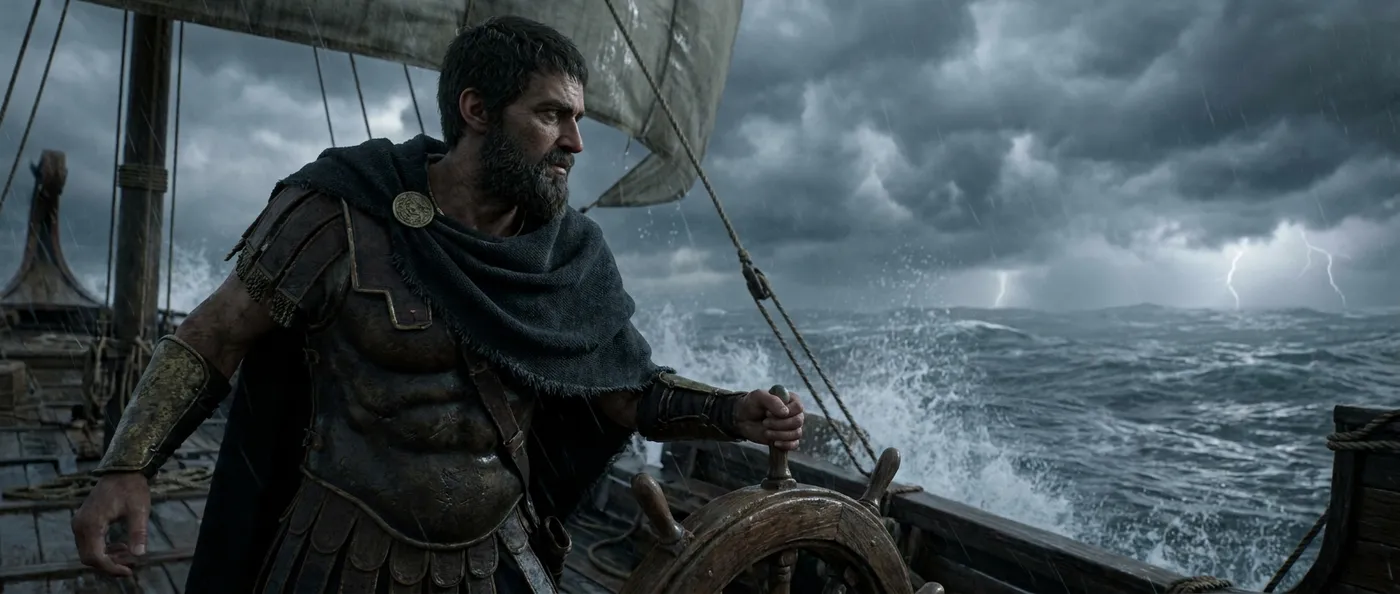
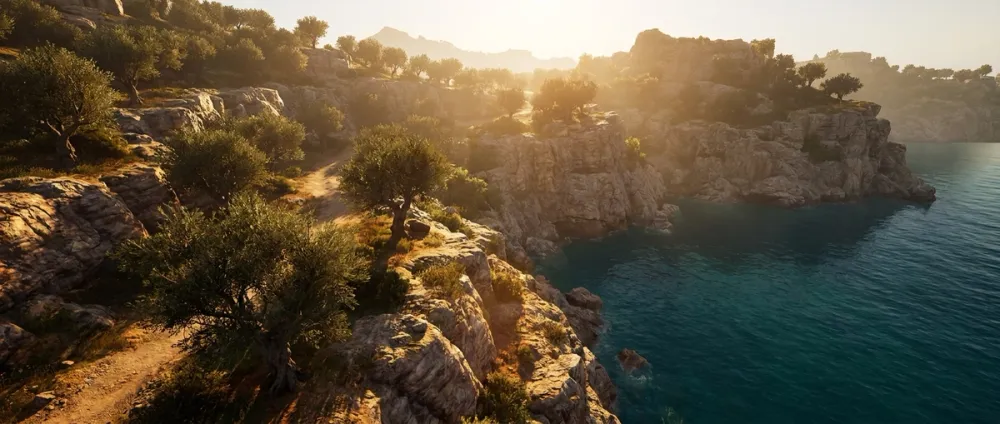
There's likely no single historical Odysseus — no specific king who really sailed home from a real siege of Troy through a real run-in with a real cyclops. But the world he moves through is built from genuine Bronze Age Mediterranean geography, real Mycenaean-era armor and burial customs, real trade routes, and a real, centuries-old oral storytelling tradition that eventually got written down as one of the most influential stories humans have ever told.
That's the part worth sitting with: the myth may not be literally true, but it's not fiction floating in a vacuum either. It's built out of a real world — which is exactly what makes actually understanding that world so much more interesting than just knowing how the story ends.