Did the Wehrmacht Fight on Meth?
 AI
Did the Wehrmacht fight on meth?
In part. In 1940 the Wehrmacht received millions of Pervitin tablets, that is methamphetamine, the active ingredient of crystal meth, in a small dose. Many soldiers took it, mainly to stay awake. But most historians consider it an exaggeration that the whole army was permanently high or that the victory over France was owed mainly to the drug.
A letter home and an order without precedent
Perhaps the best-known witness is, of all people, a future Nobel laureate in literature who kept asking his parents for more. Three weeks before the attack on France, the army command then sent out a decree unlike anything any army had issued before. And on the other side of the Channel, people were paying attention and drawing their own conclusions.
"Today I'm writing mainly to ask for Pervitin"
In November 1939, a 22-year-old soldier in occupied Poland wrote to his family in Cologne. Duty was hard, nights were short, and he had a request: "Today I'm writing mainly to ask for Pervitin." In May 1940 he wrote again, asking for a bit more Pervitin for his supply, and once more in July. The soldier's name was Heinrich Böll. Decades later he received the Nobel Prize in Literature. His letters are now among the best-known pieces of evidence for how widespread the drug was among German soldiers.
Pervitin was a pharmacy medicine, not contraband. Its active ingredient is methamphetamine, the same substance sold today as crystal meth, but as a 3-milligram tablet rather than as crystals in far larger amounts. So anyone asking whether the Wehrmacht was "on meth" has to separate two questions: how much of it actually reached the soldiers? And did it change the course of the war? For the first question there are fairly good numbers. On the second, opinions diverge widely.
 AI
This is HistoryBytes.
Short lessons, real duels, and immersive visuals from a world of history — download it now.
A pick-me-up from Berlin
Methamphetamine was not a German invention; it had been made in Japan decades earlier. But the Berlin company Temmler developed its own process, patented it in 1937, and brought the drug to market in the winter of 1937/38 under the name Pervitin. It was widely advertised as a remedy for fatigue, listlessness, and low mood. At first it was available without a prescription, and there were even chocolates that contained Pervitin.
The effect explains the success. Pervitin made people alert, euphoric, and uninhibited, sharpened concentration, and dulled pain, fear, hunger, and thirst. The downside only showed gradually: a racing heart, sleeplessness, exhaustion once it wore off, and the risk of addiction. In the Wehrmacht the drug soon went by names like "tank chocolate," "Stuka tablets," or "Hermann Göring pills."
 AI
A contradiction in the Nazi state
At first glance, Pervitin does not fit the Nazi state. The Nazis presented themselves as enemies of narcotics, promoted a healthy, disciplined "national body," and persecuted drug use as a sign of weakness. Yet they made an exception for the stimulant, because it promised exactly what the regime demanded: performance, endurance, and alertness. The pharmacy historians Stephen Snelders and Toine Pieters describe how Pervitin was soon taken by workers, office staff, students, and housewives.
It was cheap, too. According to research, around 200 tablets cost about 7 Reichsmarks in 1942. Advertising did the rest: posters and ads presented Pervitin as a modern remedy for tiredness and low spirits. To understand why soldiers like Böll asked for it as a matter of course, you have to know this: for many Germans before the war, Pervitin was an ordinary medicine, perhaps the way a strong coffee or a headache pill is today, only with far greater risks.
The doctor who didn't want to sleep
One man in particular took a military interest: Otto Ranke, head of the Institute of General and Defense Physiology at the Military Medical Academy in Berlin. He was looking for ways to fight fatigue in soldiers and, from 1939, tested Pervitin on students at the academy, who had to solve arithmetic and logic problems through the night. The results convinced him. Ranke wrote, in essence, that one could hardly overstate the military significance of removing natural tiredness by medical means.
Ranke also took Pervitin himself, apparently regularly. In his notes he recorded that with it one could work 36 to 50 hours without feeling tired. At the same time he saw the risks: a further experiment was stopped after subjects reported heart problems, and Ranke warned other institute heads about the danger of addiction. That double role runs through the whole story: enthusiasm about the effect, unease about the consequences.
 AI
From field trial to decree
Already during the occupation of Czechoslovakia in 1938, medical officers gave Pervitin to soldiers of a tank division. The first major use in the field came with the invasion of Poland in September 1939. Reports from the units were mixed: many praised that the men held out longer, others reported heart problems and misuse among officers. As early as the winter of 1939, Pervitin in the Wehrmacht was therefore placed under a strict prescription requirement.
For the attack in the West, the other side prevailed anyway. On 17 April 1940 the so-called stimulant decree went out to medical officers, a document on the use of stimulants issued under the army's commander-in-chief, Walther von Brauchitsch. It set out when and how Pervitin could be handed to soldiers, for instance when a unit had to keep marching or stay awake despite exhaustion. Ohler calls it a document without precedent in military history. What matters, though, is what it was not: an order to keep all soldiers permanently on drugs.
35 million tablets for the Western campaign
The figure that appears in almost every article on the subject is well documented: from April to July 1940, the army and air force received more than 35 million tablets of Pervitin and of Isophan, a similar product made by the Knoll company. On 10 May 1940 the attack on France, Belgium, the Netherlands, and Luxembourg began. Tank formations drove through the Ardennes, which the French had considered an obstacle, crossed the Meuse at Sedan, and reached the English Channel within days. The Luftwaffe also issued Pervitin to pilots, hence the nickname "Stuka tablets," after the Ju 87 dive bomber that had become the symbol of German air attacks. For many soldiers the campaign meant days with hardly any sleep. The advance through the narrow forest roads of the Ardennes alone created an enormous jam of tanks, trucks, and horse-drawn wagons stretching for many kilometers. Drivers and crews had to keep moving day and night, often under the threat of air attack. Situations like these were exactly what a stimulant was meant for.
How much is 35 million tablets? Around three million German soldiers took part in the Western campaign. On paper that works out to around a dozen tablets per head over several months, spread across an army in which by no means everyone got them or wanted to take them. That is a lot, but it is no proof of an army permanently high. It fits better with a drug used selectively in particular situations, such as for tank crews and drivers on long night marches, or for pilots.
 AI
The Reich Health Leader sounds the alarm
Not everyone in the Nazi state was enthusiastic. Leonardo Conti, the Reich Health Leader and an advocate of so-called euthanasia, the murder of sick and disabled people, warned doctors in March 1940: anyone who tried to banish fatigue with Pervitin could be sure that the collapse of performance would come one day. Conti feared that whole sections of the population could become addicted. In 1941 Pervitin was placed under the Reich Opium Law, meaning it was treated as a narcotic, and its issue to the troops was significantly restricted.
That did not make it disappear. The medical historian Peter Steinkamp of Ulm University has shown that warnings had only a limited effect on the Eastern Front: officers kept giving the drug to exhausted men on the march to keep them awake. At the same time, the top command never ordered Pervitin to be issued en masse to all soldiers. The Wehrmacht knew the drug affected different men very differently.
 AI
The "methamphetamine war" thesis
This is where the real dispute begins. In 2015 the novelist Norman Ohler published "Der totale Rausch," which appeared in English as "Blitzed: Drugs in Nazi Germany," a bestseller translated into more than 30 languages. In it he calls the Blitzkrieg a methamphetamine war and even explains Hitler's famous halt order before Dunkirk with Göring's morphine addiction. The military historian Antony Beevor praised the book as a remarkable piece of research, and Ian Kershaw, one of Hitler's best-known biographers, also considered it a valuable addition. Many other historians were far more critical.
Richard J. Evans, one of the best-known historians of the Third Reich, called the book a crass and dangerously inaccurate account. To claim that all Germans, or even most of them, could only function on drugs was, he wrote, wildly exaggerated. The medical historian Paul Weindling judged it in a balanced but highly critical review in the journal Nature. The British historian James Pugh faulted Ohler for equating the pace of the German campaigns with the use of a stimulant. Research points to other reasons for the victory over France: the surprise thrust through the Ardennes, the fast command of the tank formations, and serious mistakes by the French and British leadership. The historian Karl-Heinz Frieser, who examined the Western campaign in "The Blitzkrieg Legend" (German original 1995), mentions Pervitin among the tank troops but explains the outcome through these factors. Pervitin helped individual units stay awake longer, but it replaced neither fuel nor planning nor an opponent who made mistakes.
Benzedrine: the other side took pills too
One detail is missing from many accounts: the Allies used stimulants as well. In 1940 the British found Pervitin in a German aircraft shot down over southern England and assumed the drug had contributed to Germany's success. Britain and the United States then tested amphetamine on their own soldiers. Their drug was Benzedrine, an amphetamine very similar in effect to Pervitin.
In November 1942, Britain's Royal Air Force officially approved Benzedrine for its aircrews on operations. Over the course of the war, an estimated 72 million amphetamine tablets were procured for the British armed forces, and the US Army used them too. How many were actually taken is unclear, though: the historian James Pugh writes that it has proved impossible to find figures for the scale of use within the RAF. The war was thus a stimulant war on both sides. Anyone who presents Pervitin as a German secret weapon overlooks that the opponents had the same idea, just with a different product.
 AI
And Hitler?
The second big part of Ohler's book concerns Hitler himself. His personal physician Theodor Morell gave him more than 40 different preparations over the course of the war, among them Vitamultin, which sometimes contained Pervitin, and Eukodal, a drug from the opioid group. That Hitler received a great many medications has long been known and is well documented. How dependent he was is disputed.
The physician Hans-Joachim Neumann and the historian Henrik Eberle analyzed Morell's records and presented their findings in 2013. They found chronic gastrointestinal illness, high blood pressure, heart problems, and Parkinson's disease, whose signs appeared from 1941, but little evidence of dependence on cocaine or barbiturates. He may have relied on methamphetamine to some degree. Their conclusion, however, is clear: Hitler's decisions are explained by his personality and ideology, not by illness or drugs. That is exactly why Evans found Ohler's account dangerous: it could be read as if Hitler were not fully responsible for his actions.
 AI
What remains open
First, how many soldiers actually took Pervitin: we know how many tablets were delivered, not how many were swallowed, resold, hoarded, or never used. Second, how much it achieved militarily: some reports praise the effect, others complain of exhaustion afterward and mistakes by overtired men. There is no reliable measure of how much faster a unit advanced thanks to Pervitin.
Third, how many became addicted: there are reports of misuse, heart problems, and deaths, but no statistics for the Wehrmacht as a whole. Fourth, society: the pharmacy historians Stephen Snelders and Toine Pieters describe Germany after 1938 as a "methamphetamine dictatorship" in which the drug was widespread, but they stress that people bought it for their own reasons, not because the state prescribed it. Fifth, Hitler: how strongly medication affected his condition in the last years of the war is still being researched.
The evidence at a glance, what a short answer doesn't show
To wrap up, everything at a glance, with fact and interpretation kept apart.
| Category | What belongs here |
|---|---|
| Well documented | Pervitin (methamphetamine, 3 mg tablets) by Temmler, on the market from winter 1937/38; Otto Ranke's tests from 1939; use in Poland 1939; prescription requirement in the Wehrmacht from winter 1939; stimulant decree of 17 April 1940; more than 35 million tablets of Pervitin and Isophan to the army and air force from April to July 1940; Conti's warning in March 1940; placed under the Opium Law in 1941; Heinrich Böll's letters; Benzedrine among the Allies, RAF from November 1942; Morell's medications for Hitler |
| Handed down | Nicknames such as "tank chocolate" and "Stuka tablets"; individual reports of soldiers going days without sleep; Pervitin found in a downed German aircraft in 1940; around 72 million amphetamine tablets for the British armed forces (estimate) |
| Disputed or open | Whether Pervitin substantially made the victory over France possible (most historians: no); Ohler's reading of the Dunkirk halt order; how many soldiers took it and became addicted; how far Hitler depended on methamphetamine |
One war from five angles
The Pervitin story shows how easily a single spectacular explanation can overshadow an entire era. Every season in HistoryBytes is split into five categories, and this story touches all of them: people like Heinrich Böll or Otto Ranke, places like the Ardennes and Sedan, events like the 1940 Western campaign, ideas like that of the "tireless soldier," objects like the small tube of tablets. That's how the WW2 season builds a picture bigger than any single thesis.
Awake, but not invincible
Did the Wehrmacht fight on meth? Some of its soldiers really did take methamphetamine in 1940, and the leadership deliberately made that possible. It is a disturbing finding, and it belongs to the history of this war. But the drug was no miracle that made an army invincible. It kept men awake who should have been sleeping, and it left behind exhaustion, heart problems, and addiction. The victories of 1940 had other causes, and no pill could prevent the defeats that followed. In the end, Pervitin says less about wonder weapons than about a leadership that treated people like machines that only needed the right fuel.
 AI
Sources and date: 17 November 2026
Greg Eghigian, "A Methamphetamine Dictatorship? Hitler, Nazi Germany, and Drug Abuse," Psychiatric Times 33, no. 6 (2016); James Pugh, review of "Blitzed," British Journal for Military History 3, no. 3 (2017); Paul Weindling, review in Nature (6 October 2016); Richard J. Evans, review in the Guardian (16 November 2016), quoted via Not Even Past (University of Texas); Peter Steinkamp, "Pervitin Testing" (2006); Stephen Snelders and Toine Pieters, "Speed in the Third Reich" (2011); Henrik Eberle and Hans-Joachim Neumann, "Was Hitler Ill?" (2009/2013); Karl-Heinz Frieser, "The Blitzkrieg Legend" (German original 1995); Norman Ohler, "Blitzed" (2015/2016); Ärzte Zeitung, taz, and Der Spiegel on Heinrich Böll's letters; Time, History Hit, PBS "World War Speed" (2019), JSTOR Daily on Benzedrine in the RAF. This page is updated when new research is published.
Discover World War II in HistoryBytes
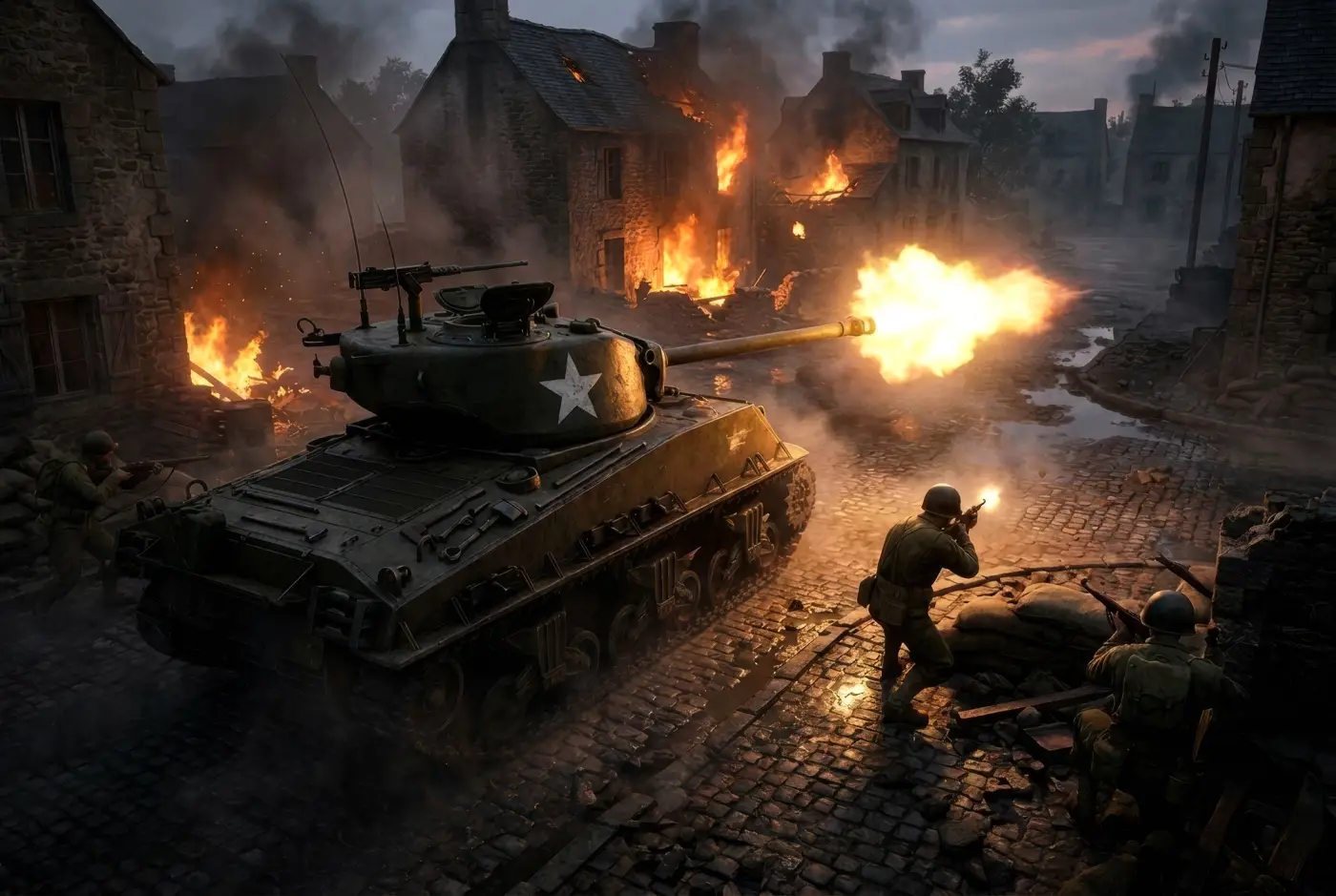
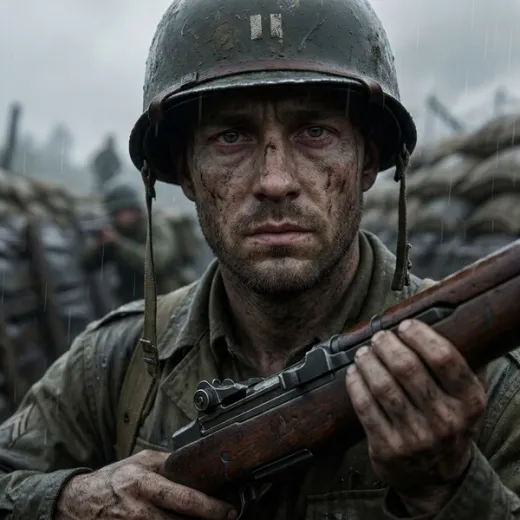
WW2
From the battles of Europe to the Pacific — in the WW2 season you learn how people, places, events, ideas, and objects shaped the war. Story campaigns, quizzes, and real immersion into a world of war, courage, and turning points.
5 episodes freeThe first 5 episodes are free, Premium unlocks the rest.