Year of the Four Emperors: Rome's Wildest Year, 69 AD
September 28, 2026 · HistoryBytes Team
Four men, one throne, twelve months
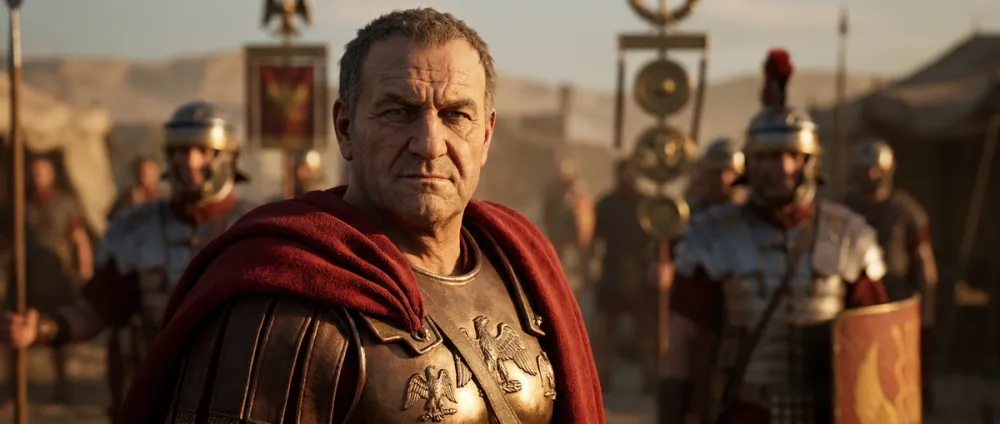
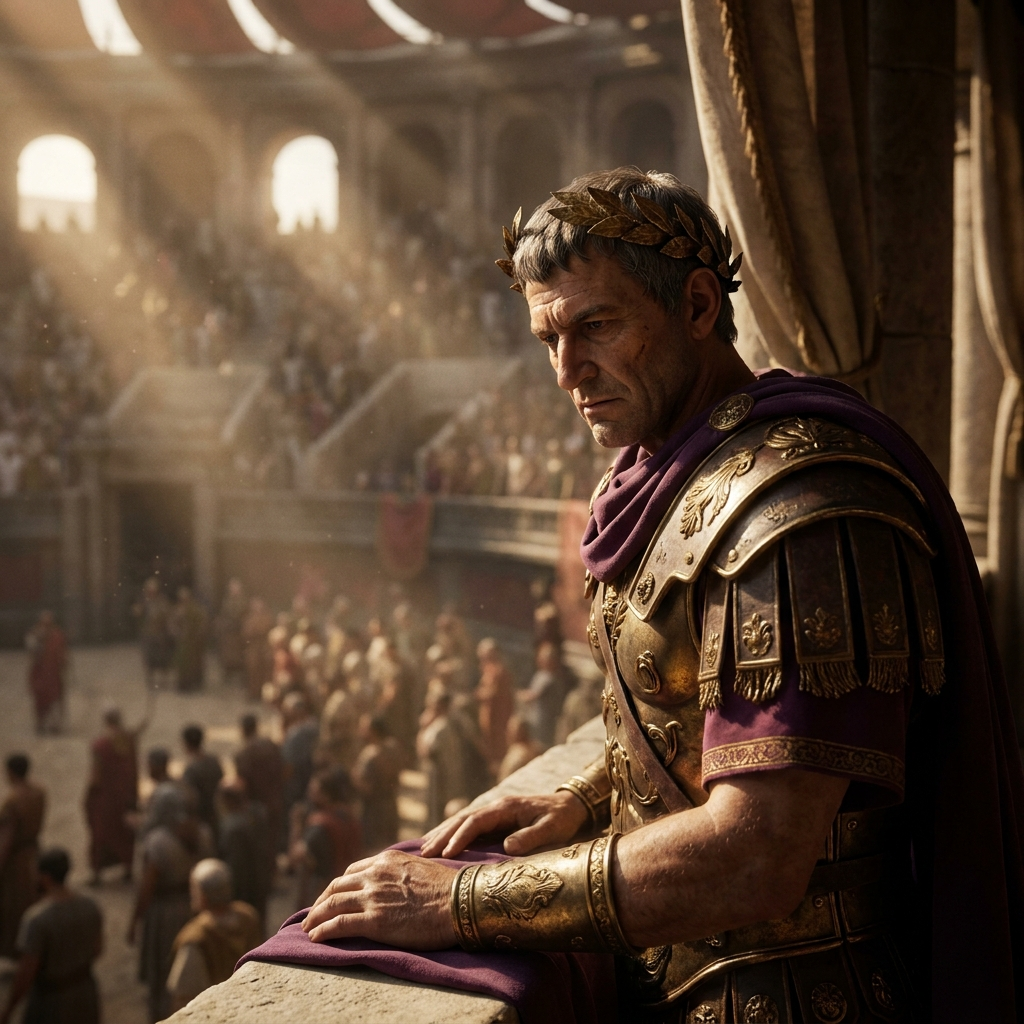
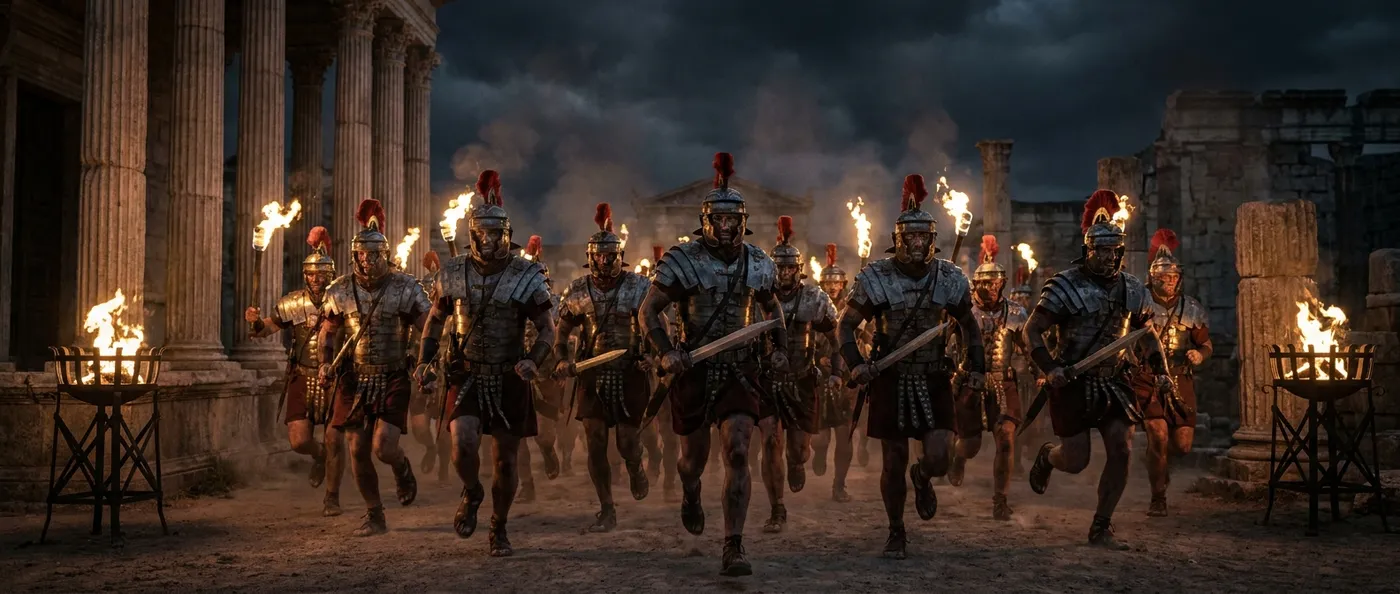
On 1 January AD 69, Galba sits on the throne of the Roman Empire. By the end of December, Vespasian is emperor. In between lie twelve months in which Rome burns through three rulers: Galba is cut down in the Forum, Otho takes his own life after a lost battle, and Vitellius is caught in his own palace and killed. Four men, one year, three violent deaths — no wonder historians simply call it the Year of the Four Emperors.
Absurd as it sounds, it was more than a chain of bloody accidents. The Year of the Four Emperors was the first civil war of the Empire, and it exposed what Augustus had carefully hidden for nearly a century: power in Rome rested neither with the Senate nor with the people, but with those who carried the swords. If you want to understand how a seemingly unshakable empire can teeter on the edge of collapse within months, this is one of the densest lessons in Roman history.
Nero is dead, and nobody knows who comes next
The trigger was Nero's fall. After the Senate declared him a public enemy, Nero took his own life on 9 June 68. With him ended the family that had ruled Rome since Augustus, the Julio-Claudian dynasty. Until then, succession had essentially been a family matter. Now there was no son, no nephew, no adoptee to claim the throne, and suddenly the question nobody had ever needed to ask was on the table: who gets to be emperor?
The answer came from Spain. Galba, an elderly and childless governor, was recognized as Nero's successor. He had one problem, though: he wasn't popular. His financial policies angered many, and several of his supporters felt cheated of the gratitude they had expected for their help. When Galba then adopted an heir, the rift became final. He chose Piso Licinianus and thereby passed over Otho, a former governor of Lusitania, who had been firmly counting on being the chosen one.
Two weeks, two emperors — and a soldier carrying a head
The first days of AD 69 showed how quickly things could turn. On 1 January, the legions on the Rhine proclaimed their commander Vitellius, governor of Lower Germany, emperor. That gave Rome two claimants, one in the capital and one at the frontier, both claiming to speak for the army.
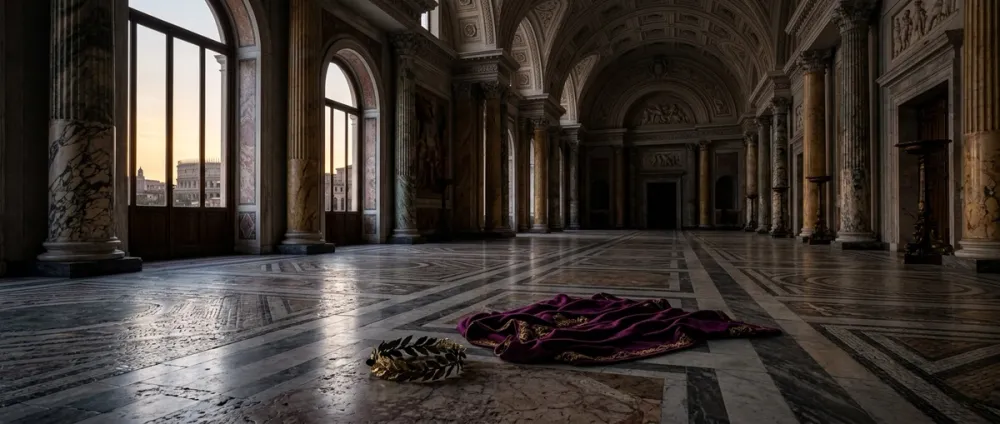
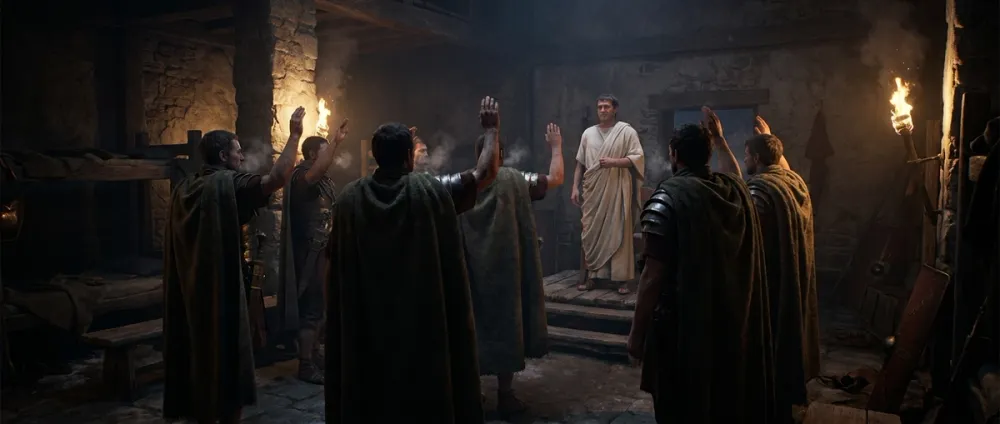
But the real decision fell in Rome itself. Otho had brought the Praetorian Guard over to his side, by bribery, as the ancient accounts stress, and on 15 January the guardsmen swore him their oath. Then they moved. Galba was killed by the Praetorians in the Forum, Piso was murdered, and Galba's body lay in the street until an ordinary soldier took the head and brought it to Otho. After barely seven months, Galba's rule was over, and the Senate confirmed Otho as the new emperor, because it had no other choice.
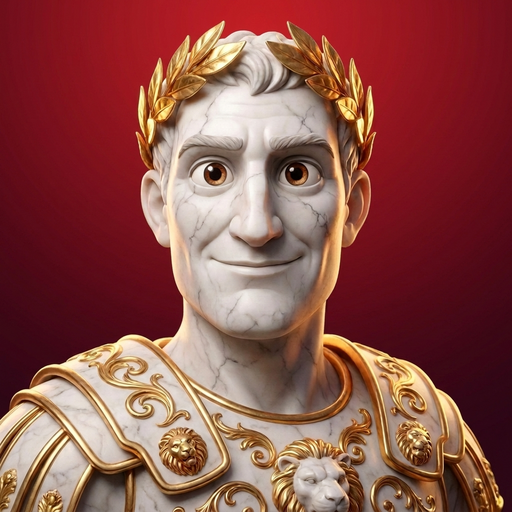
This is HistoryBytes.
Short lessons, real duels, and immersive visuals from a world of history — download it now.
Popular, determined, and still without a chance
Otho wasn't the emperor people had expected. He quickly became popular through favours and by recalling Nero's successful early years. But he couldn't negotiate one problem away: Vitellius had no intention of stepping down. Otho even offered to make him his son-in-law, but Vitellius rejected every peace offer and let his troops keep marching.
In February, two armies from Germany invaded Italy. One, under Fabius Valens, crossed the Cottian Alps; the other, under Caecina Alienus, crossed the Pennine Alps. Otho sent his soldiers out to meet the advancing legions, and at Bedriacum the decision fell against him. On 16 April AD 69, Otho took his own life at the age of 36. He had ruled for just three months and, with his death, ended a civil war he had helped start himself. The winner was Vitellius, and he marched on Rome.
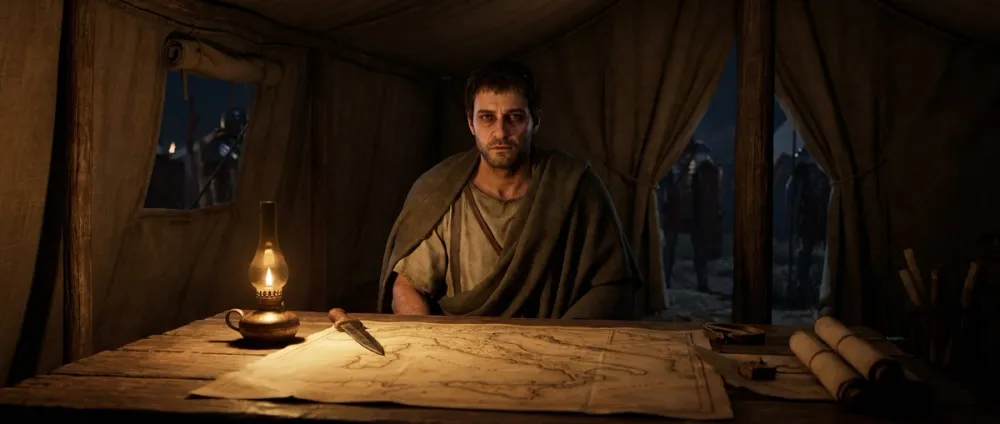
A weak emperor and an opponent who waited
Vitellius arrived in Rome in April, and from the start it went badly. Ancient accounts portray him as a weak, self-indulgent ruler who was in truth steered by his generals. That was fatal, because in the East someone was waiting who knew exactly how to run an empire: Vespasian, governor of Judaea since 67 and in the middle of crushing the Jewish Revolt.
The legions of the East declared for Vespasian, and soon the legions on the Danube joined them. What mattered about this situation: Vespasian didn't have to march on Rome himself. He could rely on allies, above all Antonius Primus, a dynamic commander of the Danube army. Primus swept through northern Italy, took city after city, and forced the troops of Vitellius into a decisive battle in October AD 69. Again it was Bedriacum. This time, though, a single misunderstanding decided it.
How a greeting to the sun decided a battle
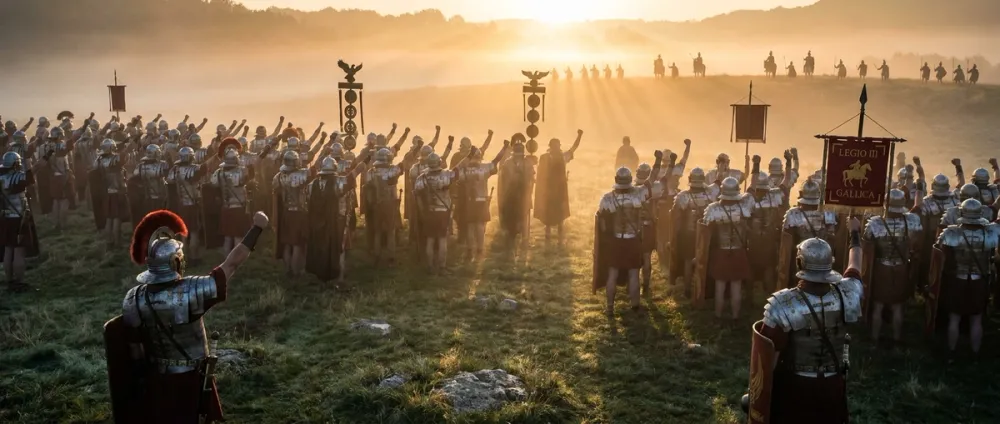
The second Battle of Bedriacum dragged on through the night, hard and without a clear front. Then the sun rose, and the Legio III Gallica did what it had grown used to during its years in Syria: the soldiers greeted the rising sun, a custom they had picked up in the East. On the other side, the Vitellians saw the cheering army in the morning light and believed reinforcements had arrived. Morale collapsed, and the battle was lost.
It is one of those details that would be hard to invent yet still appears in the sources: a ritual that had nothing to do with war tipped the decision in the struggle for the Roman Empire. The road to Rome lay open. For four legions the outcome was a disaster: XV Primigenia, I Germanica, IIII Macedonica and XVI Gallia were destroyed in the course of this struggle for the throne. Three of them had backed Vitellius; the loyalty of XV Primigenia is disputed among historians. They had served the Empire with distinction for years, and a single year on the wrong side was enough.
The end of Vitellius and a temple in flames
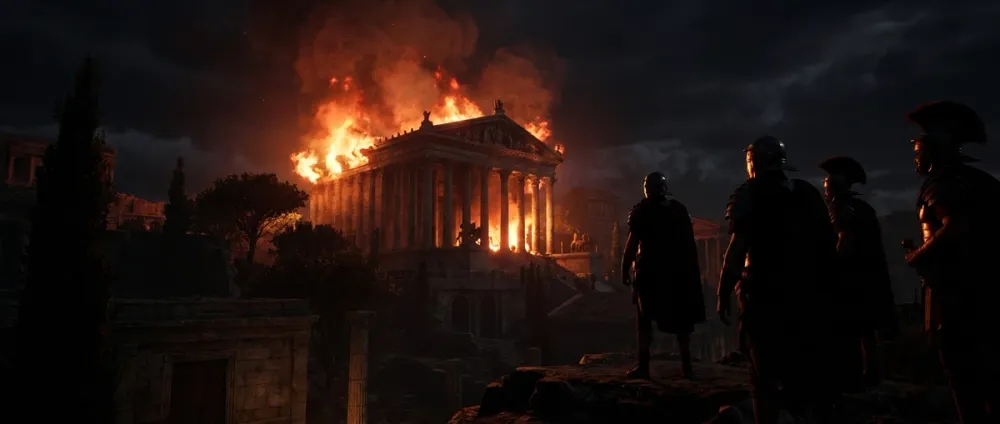
As Vespasian's armies reached Rome, Vitellius still tried to buy time. He sent envoys, accompanied by Vestal Virgins, to negotiate a truce. The next day came word that the enemy was already at the gates. Vitellius hid and prepared to flee, but returned to the palace one last time, where Vespasian's men found and killed him.
In the seizure of the capital, the Temple of Jupiter burned down, the religious heart of the Roman state. The Senate recognized Vespasian soon after, at the end of December AD 69. Rome had a fourth emperor in a single year, and this time he stayed. Vespasian ruled until his death in AD 79, and he died, a rarity in those years, of natural causes. The consequences of the chaos reached beyond that year, however: the Batavian revolt in Germania broke out as a direct aftershock of the civil war.
Why this year changed Rome's self-image forever
The historian Tacitus captured the significance of this year in a famous thought: the secret of the empire was out, an emperor could be made elsewhere than in Rome. Until AD 69, the fiction had held that the emperor was the "first citizen," carried by Senate and people, the principle we already met in the SPQR article. Now every soldier and every governor knew it took legions to become emperor.
That had consequences that stayed visible until the end of the Empire. The Praetorians, who had made two emperors in AD 69, repeated the game later in an even more brazen way: in AD 193, they literally auctioned the throne to the highest bidder. The Year of the Four Emperors was therefore no fluke but a template, a pattern that kept haunting Rome whenever an emperor died without a clear succession.
History you understand by playing it
Behind turning points like this sits exactly what carries the Emperors of Rome season in HistoryBytes: emperors, legions, and the intrigues that shaped a world empire. Season 1 is completely free to play, and once you understand how power in Rome really worked, you no longer read the Year of the Four Emperors as a list of names, but as what it was: a thriller in which, in the end, the one who had patience won.
From chaos to the Colosseum
Vespasian is remembered as the man who stabilized the Empire, and he did it not with pathos but with pragmatism. His legendary last words are said to have been: "Vae, puto deus fio," meaning "Oh dear, I think I'm becoming a god." A man who had risen as the son of a tax collector stayed a joker to the very end.
And there is a twist that seems tailor-made for this year: Otho had, back in January, still put money into finishing Nero's Golden House, the extravagant palace Nero had built after the fire of Rome. Vespasian later opened the grounds to the public and began building an amphitheatre there, which we know today as the Colosseum. Out of the chaos of AD 69 grew, of all things, the building that represents Rome to this day.