History Quiz App: How to Actually Remember History
 AI
How do you really remember history?
By quizzing yourself instead of just rereading. Studies show that retrieval practice pays off more than rereading after days and weeks, especially with feedback and spacing. A good history quiz app asks short, self-contained questions, lets you guess first, and brings material back later. It does not replace books.
Try it yourself
That is the answer in brief. If you want to try it: in HistoryBytes the Emperors of Rome season is completely free, with cards, quiz questions, and everything that appears in this article, before or after you read it.
This is HistoryBytes.
Short lessons, real duels, and immersive visuals from a world of history — download it now.
The problem is rarely understanding
You read a good article about ancient Rome, nod at every paragraph, and two weeks later barely remember which emperor came after Nero. The understanding worked, the remembering didn't. That's not your fault but the way most people study: the psychologists John Dunlosky and Katherine Rawson found in 2013, with three colleagues, that most students use rereading and highlighting even though neither reliably improves retention.
The tricky part: rereading feels like knowing. The text looks familiar, and we easily mistake familiarity for ability. The studies discussed here measured that feeling along the way.
In short: if you want to remember history, you need less reading and more self-testing. That is the idea behind every good quiz app. This article shows what the research really says, where its limits lie, how to recognize a good quiz question, and what to look for in a history quiz app. At the end there is a five-question self-test.
Self-testing beats rereading, but only after a while
The classic is a study by Henry Roediger and Jeffrey Karpicke from 2006. Students read texts and then reviewed them either by rereading or by recalling from memory. Right afterward, rereading did better. Two days and a week later it was the other way round: those who had tested themselves remembered clearly more. The rereaders felt more confident even though they knew less.
The pattern has held up in many studies. In 2011, Karpicke and Blunt showed in the journal Science that retrieval practice also produced more learning than an elaborate method, creating concept maps. Dunlosky and colleagues compared ten popular learning techniques in 2013 and gave only two the rating "high utility": practice testing and distributed practice over several days. Rereading, highlighting, and summarizing they rated as low utility. The authors summed it up this way: simply replacing rereading with delayed retrieval would help students.
Self-testing feels harder, and that is exactly the point: the effort of remembering is itself the learning. That rereading feels more comfortable is an illusion the studies measured along the way: those who test themselves often rate their learning lower even though they end up remembering more.
 AI
Why guessing before reading helps, even when you're wrong
Even more unusual is a finding called the pretesting effect: if you are asked a question before you know the answer and get it wrong, you learn the right answer better afterward. Nate Kornell, Matthew Hays, and Robert Bjork showed this in 2009 with tasks whose answer could not be guessed. Those who had to guess first knew more later than someone who spent the same time just reading the answers. Lindsey Richland and colleagues found similar results the same year with a text about vision.
The qualification matters: the benefit applied mainly to the content you were asked about beforehand. For other parts of the text there was neither advantage nor disadvantage. In several studies the effect lasted at least 24 hours, and it needs feedback with the right answer, which according to Kornell (2014) may even come delayed. A related finding is called hypercorrection: errors you were sure about are especially often corrected later (Butterfield and Metcalfe, 2001), probably because of the surprise.
A review by Steven Pan and Shana Carpenter (2023) sums up the situation as: guessing before learning can improve retention. For a learning game that means a question before the story is not an imposition but a tool.
 AI
Spacing, difficulty, and limits
Repeating with spacing: besides self-testing, Dunlosky and colleagues also rated distributed practice as high utility, that is, spreading the same practice over several days instead of doing it all at once. That explains why cramming before an exam does for the next morning and hardly for the next weeks. Karpicke and Roediger found in 2007 that retrievals at equal intervals promote long-term retention better than retrievals at growing intervals, which bring more in the short term. A 2021 meta-analysis examined the benefit of spacing out retrieval practice, and Katherine Rawson showed that retrieval works better when more time lies between tests and the tests are harder. For an app this means questions should not come only right after the story but should return later.
Self-testing is not a magic word. First, the benefit doesn't come automatically: according to an overview by Karpicke the learning gain grows when you often get it right at the first retrieval, from about 75 percent. The questions should challenge but not overwhelm. Second, the 2011 comparison with concept maps has been criticized methodologically: a 2023 paper argues the retrieval group there also memorized additionally, so the finding is rather that retrieval plus memorizing beats a concept map without memorizing.
Third, almost all studies come from the lab and the classroom, with students and mostly with texts or fact lists. Whether and how strongly the effect works in a learning app where you play in short units on the go is thus not measured, not for HistoryBytes either. Fourth, self-testing does not replace understanding: you can only quiz what you have already met. A history app that only asks questions would be a flashcard deck. Only the story before it gives the quizzed fact a place.
Which question types do what
According to the 2013 overview, practice tests that demand more effort when remembering tend to promote retention more strongly than those that demand less. That holds for all formats: the question should challenge, not merely test recognition. The team around Smith and Karpicke examined in 2014 retrieval practice with short answers, multiple choice, and mixed tests.
In a quiz app you mostly meet three types. In matching you connect terms, people, or places and test relationships. In multiple choice you choose among several answers and test whether you recognize the right one. In true or false you judge a statement. Each type asks something different, and that is why they shouldn't ask the same thing twice. In HistoryBytes the three types within an episode deliberately never ask the same thing.
 AI
How to recognize a good quiz question
These are the rules by which we write the quiz questions for HistoryBytes. They are not research results, but they follow what is said above.
The question doesn't give away the answer. If the name of the solution is already in the question, nothing is remembered, only recognized.
The question is short. Whoever must read three subordinate clauses has forgotten the core before answering.
The question can be understood on its own. Questions come back later individually, so no question may refer to "earlier" or "that night" but names place, time, or person.
The wrong answers are plausible and about as long as the right one. Otherwise whoever picks the longest answer wins.
Only what came up before is asked. Anything else tests prior knowledge, not learning.
After the answer comes an explanation. Feedback corrects mistakes; without it a wrong guess stays in your head.
Checklist: How to recognize a good history quiz app
When you compare apps, these eight questions help without your needing to know a name.
| Criterion | How you recognize it |
|---|---|
| You are quizzed, not just informed | Every unit has questions, not only at the end of a long chapter. Retrieval practice is the technique with the best evidence. |
| You may guess first | Before reading there is a question you needn't be able to answer (pretesting). |
| There is immediate feedback | After every answer it says what was right and why. |
| Questions come back later | What you learned reappears after days, for example in a mixed mode (distributed practice). |
| Every question stands alone | It names place, time, and person and needs no context. |
| Several question types | Matching, multiple choice, and true or false instead of always the same form. |
| The difficulty fits | You are often right but have to think. Too easy and too hard bring little. |
| You can test it for free | A fair free tier instead of a trial that quietly expires. |
How HistoryBytes does it
We built HistoryBytes on these ideas and say honestly: how strongly they work for you, we have not measured. The studies refer to learning strategies, not to our app.
Guess first, then read. Before the cards with the story comes a guess question, for example about a year or a number. You may be off, then you read the answer in the story. That corresponds to pretesting.
Four cards, then questions. Each episode tells a story in four cards, then come quiz questions in the three types matching, multiple choice, and true or false. In between there are short stops such as "Put them in the right order," "Who is this?," and "Guess the year."
Context and help. For many questions you see how many other players got them right, in the manner of "Only 38 percent knew this" (an example). That is a comparison and not evidence of learning, but it makes the question more tangible. When you're stuck, the "Council of History" joker gives you a hint.
Repeating and measuring. In mix mode questions reappear individually, detached from the episode. That is why every question is written so that it can be understood without context. With other players you can compete in 1v1 duels.
On top of that come streaks and XP, which are meant to keep the momentum. Whether they promote learning itself we have not examined, they are motivation and not evidence of learning.
And the price: the Emperors of Rome season is completely free, and of every other season the first five episodes are free, without ads. So you can test the principle before you pay.
 AI
Five questions for a self-test
If you know the Rome articles in this blog, you can quiz yourself here. Guess first, look below only afterward.
1. In which year did Rome have four emperors after Nero's death?
2. What does the abbreviation SPQR stand for?
3. True or false: Most gladiator fights ended with the death of the loser.
4. Where was Nero, according to Tacitus, when the fire of Rome broke out in July AD 64?
5. Which spelling of the number four appears on most tower clocks: IV or IIII?
Answers: 1. In AD 69 (Galba, Otho, Vitellius, and Vespasian). 2. Senatus Populusque Romanus, "the Senate and the People of Rome." 3. False: in Pompeii about one in five fights ended in death, other estimates say 10 to 20 percent. 4. In Antium, about 50 kilometers south of Rome. 5. IIII.
Answer the five questions again in three days without looking. If you still know them then, the retrieval has worked. If you were sure about a question and got it wrong, that is not a failure: such errors, according to the studies, are especially often corrected later and then stick well.
What the studies show and what they don't
To wrap up, everything at a glance, with finding and assumption kept apart.
| Category | What belongs here |
|---|---|
| Well documented | Retrieval practice beats rereading after a delay (Roediger and Karpicke, 2006); practice testing and distributed practice are "high utility," rereading, highlighting, and summarizing low utility (Dunlosky et al., 2013); guessing before learning improves retention of the asked content, even with wrong answers (Kornell, Hays, and Bjork, 2009; Richland et al., 2009) |
| With qualification | Advantage over concept maps (Karpicke and Blunt, 2011), methodologically criticized (2023); pretesting works mainly for what was asked; larger gain with a high success rate (from about 75 percent); studies mostly with students and texts |
| Open | Effect in history learning apps in short everyday units (not measured); how long retention lasts with everyday use; whether game elements like XP or duels help or distract |
History stays when you fetch it
History is not a fact list, but it consists of things you want to remember: names, dates, places, and the stories that connect them. The way there is less comfortable than rereading and clearly more effective: guess, look up, fetch it again later. A good history quiz app turns that into not an exam but a rhythm of a few minutes. Whether you need an app for it is up to you. The idea also works with flashcards and a book. As a rule of thumb without an app: after every article write down three questions, answer them the next day without looking, and again after a week.
 AI
Sources and date: 11 November 2026
Henry L. Roediger and Jeffrey D. Karpicke, "Test-enhanced learning: Taking memory tests improves long-term retention," Psychological Science 17 (2006); Jeffrey D. Karpicke and Janell R. Blunt, "Retrieval practice produces more learning than elaborative studying with concept mapping," Science 331 (2011); John Dunlosky et al., "Improving students' learning with effective learning techniques," Psychological Science in the Public Interest 14 (2013); Nate Kornell, Matthew J. Hays, and Robert A. Bjork, "Unsuccessful retrieval attempts enhance subsequent learning," Journal of Experimental Psychology: Learning, Memory, and Cognition 35 (2009); Lindsey E. Richland, Nate Kornell, and Liche S. Kao, "The pretesting effect," Journal of Experimental Psychology: Applied (2009); Brady Butterfield and Janet Metcalfe, JEP:LMC 27 (2001); Nate Kornell, JEP:LMC 40 (2014); Steven C. Pan and Shana K. Carpenter, "Prequestioning and pretesting effects," Educational Psychology Review (2023); Jeffrey D. Karpicke, "Retrieval-based learning: A decade of progress" (2017). This page is updated when new research is published.
Experience the Roman Empire in HistoryBytes
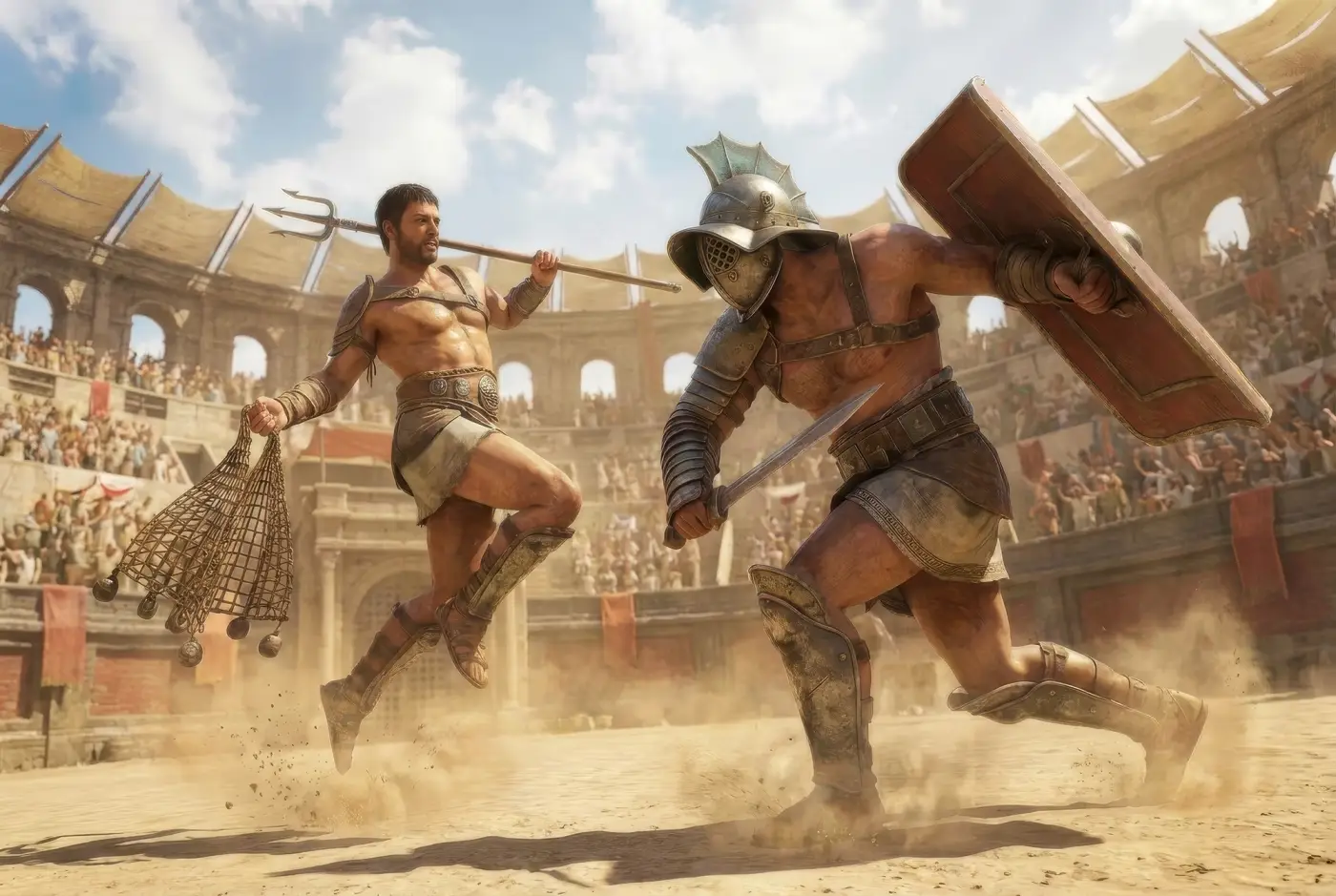
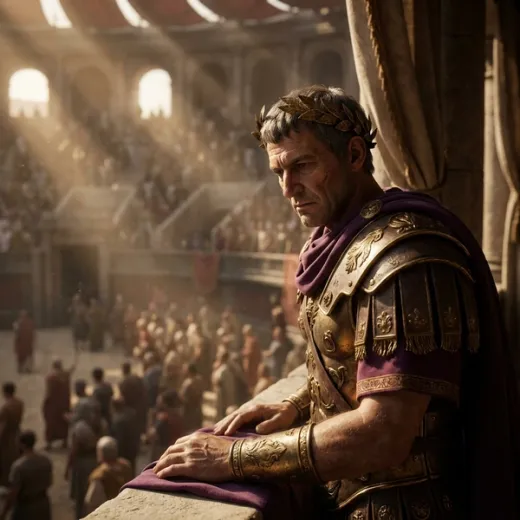
Emperors of Rome
From Caesar to Constantine — in the Emperors of Rome season, the age of the Roman emperors comes alive. Story campaigns, quizzes, and real immersion into a world of power, intrigue, and legions.
Completely freeEmperors of Rome is completely free and ad-free.