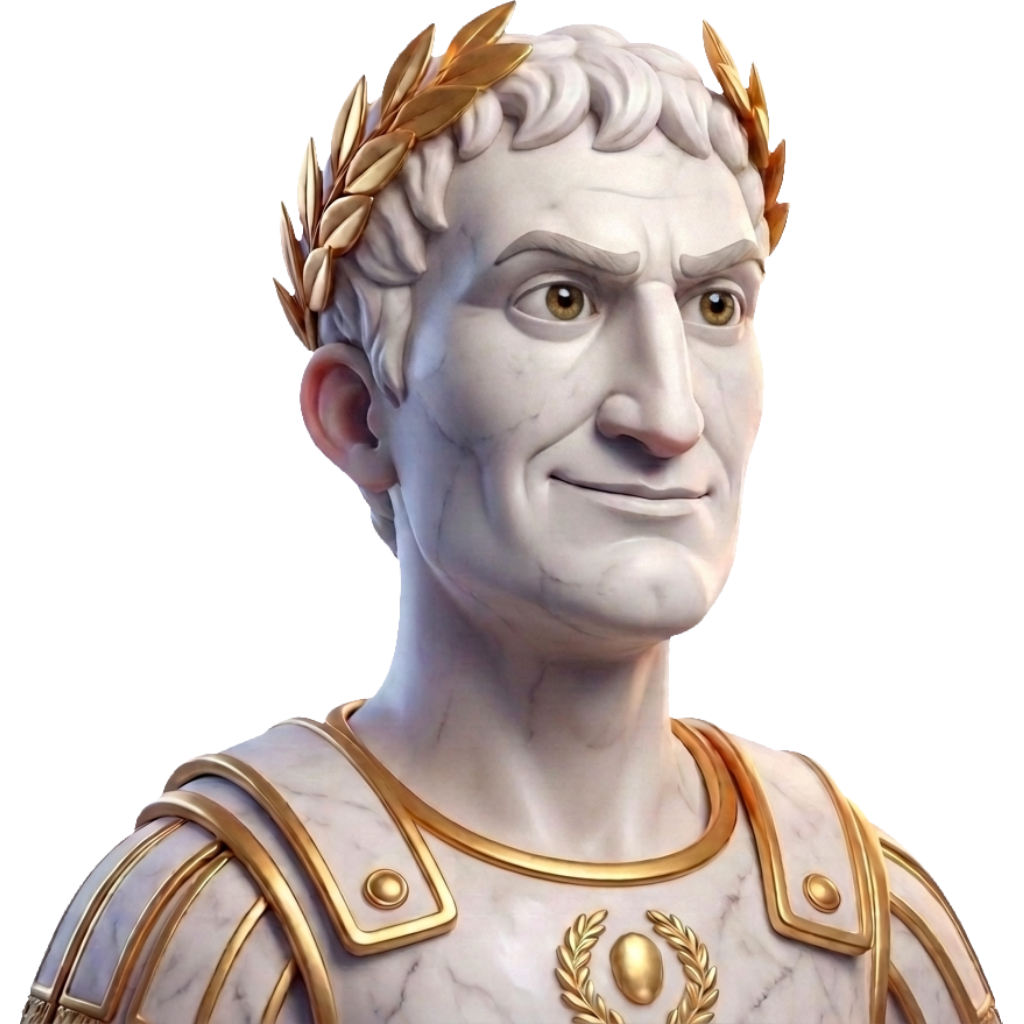

 AI
AIHannibal at the gates
In 218 BC, the Carthaginian general Hannibal crossed the Alps with his army and war elephants and brought Rome to the brink at Cannae. Only Scipio defeated him in 202 BC at Zama.
 AI
AILegions that conquered the world, emperors between madness and genius, and games before 50,000 spectators: experience Rome from the war against Carthage to the rise of Christianity. The people, places and dramas that shaped an empire.
We take you into the heart of the empire: From deadly whispers in the Senate to the roar of the Colosseum.
Ruling here means: Becoming a god or ending in the dust. Welcome to Eternal Rome.
AIIn 218 BC, the Carthaginian general Hannibal crossed the Alps with his army and war elephants and brought Rome to the brink at Cannae. Only Scipio defeated him in 202 BC at Zama.
 AI
AIIn 49 BC, Caesar crossed the border river Rubicon with his legion and started a civil war. He became sole ruler, until senators murdered him on the Ides of March in 44 BC.
 AI
AIIn AD 9, the Germanic leader Arminius lured three Roman legions into an ambush and destroyed them. Afterwards, Rome gave up its plans to conquer Germania up to the Elbe.
 AI
AIFrom Augustus to Constantine, emperors ruled somewhere between genius and madness. In AD 64, Rome burned for days. That Nero played music while it burned is a legend, but he did blame the Christians.
 AI
AIGladiators, chariot races and even naval battles: emperors had artificial lakes built for their games. According to ancient accounts, the arena itself was flooded when the Colosseum opened in AD 80.
 AI
AIIn AD 312, Constantine won at the Milvian Bridge under the sign of Christ. A year later he granted Christians religious freedom, and the once persecuted faith became the religion of the empire.
Swipe for more →
The Roman Empire was one of the largest and longest-lasting empires in history. From a small town on the Tiber, Rome came to rule the entire Mediterranean world at its height, from Britain to Mesopotamia.
According to legend, Rome was founded in 753 BC. From 509 BC it was a republic, and from 27 BC an empire. The Western Roman Empire ended in AD 476, while the Eastern Roman Empire lasted until the fall of Constantinople in 1453.
Augustus, Julius Caesar's great-nephew and adopted son, became the first emperor in 27 BC. Caesar himself was never emperor but dictator for life, until he was assassinated in 44 BC.
It reached its greatest extent around AD 117 under Emperor Trajan, covering about five million square kilometers. A network of roads, harbors and frontier defenses such as Hadrian's Wall held it together.
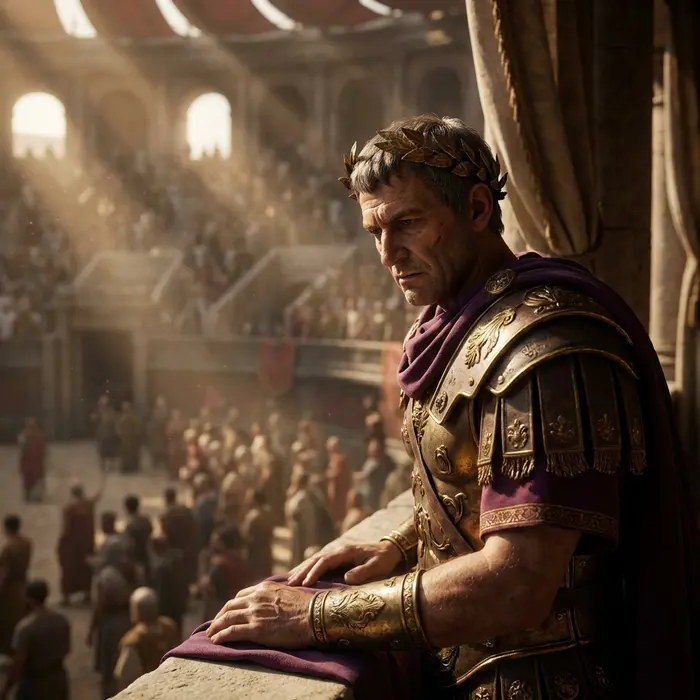
The Colosseum opened in AD 80 and held around 50,000 spectators. It hosted gladiator fights, wild beast hunts and executions, part of the games emperors used to win over the people.
Most people in Rome lived in multi-storey apartment blocks. Public baths, aqueducts bringing fresh water and busy markets shaped daily life. A fish sauce called garum was the most popular seasoning.
There were many reasons: civil wars, economic crises, pressure from Germanic peoples on the borders and the division of the empire. In 476, the Germanic leader Odoacer deposed the last Western emperor, Romulus Augustulus.
In HistoryBytes, you experience the Roman Empire in short episodes: the people, places, events, ideas and objects of the era. Piece by piece, you build the whole picture, from Hannibal to Constantine. Season 1 is completely free.
Every episode, no ads, no credit card. Get the app and start right away.
Yes. Season 1 is completely free, forever, with no ads and no credit card.
Emperors of Rome has 204 episodes covering the people, places, events, ideas and objects of the era.
iPhone, iPad and Android. Your progress is tied to your account and syncs across all your devices.


