Samurai Turned CEOs: How an Ex-Samurai Founded Mitsubishi
 AI
AI"A warrior's business": a byword for bankruptcy
When Japan abolished the samurai in the 1870s, about 1.9 million members of the class lost their secure income. Many tried trade or farming, and most failed so often that a phrase arose: "bushi no shōhō," a warrior's business, became a byword for commercial incompetence.
Three men did the opposite: Iwasaki Yataro, the son of a family that had sold its samurai status, founded Mitsubishi. Shibusawa Eiichi, a farmer's son who became a retainer of the last shōgun, founded about 500 companies and is today on the 10,000-yen note. Godai Tomoatsu, a samurai from Satsuma, made Osaka a trading city.
In short: with the abolition of the samurai from 1871 to 1876, Japan lost its warrior caste, and some former samurai built the modern economy instead. They shared certain conditions: experience with trade or foreign countries from the last years of the shogunate and closeness to the new government.
 AI
AIFrom 1871 to 1876
The samurai made up about 1.89 million people, with families about 4 million, or 5 to 6 percent of the population. The reformers of the Meiji era were often samurai themselves, but they dismantled the class step by step: on 14 July 1871, all 261 domains were dissolved and replaced by prefectures. Samurai stipends at that time made up nearly half of all tax revenue, which the state could not bear. On 10 January 1873, universal conscription took away their monopoly on military service.
On 28 March 1876, the Haitōrei banned wearing swords in public, and on 5 August 1876, the stipends were finally converted into interest-bearing government bonds. For many samurai the bonds weren't enough to live on, and most sold them within a few years. The answer was partly violence: the last samurai uprising, the Satsuma Rebellion of 1877, was crushed by a conscript army. Most others had to find a new occupation.
 AI
AIFrom Tosa to Nagasaki
Iwasaki Yataro was born in 1835 in the village of Inokuchi in the Tosa domain on the island of Shikoku, though sources also give 1834. His family was a special case: his great-grandfather had sold the family's samurai status to pay debts, and Yataro grew up as the son of a simple farmer. At 19, he followed a domain official to Edo and studied under the reformer Yoshida Toyo, which got him a clerk's job in the Tosa administration. He saved and bought back the family's samurai status.
Tosa was strictly layered: between high and low samurai there was a sharp divide, even in where they lived, and Sakamoto Ryōma, from a family that had bought its rank through sake brewing, remained low-ranking all his life. That explains why the Tosa elite gave talents like Iwasaki chances that would have been absent in other domains. In 1867, Iwasaki became head of the domain's trading operations in Nagasaki, and in 1869 he was transferred to Osaka.
 AI
AI
This is HistoryBytes.
Short lessons, real duels, and immersive visuals from a world of history — download it now.
How the domain's shipping business became Mitsubishi
The Meiji government wanted to ban businesses run by domains. That is why the Tosa politicians Gotō Shōjirō and Itagaki Taisuke founded Tsukumo Shōkai in 1870 to take over the domain's shipping business. Iwasaki became president in March 1870 and took over three steamships that were chartered from the domain. In 1873, the company was renamed Mitsubishi Shōkai.
The name comes from the emblem: "mitsu" means three, "hishi" denotes a water caltrop or rhombus. The emblem joins the three oak leaves of the crest of the Tosa ruling house Yamauchi with the three stacked diamonds of the Iwasaki family crest. He did not put his own name on the company but a sign that joins his first employer and his family.
 AI
AITaiwan, Satsuma, and the rise to a conglomerate
The breakthrough came from the state. In 1874, Mitsubishi supplied ships for the government's Japanese Expedition to Taiwan, a military expedition against the Paiwan, and afterward received the ships procured for it, by one account around 30. In 1875 the company was called Mitsubishi Mail Steamship and inherited staff and facilities of a postal service dissolved by the state. In 1877, Mitsubishi ships carried the troops that crushed the Satsuma Rebellion, the last samurai uprising.
That was a lucrative business: in 1880 Iwasaki founded an exchange house, in 1881 he bought the Takashima coal mine near Nagasaki, later he leased the Nagasaki shipyard from the state, which was the start of manufacturing. Against the rival Kyōdō Un'yu he fought a hard price war. He died in 1885 of an illness, and his brother Yanosuke and later his son Hisaya took over. The Mitsubishi group existed as a zaibatsu from 1870 to 1946.
From arson plot to banker
Shibusawa Eiichi was born on 16 March 1840 to a well-off farming family in Chiaraijima, today Fukaya in Saitama Prefecture. As a young man he belonged to the anti-foreign movement and in 1863 planned to attack and burn the foreign settlement at Yokohama. He gave up the plan, traveled to Kyoto, and through an acquaintance became a retainer of the Hitotsubashi family. When its head Tokugawa Yoshinobu became the last shōgun, Shibusawa also became a retainer of the shogunate, and according to Britannica, Yoshinobu had granted him samurai status.
In 1867, he traveled as part of the delegation of Tokugawa Akitake, the younger brother of the shōgun, to the Paris World's Fair and was, at 27, turned around by the impression of European progress, giving up his xenophobic views. In 1873 he left the Ministry of Finance and became president of the Dai-Ichi Kokuritsu Ginkō, Japan's first national bank, which he had reorganized from a bank of Mitsui and Ono. That same year he founded the Ōji paper company, ten years later the Osaka Spinning Company, and in 1878 he took part in founding the Tokyo Stock Exchange.
 AI
AIAbout 500 companies and the man from Satsuma
In all, Shibusawa was involved in founding about 500 companies, among them the Mizuho group, the Imperial Hotel, Tokyo Gas, Tokio Marine, the Sapporo brewery, and the shipping line NYK, plus about 600 schools, hospitals, and welfare organizations. On 3 July 2024 he appeared on the new 10,000-yen note, the first time in 40 years that the portrait on that note changed. He died on 11 November 1931 at the age of 91.
His western counterpart is Godai Tomoatsu, born in 1836 in Kagoshima in Satsuma, a samurai who in 1864, in Satsuma's war with Britain, commanded a ship and was taken prisoner by the British. In 1865 he traveled with the "Satsuma students" to England, where the Manchester Chamber of Commerce is said to have impressed him. After the Restoration, he left the government in 1869 and made Osaka the center of a network of companies. He founded the Osaka Chamber of Commerce (1878) and the Osaka Stock Exchange and died in 1885 at 49, the same year as Iwasaki. There was a scandal for him too: in 1881 he drew criticism over a sale of property of the Hokkaido Development Commission.
 AI
AIForeign experience and closeness to the government
Looking at their lives, you find similarities. All three had dealt with trade or foreign countries already in the last years of the shogunate: Iwasaki ran Tosa's trading operations in Nagasaki, Shibusawa saw the World's Fair in Paris, Godai was in England. And all three stood close to the new government: Iwasaki received state contracts for Taiwan and Satsuma, Godai had close ties to the Meiji leadership, Shibusawa came from the Ministry of Finance.
Closeness to power is part of the truth. Their success was not only business sense but also access, and that is exactly what most ex-samurai lacked. That a conglomerate resulted was thus less coincidence than the consequence of an opportunity that few had and fewer still used.
The overview at a glance
To wrap up, the short version, so fact and story don't blur.
| Category | What belongs here |
|---|---|
| Well documented | The abolition of the domains on 14 July 1871, of the samurai monopoly via conscription on 10 January 1873, the sword ban on 28 March 1876, the conversion of stipends on 5 August 1876; Iwasaki as founder of Tsukumo Shōkai (1870) and Mitsubishi; the emblem from the Tosa and Iwasaki crests; the ships for the 1874 Taiwan Expedition and the 1877 Satsuma Rebellion; Shibusawa on the 10,000-yen note since 3 July 2024; the Dai-Ichi bank in 1873; Godai's Osaka foundations |
| Handed down | That Iwasaki's great-grandfather sold the samurai status and Yataro bought it back (account of Mitsubishi's corporate history); the figure of 30 ships after the Taiwan expedition; "about 500" companies for Shibusawa; that the Manchester Chamber of Commerce inspired Godai |
| Open | Iwasaki's birth year (1834 or 1835); the exact date of the renaming to Mitsubishi (1872, 1873, or 1874 depending on the source); the founding year of the Osaka Chamber of Commerce (1878 or 1880); how much of the success was access to the government and how much business sense |
One picture from five angles
This story shows how a class goes under and its people carry on. That's why every season in HistoryBytes is split into five categories, and this story touches all five: Iwasaki Yataro as a person, Nagasaki as a place, the sword ban of 28 March 1876 as an event, "bushi no shōhō" as an idea, Mitsubishi's three-diamond emblem as an object. That's how the Whispers of the Samurai season builds the whole picture of a world that did not end at the Battle of Sekigahara but only with the Meiji era.
From the sword to the ledger
The sword was the sign of the samurai, and after 1876 hardly anyone was allowed to wear it. What remained was a class without a task and a country that needed entrepreneurs. Most samurai failed at this changeover, three of them built conglomerates. Today the three-diamond sign stands on cars and factory halls, a farmer's son looks out from the banknote, and in Osaka the stock exchange recalls a man from Satsuma. The warrior caste has disappeared, their names stand on Japan's economy.
 AI
AIStep into the world of the samurai in HistoryBytes
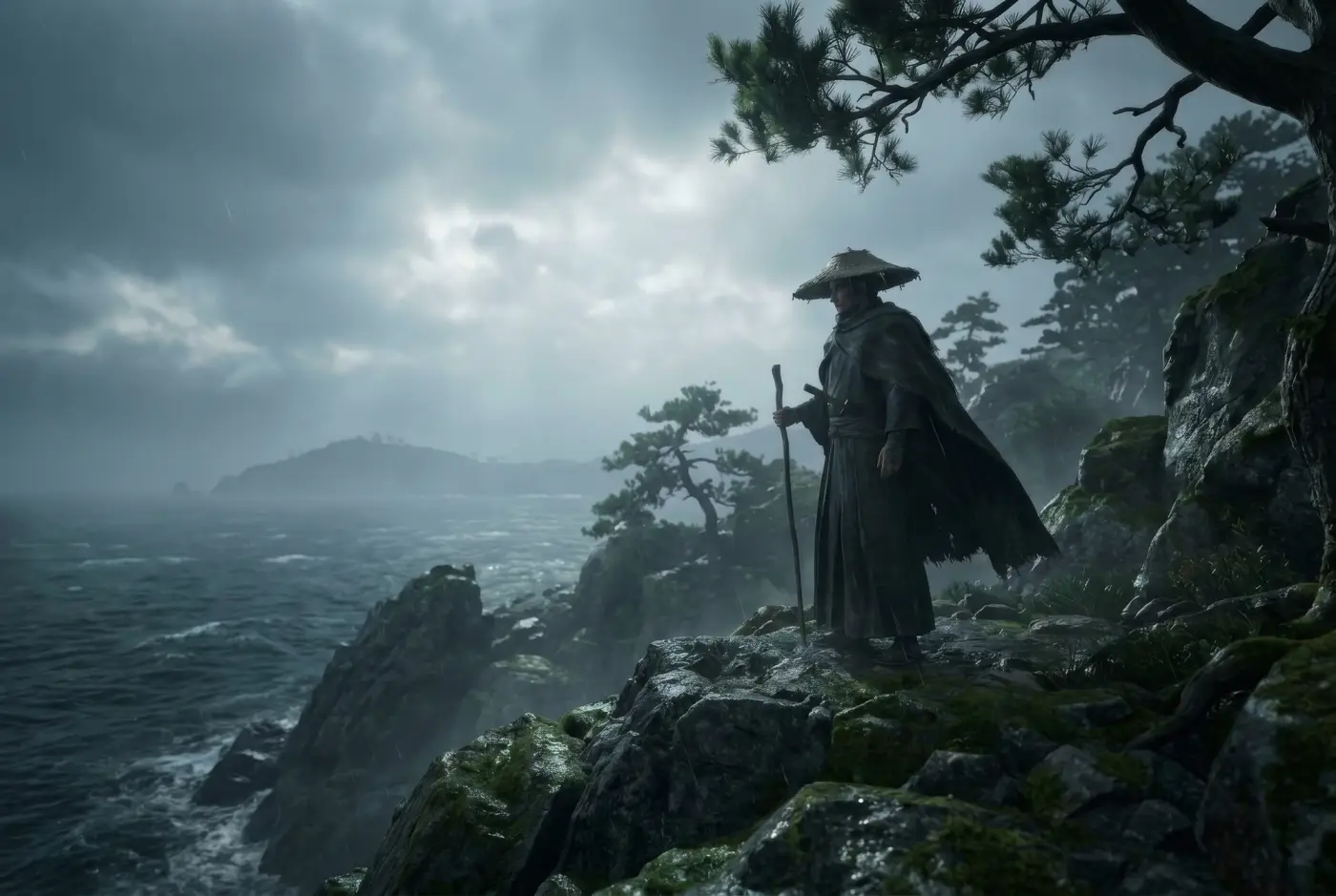
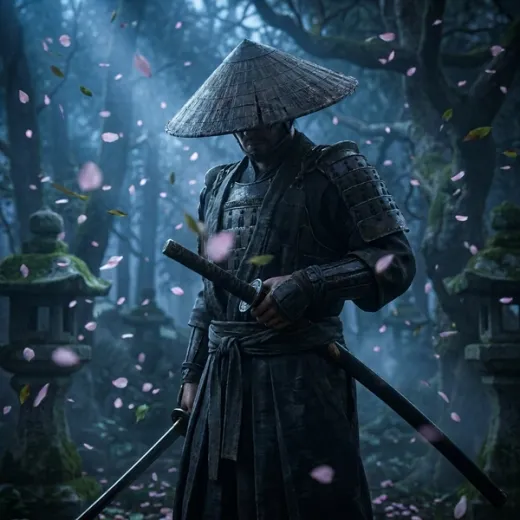
Whispers of the Samurai
From rising warlords to the battles that united a country — in the Whispers of the Samurai season, the age of the samurai comes alive. Story campaigns, quizzes, and real immersion into a world of power, betrayal, and change.
5 episodes freeThe first 5 episodes are free, Premium unlocks the rest.