1,000 Roman Dice Found: Ancient Las Vegas or Shrine?
 AI
More than a thousand dice at one building
Normally, archaeologists find ten or fifteen dice at Roman excavations. At Grand, a village of a few hundred people in the Vosges in northeastern France, they recovered more than 1,000 bone dice next to a single small building. Headlines spoke of an "ancient Las Vegas." The excavators themselves make no such claim, the excavation report does not make that claim.
In short: the find is extraordinary, but it does not prove that Grand was a gambling center. The dice could stand for play, for production, or for ritual. And it recalls a story that could hardly be more contradictory: Rome banned dice, and its emperors loved them.
A Gallo-Roman town in the Vosges
In Roman times, Grand was a Gallo-Roman town of more than 70 hectares with monumental buildings. The amphitheater measured about 148 meters and held more than 17,000 spectators, who watched gladiatorial contests and animal displays there. There was also a sanctuary of the healing god Apollo Grannus. The Roman town was called Andesina and belonged to the Leuci tribe, its population is estimated at 15,000 to 20,000. The amphitheater was built between 80 and 140 AD and is considered the eighth largest in the Roman world, it measured 148 by 64.5 meters. It lay outside the town wall and was abandoned in the 4th century, after which the inhabitants took stones from it.
The archaeologists returned in 2022 to a part of the town to re-examine buildings first studied in the 1960s. What is new is the quantity of dice, which nobody had expected.
 AI
Why a town in the forest grew so large
Grand lies on a forested plateau, away from the empire's major trade and military routes. That a town of this size arose there it owes, according to the Princeton Encyclopedia of Classical Sites, to the cult of a native healing god, replaced after the Roman conquest by a sanctuary of Apollo. The Romans therefore made Grand an example of their town-founding policy. The town was destroyed several times, but occupation did not break off from Gallic independence into the Merovingian period.
Among the remains is a basilica whose floor is covered by a mosaic of 232 square meters, one of the largest in Europe, discovered in 1883 and identified in 1961 and 1962 as part of a basilica. At its center it shows a theater scene from Menander's play "Phasma" and in the corners four animals. The mosaic pieces were also called "tessera" in Latin, like the Roman dice.
An emperor also appears: according to Cassius Dio, Caracalla suffered from physical and mental ailments and sought help from Apollo Grannus, Asclepius, and Serapis, without it helping him. Whether he came to Grand in 213 for this is disputed. An inscription found at Grand names "Antoninum," Caracalla's cognomen, but more recent research also considers the sanctuary at Faimingen in Raetia possible. Donations from the emperor are said to have paid for the mosaic and the renovation of the west side of the amphitheater.
 AI
What exactly was found
By July 2026, the team had recovered more than 500 dice, later reports give over 1,000, according to France 3 Grand Est. The dice are made of bone and carry small concentric circles, the "eyes." Three dice came from the building's foundations, which suggests they were connected to activities at or in the building and were not just lost by passersby.
About 20 meters north of the building, the archaeologists traced a narrow conduit, water played an important role in Grand. The building itself is small, and it isn't clear what it was used for.
This is HistoryBytes.
Short lessons, real duels, and immersive visuals from a world of history — download it now.
Gambling den, workshop, or shrine?
The specialist sites name three possibilities, and none is proven. First, a gaming venue where people threw dice and bet. Second, a workshop: the dice could have been made there, in which case the finds would be evidence of production and not of play. Third, a ritual place: dice also served divination in ancient Greece, and Grand had a sanctuary of a healing god, Apollo Grannus. The line between play, chance, and oracle was fluid.
The headline about an "ancient Las Vegas" is thus a media flourish. The excavators themselves say the finds do not prove that Grand was a Roman gambling center. And dice themselves aren't rare: gaming objects have been found across the empire. What is rare is the number.
 AI
Tali and tesserae
The Romans knew two kinds of dice: the tesserae, six-sided dice like today's, thrown three at a time, and the tali, originally ankle bones of animals, of which four were thrown, the side on which the bone lay being counted. The Latin word for dice gambling was "alea." One threw from the hand or from a dice cup.
The best throw was called "Venus": with the tesserae three sixes, with the tali four different sides. The worst was called "dog" (canis): three aces with the tesserae, four identical sides with the tali. While throwing, players voiced their wishes or called the name of their lover.
Roman gambling between law and passion
Gambling for money in Rome was largely banned, with exceptions: in December, during the Saturnalia, one could throw dice, and bets on chariot races and contests also remained allowed. The Saturnalia was a festival in which roles were reversed and gifts exchanged. According to one account, violations carried infamia, the loss of civic honor. It was hardly enforced: large sums changed hands not only in gambling houses but also in private homes.
The emperors led the way themselves. According to Suetonius, Augustus was a passionate gambler who did not limit himself to the Saturnalia and in a letter admitted heavy losses. According to Suetonius, Claudius played "most avidly" and wrote a book on the art of dice, "De arte aleae," which is lost. He also had a gaming table built for his carriage so he could play on bumpy roads. Ancient biographers also portray Caligula, Nero, and Commodus as enthusiastic gamblers or addicts.
 AI
Rigged dice and a famous phrase
That many Romans didn't take the ban seriously is shown by finds, among them a rigged die of polished bone found in 1992 in Limoges (Roman Augustoritum) in a basement room from the second half of the 1st century AD. The researcher Thomas Daniaux studied unusually shaped dice from Gaul and Germany and sees in them signs of cheating and of a hidden but well-known side of the life of the Roman elite, who gambled despite many bans.
The word "alea" is known from a famous phrase: when Caesar crossed the Rubicon with his legions, he is said to have said "iacta alea est," "the die is cast." That is how Suetonius reports it, Greek sources like Plutarch and Appian render the phrase in Greek. "Alea" means dice game, and the allusion is clear: Caesar put the state up as the stake.
The overview at a glance
To wrap up, the short version, so fact and story don't blur.
| Category | What belongs here |
|---|---|
| Well documented | More than 500 dice by July 2026, later reports over 1,000, next to a small building at Grand; bone dice with concentric circles; three dice from the foundations; Grand with an amphitheater for over 17,000 spectators and an Apollo Grannus sanctuary; Roman dice types tali and tesserae; Venus and dog as best and worst throws; gambling for money largely banned, exception Saturnalia and sports betting; the rigged die from Limoges |
| Handed down | Augustus's passion and his letter about losses (Suetonius); Claudius's book on dice and the gaming table in his carriage (Suetonius); Caligula, Nero, and Commodus as gamblers (ancient biographers); the phrase "alea iacta est" in Suetonius's version; infamia as punishment |
| Open | What the building at Grand was used for; whether the dice were played with, made, or used ritually there; how exactly the figure of over 1,000 arises (reports differ); why so many dice lay in one place |
One picture from five angles
The dice of Grand show how much can be contained in a small object. That's why every season in HistoryBytes is split into five categories, and this story touches all five: Emperor Claudius as a person, Grand in Gaul as a place, the Saturnalia in December as an event, gambling between ban and passion as an idea, the bone die as an object. That's how the Emperors of Rome season builds the whole picture of a world in which laws and habits often diverged.
The die is cast, the question remains
Whether at Grand people threw dice, made them, or prayed with them, we don't know. What is certain is that more than 1,000 small bones lay in one place, and that the Romans who used them knew a ban and flouted it anyway. The headline about a gamblers' paradise is entertaining, but it says more about us than about the Romans. What the dice say is quieter: that chance was as close to people then as it is today.
 AI
Experience the Roman Empire in HistoryBytes
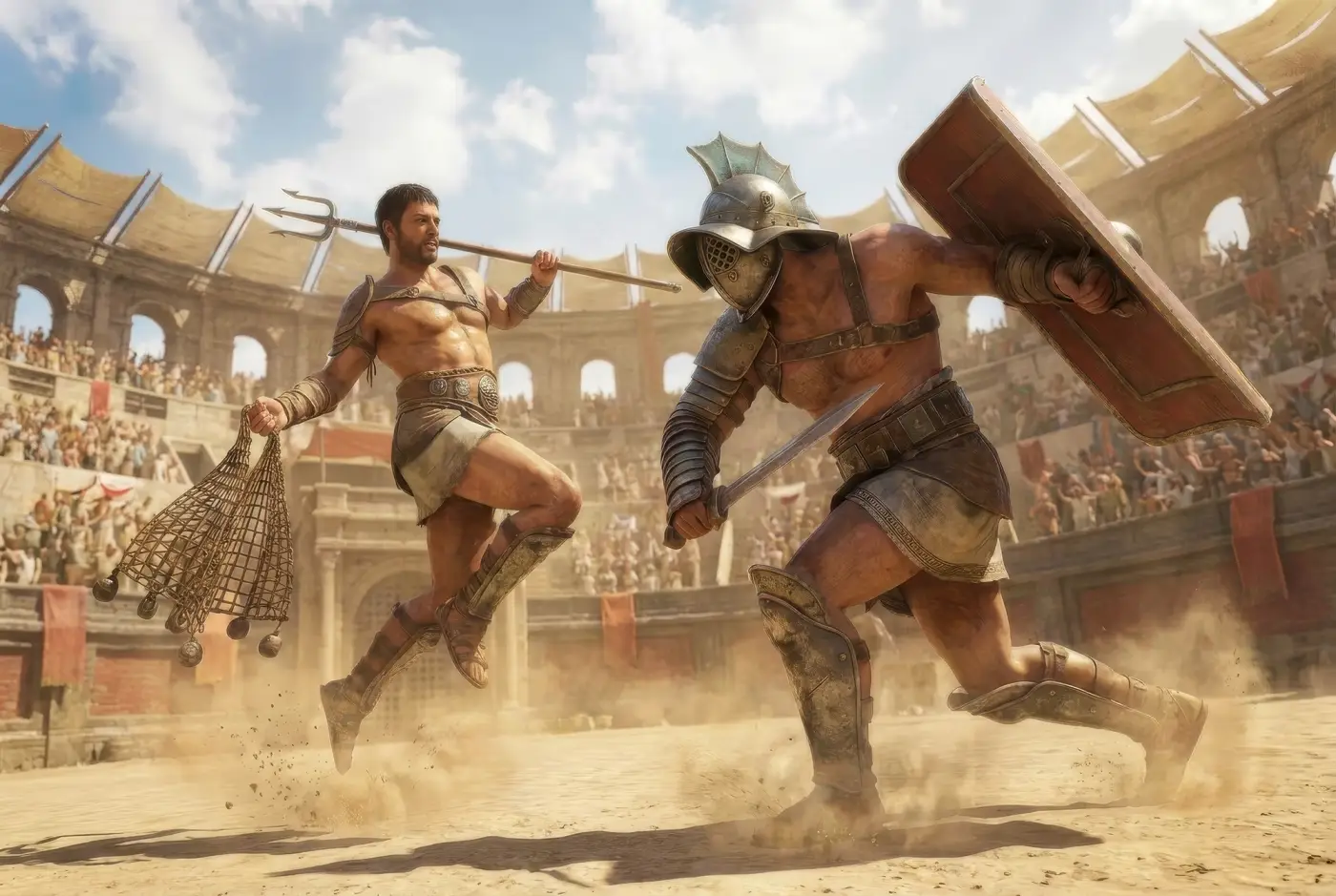
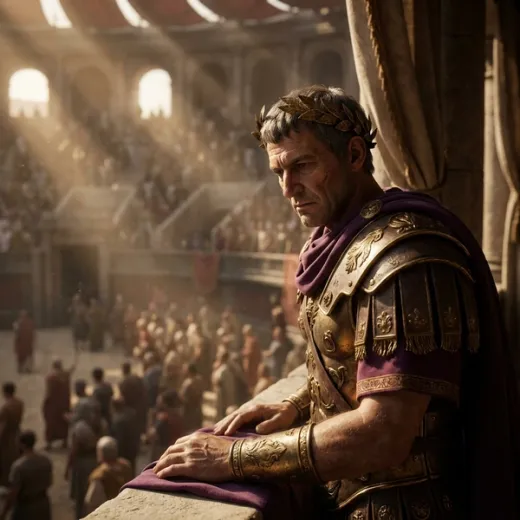
Emperors of Rome
From Caesar to Constantine — in the Emperors of Rome season, the age of the Roman emperors comes alive. Story campaigns, quizzes, and real immersion into a world of power, intrigue, and legions.
Completely freeEmperors of Rome is completely free and ad-free.