Cincinnatus: The Roman Dictator Who Gave Up Power After 16 Days
 AI
AIThe most powerful man in Rome was standing knee-deep in his field
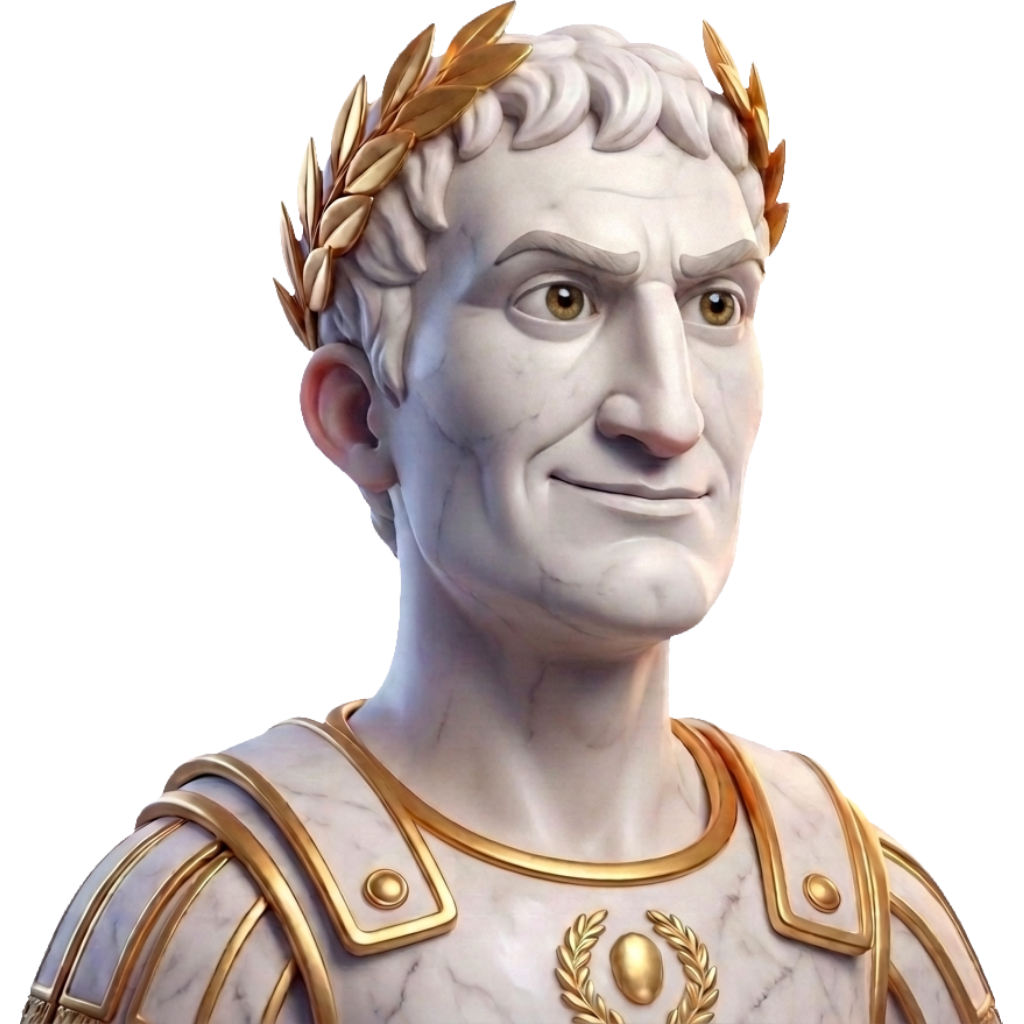
When Senate envoys set out in 458 BCE to find a man named Lucius Quinctius Cincinnatus and tell him he now held absolute power over Rome, they didn't find him in a palace, but on a four-acre farm west of the Tiber, in the middle of plowing. Rome was in an existential crisis, and the Senate had turned to the highest and most dangerous office the Republic had, the dictator, a position with near-royal authority, handed to an ordinary farmer.
What makes this story remarkable to this day isn't just that Cincinnatus saved Rome. It's what he did immediately afterward.
A man who lost everything through his own family
Cincinnatus hadn't always been an ordinary farmer. He had already served as consul in 460 BCE, one of the Republic's highest offices. His decline began with his son Caeso, a hot-headed young patrician put on trial for violent assaults against plebeians. To raise his son's bail, Cincinnatus had to sacrifice practically his entire fortune, leaving him with only the small farm where the Senate's envoys later found him.
This backstory matters for understanding him: Cincinnatus wasn't living in retreat out of some romantic longing for simple country life, he was there because he genuinely had nothing else left. That exact context is what makes his later decision to voluntarily give up power even more remarkable, he had every reason to want to keep it.
 AI
AIWhy Rome needed a dictator in the first place
The trigger for Cincinnatus's appointment was a military disaster. The sitting consul, Lucius Minucius Esquilinus, had marched his army against the Aequians, one of early Rome's constant enemies, and had maneuvered himself into a trap at Mount Algidus, a mountain pass southeast of the city. Surrounded, cut off from supplies, the entire legion along with its commander faced annihilation.
In exactly this kind of emergency, the Roman constitution provided for an extraordinary remedy: appointing a dictator, limited to a maximum of six months, with nearly unlimited authority, free of the usual checks from the Senate or popular assembly. The Senate chose Cincinnatus unanimously, "to restore their shattered fortunes," as ancient sources put it, of all people, a man who had already lost his entire political standing by that point.
 AI
AI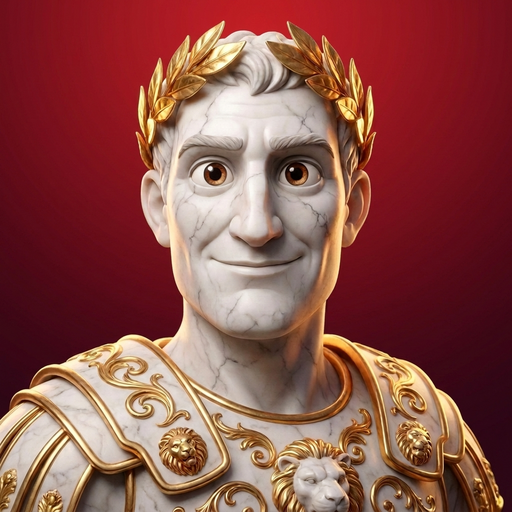
This is HistoryBytes.
Short lessons, real duels, and immersive visuals from a world of history — download it now.
How a farmer raised an army out of nothing
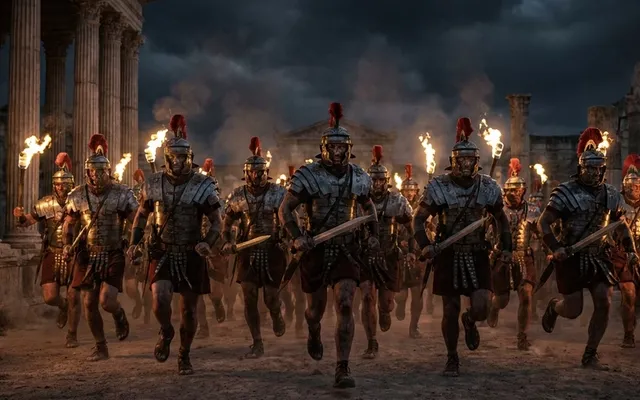
What Cincinnatus accomplished after his appointment happened with remarkable speed. He set down his plow, said goodbye to his wife, and put on the toga, the official garment of his new office. On the very same day, he assembled a force of able-bodied Romans and marched toward Mount Algidus.
Once there, he had his troops encircle the Aequians by night, who were themselves still besieging Minucius's legion, a tactical move that turned the besiegers into the besieged. When the Aequians realized their hopeless position the next morning, they surrendered without a fight. Cincinnatus hadn't just rescued the trapped legion, he'd forced an entire enemy army to surrender without a single pitched battle. For his victory, he was granted a triumph, Rome's highest military honor, riding through the cheering city on a chariot.
A word that survived to this day
Instead of killing the defeated Aequians, Cincinnatus demanded a different, more symbolically potent punishment: he had a "yoke" built from three spears lashed together, under which every single Aequian soldier had to pass bent over, while Roman troops lined both sides jeering at them. This ceremony of public humiliation was considered one of the worst disgraces a defeated army could suffer, so much so that it left the Latin language with a word still in use today: "subjugate," from "sub" (under) and "jugum" (yoke).
Power, given up voluntarily, weeks ahead of schedule
Here lies the real core of the Cincinnatus legend. His term as dictator was set at six months, plenty of time to further secure his own position politically, as many rulers before and after him would have done. Cincinnatus did exactly the opposite: just 15 to 16 days after his appointment, immediately after the military crisis was resolved, he fully resigned his office and returned to his small farm, to finish the half-plowed field he'd left behind when he was called.
For Roman historians, it was precisely this moment, not the military victory itself, that became the real proof of his virtue. Gaining absolute power wasn't unusual in antiquity, giving it up voluntarily, with no outside pressure at all, was. Cincinnatus demonstrated a principle Roman authors invoked as an ideal for centuries afterward: power is a borrowed tool for a specific task, not a personal possession you keep just because you can.
 AI
AIA second dictatorship, decades later
Cincinnatus's story didn't end with his first retirement. In 439 BCE, at around 80 years old, the Senate called him into office as dictator a second time, this time to handle a domestic political crisis: a plebeian named Spurius Maelius was accused of secretly aiming for kingship by distributing grain to the starving population to buy loyalty, one of the early Roman Republic's greatest fears, having overthrown its own kings only about half a century earlier.
That Cincinnatus, of all people, the very embodiment of voluntarily giving up power, was called back for exactly this situation was hardly a coincidence, but a deliberate symbolic choice by the Senate: who better embodied the opposite of a man reaching for a crown?
A name that originally just meant his hair
Incidentally, "Cincinnatus" wasn't originally a grand honorific at all, just a nickname for his hairstyle, derived from the Latin "cincinnus," meaning curl. The man whose name later became synonymous with selfless service to the republic was, at its core, simply called "the curly-haired one." Over the centuries, though, his actual legacy reached far beyond antiquity: during the Renaissance, the philosopher Niccolò Machiavelli explicitly cited the Cincinnatus story as an example of republican virtue, long before American revolutionaries rediscovered the same figure for their own purposes.
George Washington, a king who declined, and a city in Ohio
Over two thousand years after his death, Cincinnatus's story found an unexpected second life, in the young United States. In 1783, officers of the victorious Continental Army founded the "Society of the Cincinnati," an organization devoted to preserving the ideals they'd fought for. Its Latin motto, "Omnia reliquit servare rem publicam," "He gave up everything to serve the republic," was a direct reference to Cincinnatus himself. George Washington became its first president.
When Washington, after winning the War of Independence, actually gave up his military power voluntarily instead of using it to seize rule as many had expected, Britain's King George III is said to have remarked that if he really did that, "he will be the greatest man in the world." Washington did it. The city of Cincinnati, Ohio, still carries its name today in honor of exactly that society, and through it, indirectly, in honor of a Roman farmer who had made the same sacrifice 2,241 years earlier.
 AI
AIPower that gets handed back
Figures exactly like this sit behind every season in HistoryBytes, not just rulers who seized power, but the rarer ones who gave it back. In the Emperors of Rome season, you'll keep running into exactly this tension of the early Roman Republic, between personal ambition and what Rome expected of its citizens in moments of crisis.
A farmer who showed, twice, how power should end
Cincinnatus's story is, in the end, not a story about military genius, his actual achievement at Mount Algidus was tactically solid but hardly unprecedented. What turned him into a legend across the centuries was the moment he simply handed back power he could have kept, twice, decades apart, with no one able to force him to do it. In a world where most men with access to absolute power tried to hold onto it, that exact rarity is what kept his name alive for two and a half millennia, all the way to a city on the Ohio River that still carries it today.
Experience ancient Rome in HistoryBytes
 Season 1
Emperors of Rome
753 BC - 476 ADFrom the first city-states to the mightiest empire of antiquity — Season 1 is completely free to play. Dive into intrigue, conquest, and the rise of Rome.
Start the seasonEmperors of Rome is completely free and ad-free — no Premium account required.