Yasuke: What the Sources Really Say About the African Samurai
 AI
A man who existed, and a word people argue about
In spring 1581, according to the Jesuit Luís Fróis, people in Kyoto crowded so tightly around a Jesuit house that the door burst open. They wanted to see a man who had come with the Italian Jesuit Alessandro Valignano: a tall African whom Japan had never seen before. The most powerful ruler in the country, Oda Nobunaga, had him summoned and took him into his service. Fifteen months later Nobunaga was dead, and of the man called Yasuke every trace is lost.
That he existed, nobody doubts. Since the announcement of "Assassin's Creed Shadows" in 2024 and its release in 2025, though, people have argued about whether one may call him a samurai. In short: the sources document that he served Nobunaga and received a sword, a house, and an income. But no document from the 16th century calls him a "samurai." Whether the word fits depends on how you define it, and that is why the debate is so stubborn.
What is written about Yasuke
The sources on Yasuke are few and brief. On the Japanese side stands the "Shinchō Kōki," the chronicle of Nobunaga, which his retainer Ōta Gyūichi compiled after his death from his notes and diaries, finished around 1598. More than 60 manuscripts of it exist, four versions survive in Ōta's own hand, and there used to be more than 70. The standard version is regarded as one of the most reliable sources of the period and records Yasuke's arrival in Kyoto. An early version, held in the archive of the Maeda family, adds that Nobunaga gave him an income, a house, and a short ceremonial sword.
There is also the diary of Matsudaira Ietada, a retainer of the later shogun Tokugawa Ieyasu, which mentions an income a second time and gives his height: six shaku and two sun, about 188 centimeters. On the European side, the Jesuit Luís Fróis wrote about him, in a letter of 14 April 1581 to Lourenço Mexia and in the annual report of the Jesuit mission of 1582. Later, Jean Crasset and François Solier also mention him in their histories of the church in Japan.
The sources are of differing quality. Ōta was a retainer of Nobunaga, so a contemporary from the circle, and his chronicle is regarded as one of the most reliable of the period. Matsudaira Ietada (1555 to 1600) kept his diary from 1575 to 1594, it is a valuable source for those years, and because he belonged to the camp of Tokugawa Ieyasu, he confirms Yasuke independently of the chronicle. The diary, however, was only published in 1897. Fróis in turn, according to research, wrote more about 16th-century Japan than any other European of his time, his view is that of a missionary.
Those are the main witnesses, and one is missing: Yasuke himself left nothing. Everything we know comes from people who saw him and mentioned him briefly.
 AI
From Nagasaki to Kyoto
Yasuke came to Japan in 1579 with Alessandro Valignano, the Visitor of the Jesuit missions in India and East Asia. His origin is uncertain. François Solier wrote in 1627 that he probably came from Mozambique, but that could be a mere assumption. A Jesuit letter of 1581 calls him "Cafre," a European word then common for people from East Africa. Whether he came as a free servant, a bodyguard, or a slave is open.
Valignano was installed as Visitor, that is, inspector of the Jesuit missions in India and East Asia. In spring 1581 he traveled to Kyoto, where he wanted to meet Nobunaga, the most powerful ruler of Japan, and took Yasuke along. At the audience on 27 March, according to Wikipedia, Luís Fróis was also present, and Yasuke is said to have accompanied them as an attendant. According to Fróis, a tumult broke out in the capital because the inhabitants wanted a glimpse of him. The door of the Jesuit house was broken in, and there were dead and injured. Nobunaga too wanted to see the man. The Jesuits report that he first believed the dark skin was colored with ink and had him strip to the waist and scrub. The chronicle of Ōta gives the visit on the 23rd day of the second month, in our calendar 23 March 1581, an audience of Valignano with Nobunaga is recorded for 27 March. The chronicle describes a "black page from the Christian countries," healthy and of good bearing, whose strength exceeded that of ten men. It estimates him in his mid-twenties.
Nobunaga asked Valignano to leave him the man. The terms of this deal we do not know.
 AI

This is HistoryBytes.
Short lessons, real duels, and immersive visuals from a world of history — download it now.
House, sword, and income
Nobunaga took Yasuke into his service as a retainer and gave him a name that the sources write as Yasuke (弥助) or Yasuke (弥介). According to the Maeda version of the chronicle he received an income, a house of his own, servants, and a short ceremonial sword, and Fróis and Matsudaira Ietada mention the income independently. A retainer who received a sword and an income was more than a servant or an ordinary foot soldier. According to the Wikipedia account he was a weapon-bearer and a kind of bodyguard, and according to Fróis "a black man was taken on as a vassal by Nobunaga-sama and received a stipend."
About his duties we know little. The diary of Matsudaira Ietada mentions that Yasuke accompanied Nobunaga on a tour after he had destroyed the old enemy, the Takeda clan. Yasuke served 15 months, from March 1581 to June 1582. Nobunaga probably also benefited: such an unusual man at his side raised his prestige. That is a conjecture of research and not a source attestation.
 AI
21 June 1582
Nobunaga stood in 1582 at the height of his power. He had just destroyed his old enemy, the Takeda clan, and was in the process of unifying Japan under his leadership. Yasuke accompanied him, according to the sources, on the way there. On 21 June 1582, in the Japanese calendar the second day of the sixth month, Nobunaga's senior retainer Akechi Mitsuhide then attacked the temple Honnō-ji in Kyoto, where Nobunaga was spending the night. Why Mitsuhide betrayed him is still not settled. Nobunaga died. Yasuke was nearby. He ran to Nobunaga's son and heir Oda Nobutada, who had barricaded himself in the nearby Nijō palace, and fought there against Akechi's troops. Nobutada took his own life, Yasuke was captured.
According to the Jesuits' account, Mitsuhide decided not to kill him. He was not Japanese, it was said, one should bring him to the Jesuits' church. He was taken to the Nanban-ji, the "church of the southern barbarians," which lay only one block from Honnō-ji, and the Jesuits nursed him. Five months later Fróis wrote that, thanks be to God, Yasuke had not lost his life. That is the last certain news. After that Yasuke disappears from the sources. When and where he died, we do not know.
 AI
The disputed question
That Yasuke served under Nobunaga is well documented. The question is whether one may call him a samurai, and the answer depends on the word. No document of the 16th century, neither Japanese nor Jesuit, calls him a samurai. The chronicle speaks of a "black page," the Jesuits of a man who was taken on as a vassal. The historian Thomas Lockley, whose book "African Samurai" (2019) made the story known worldwide, himself says in the Japan Times that there is no piece of paper saying Yasuke was a samurai.
On the other hand, the term was fluid in the 16th century. Several Japanese historians, among them Hirayama Yū, Goza Yūichi, and Oka Mihoko of the University of Tokyo, have commented, and many consider it not unreasonable, on the evidence, to call him so by the loose definition of the time: whoever received a sword and an income from his lord was treated like a warrior. Critics object that Lockley claimed more in his book than the sources support. Being a retainer, in this view, is not the same as being a samurai in the sense of a fixed warrior class.
Supporters also point out that Nobunaga's retainers were very diverse: the historian Jonathan Lopez-Vera notes in a video that Toyotomi Hideyoshi and Akechi Mitsuhide too were at first vassals of Nobunaga, and nobody doubts that they were samurai. The argument aims to show that "vassal" and "samurai" lay close together in the 16th century. It does not prove that Yasuke belonged, though, because the two came from the Japanese warrior estate or rose within it, whereas with Yasuke we don't know.
Both sides hold a piece of the truth: Yasuke was treated by Nobunaga like a warrior, and the word "samurai" does not occur in the sources. Whoever uses it presupposes a definition. That should be said.
 AI
From the chronicle to the video game
Until a few years ago, Yasuke was little known in Japan. That changed when Ubisoft announced that in "Assassin's Creed Shadows," released in 2025, besides the fictional shinobi Naoe a Yasuke would be playable. Some players reacted negatively to a Black samurai protagonist, others said he was not a "real" samurai. Ubisoft defended the choice: the director Charles Benoit said players could thus discover Japan at the same time as Yasuke, "through the eyes of a foreigner."
At the center stood Lockley, whose book shaped many portrayals and who appeared in a Ubisoft podcast. He claimed that no reputable Japanese historian doubted Yasuke's rank as a samurai. His critics said the book went beyond the sources, and online it was said he had also shaped the picture through changes on Wikipedia. In between stood specialists who said the question was legitimate and both sides should read the sources. The debate became, like so many around the game, quickly political and partly abusive, in Japan and outside. The literature scholar Sachi Schmidt-Hori of Dartmouth College, who accompanied the game as a narrative consultant, was also harassed online and afterward sought conversation with her critics.
What matters to us is what the sources say, and that there is no dispute about it: Yasuke existed, he stood in Nobunaga's service, and he survived the Honnō-ji.
Origin, status, and end
For all the attention, the most important questions remain open. Where did he come from? Mozambique is the common conjecture, but it rests on an author who wrote in 1627, more than 45 years after the events. In what status did he come, as servant, bodyguard, or slave? What exactly did he do for Nobunaga? What happened after 1582? Mitsuhide himself was defeated by Hideyoshi at Yamazaki barely two weeks later, and in the turmoil of those weeks Yasuke's trail may also have been lost, but that is not documented. One note later mentions a black gunner in a battle of 1584, but whether it was the same man remains open.
That such gaps get filled in games and films is understandable. Yasuke became a character in novels, anime, manga, and in the game "Samurai Warriors 5," and he is said to have been the model for "Afro Samurai." But they are inventions, and one should recognize them as such.
 AI
The overview at a glance
To wrap up, the short version, so fact and story don't blur.
| Category | What belongs here |
|---|---|
| Well documented | Arrival with Valignano in 1579; Kyoto in spring 1581 and the tumult; Nobunaga takes him into his service; height about 188 cm (Matsudaira Ietada); income (Fróis, Maeda version of the chronicle, Ietada); house, servants, and short ceremonial sword (Maeda version); service from March 1581 to June 1582; presence at the Honnō-ji incident on 21 June 1582, fighting at Nijō, capture, release to the Jesuits' church; Fróis's letter five months later |
| Handed down | That Nobunaga took the skin for ink; Mitsuhide's reason that he was not Japanese; the origin in Mozambique (Solier 1627); that Nobunaga benefited from his presence |
| Disputed or open | Whether one may call him "samurai" (the word occurs in no source of the 16th century); how far Lockley's book goes beyond the sources; his status on arrival; his exact origin; his fate after 1582 |
One picture from five angles
Yasuke shows how much history can hang on a single word. That's why every season in HistoryBytes is split into five categories, and this story touches all five: Yasuke as a person, Kyoto as a place, the Honnō-ji incident on 21 June 1582 as an event, the question of what makes a samurai as an idea, the short ceremonial sword as an object. That's how the Whispers of the Samurai season builds the whole picture of a world in which rank and service often mattered more than origin.
A name in the chronicle
Three things remain of Yasuke: an entry in the chronicle of Nobunaga, a sentence in the diary of a retainer, and a grateful letter from a Jesuit. That is little, and it is more than remained of most people of his time. That people argue so bitterly about him today perhaps says less about him than about us. Whoever wants to understand him reads the sources and bears that they don't answer everything. A man came from Africa to Japan, served a powerful lord, and survived the day on which the lord died. More we don't know, and that is enough for a story. The gaps are not a flaw in this story but part of it, and whoever leaves them honest tells it best.
 AI
Step into the world of the samurai in HistoryBytes
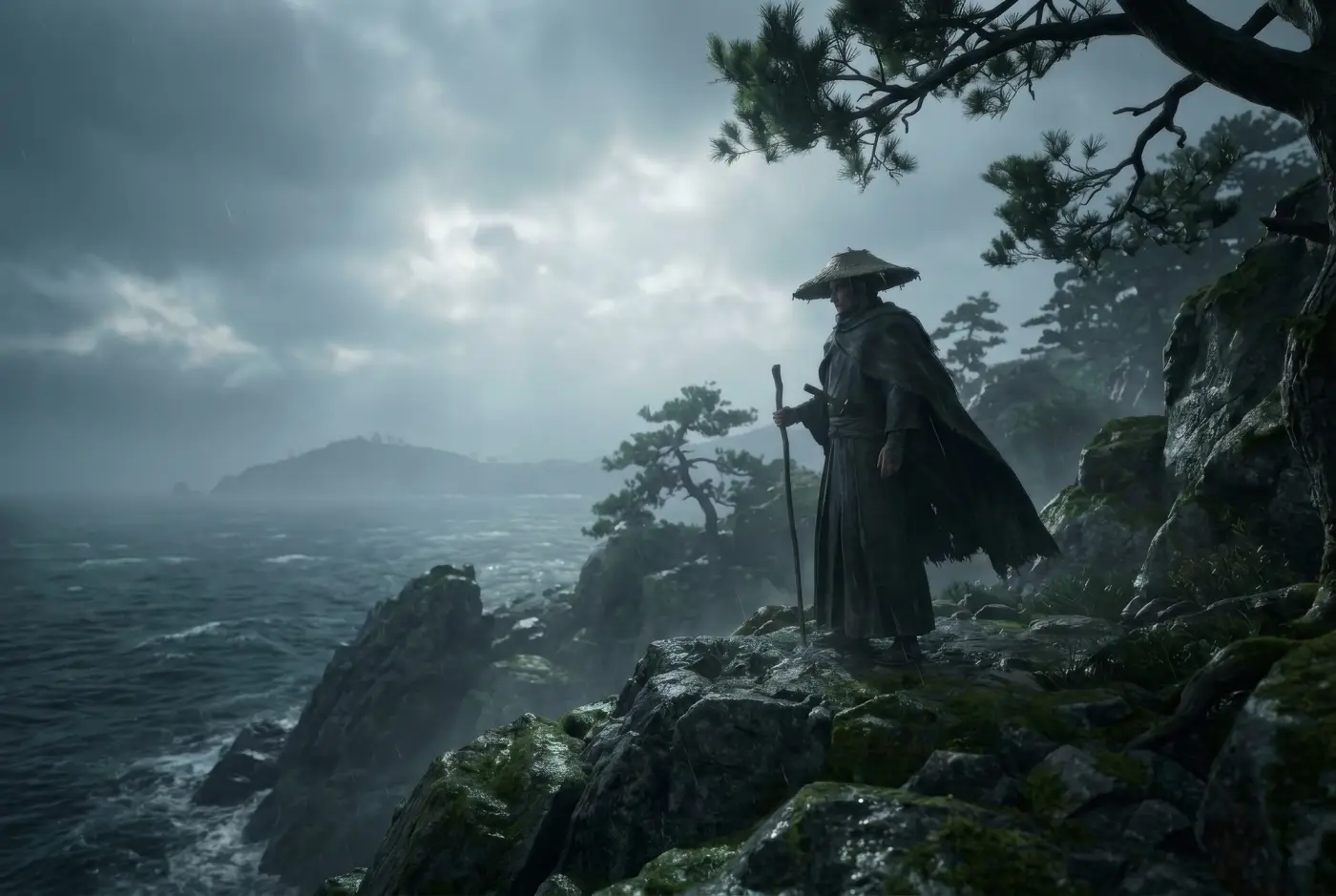

Whispers of the Samurai
From rising warlords to the battles that united a country — in the Whispers of the Samurai season, the age of the samurai comes alive. Story campaigns, quizzes, and real immersion into a world of power, betrayal, and change.
5 episodes freeThe first 5 episodes are free, Premium unlocks the rest.