
 AI
AIThe raids
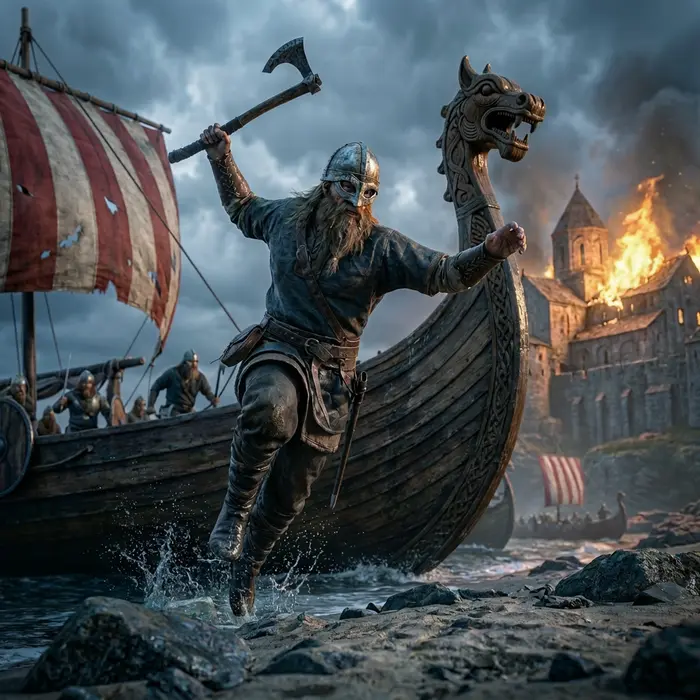
On 8 June 793, Vikings raided the monastery of Lindisfarne, marking the start of the Viking Age. Soon their dragon ships were feared on every coast, and in 865 the Great Heathen Army landed in England.
 AI
AIDragon ships on the horizon, gods in Valhalla and traders from Greenland to Constantinople: experience the Viking Age as it really was. The people, places and sagas that shaped the North.
The horizon burns as dragon heads pierce through the fog.
We throw you right into the expansion: From the bloody beaches of Northumbria to the magnificent palaces of the East. Adventure here means: Win everything or lose everything.
AIOn 8 June 793, Vikings raided the monastery of Lindisfarne, marking the start of the Viking Age. Soon their dragon ships were feared on every coast, and in 865 the Great Heathen Army landed in England.
 AI
AIThe Vikings settled Iceland, Erik the Red founded settlements in Greenland, and his son Leif Erikson reached North America around the year 1000, some 500 years before Columbus.
 AI
AIAlong the rivers of Eastern Europe, Swedish Vikings travelled as far as Byzantium and the Caspian Sea. As Varangians they founded the Rus, and in Constantinople they served in the emperor's bodyguard.
 AI
AIOdin, Thor and Freya shaped the Vikings' world. Important people were buried with their ship, sometimes also burned, so they would travel well equipped into the afterlife. From the 10th century, Christianity gradually took hold.
 AI
AIAlfred the Great stood against the Great Army, and Cnut the Great later ruled England, Denmark and Norway. In 1066 Harald Hardrada fell at Stamford Bridge, and with him the Viking Age came to an end.
 AI
AIMost Vikings were farmers, fishermen, traders and craftsmen. They lived in longhouses along fjords and coasts, often under one roof with their animals, and made important decisions at the Thing. Iceland's Althing, founded in 930, is one of the oldest parliaments in the world.
Swipe for more →
The Vikings came from what is now Denmark, Norway and Sweden. As seafarers, warriors, traders and settlers, they shaped Europe from the late 8th to the 11th century.
It is usually dated from the raid on the monastery of Lindisfarne in 793. It is generally said to end in 1066, when the Norwegian king Harald Hardrada fell at the Battle of Stamford Bridge.
"Viking" was originally not the name of a whole people but of men who went off on expeditions. Most people in the North lived as farmers, fishermen, traders and craftsmen.
No. Horned and winged helmets were invented in the 19th century and became famous through costumes for Wagner's operas. Real Viking helmets were simple iron or leather caps.
In their longships they reached England, Ireland and France, and followed the rivers of Eastern Europe as far as Constantinople and the Caspian Sea. In the West they settled Iceland and Greenland, and around the year 1000 Leif Erikson reached North America.
The Vikings worshipped gods such as Odin, Thor and Freya. Fallen warriors hoped to reach Valhalla, Odin's hall. From the 10th century, Christianity gradually spread across the North.
Families lived in longhouses, often under one roof with their animals. Important decisions were made at the Thing, the assembly of free men. Trading towns such as Hedeby linked the North with the rest of Europe.
In HistoryBytes, you experience the world of the Vikings in short episodes: the people, places, events, ideas and objects of the era. Piece by piece, you build the whole picture, from Lindisfarne to Stamford Bridge.
The first 5 episodes are free. Unlock the rest with Premium, together with every other season.
The first 5 episodes of Viking Sagas are free. Unlock all other episodes with Premium.
Viking Sagas has 203 episodes covering the people, places, events, ideas and objects of the era.
No. Every season is its own path, so you can start wherever you like.
iPhone, iPad and Android. Your progress is tied to your account and syncs across all your devices.


