Ghosts in Ancient Rome: How the Romans Banished the Dead
 AI
Did the Romans have Halloween?
Tomorrow is Halloween, and every year the question comes up whether the Romans already knew something like it. The short answer is no: Halloween goes back to Celtic and Christian customs that arose after the end of the Roman world. But the Romans knew ghosts, and they took them seriously. They had haunted houses, ghosts with chains, apparitions before battles, and festivals at which people threw beans over their shoulders at midnight to drive the dead out of the house. And they argued about whether it was all true.
In short: for the Romans a ghost was usually a person who lacked something, above all a proper burial. Whoever could fix that ended the haunting. The sources are unusually good: a letter by Pliny the Younger that can almost be read as a short story, accounts by Suetonius and Plutarch of ghosts around Caligula and Brutus, a poem by Ovid about a ritual, and a satire by Horace about witches in a cemetery.
Do ghosts really exist?
Around the year 100 AD, the senator Pliny the Younger wrote to a friend, Lucius Licinius Sura, and asked a question that is familiar to us today: do ghosts exist, do they have a form of their own and something divine about them, or are they only empty imaginings that arise from our fear? Sura came from Tarraco in Spain, was a wealthy senator, an adviser to the emperor Trajan, and a patron of the poet Martial. Pliny considered him learned enough to decide the question.
To pose it, Pliny tells stories, and the best known concerns a house in Athens. The letter is the 27th in the seventh book and lives on its mix of suspense and sobriety. Pliny says himself that he believes the first story on the testimony of others, for a further one, from his own freedman Marcus, he wants to vouch himself. Sura's answer has not survived. Whether Pliny believed in ghosts therefore remains open.
 AI
The clanking of chains
In Athens stood a large, spacious house that was considered cursed and unhealthy. In the dead of night one heard a noise like the clashing of iron, at first in the distance, then nearer and nearer, finally like the rattling of fetters. Then appeared the figure of an old man, gaunt and filthy, with a long beard and bristling hair, in chains on hands and feet. The inhabitants spent fearful, sleepless nights, became ill and died, and even by day the memory tormented them. In the end the house stood empty, left entirely to the ghost.
Then a Stoic philosopher named Athenodorus came to Athens. He read the notice on the house, found the price suspiciously low, had himself told the reason, and rented the house precisely because of it. In the evening he sent his servants to the back, sat down in the front room, and began to write, so that his mind was occupied and he wouldn't imagine anything. Then came the clanking. He did not look up. The noise grew louder, the figure entered and beckoned with a finger. Athenodorus made a sign for it to wait and went on writing. The ghost rattled the chains over his head. Now he took the lamp and followed the old man, who walked slowly as if the iron hindered him, into the courtyard, where he vanished. Athenodorus marked the spot with grass and leaves.
The next day he asked the authorities to have the spot dug up. They found bones entangled with chains. They were buried at public expense, and afterward it never haunted again. The punchline is Roman: the ghost wanted nothing evil, it wanted to be buried.
 AI
This is HistoryBytes.
Short lessons, real duels, and immersive visuals from a world of history — download it now.
A ghost is an unburied dead person
The story from Athens shows what the Romans believed: a dead person who was not properly buried found no rest. The word for such spirits was "lemures," for those who haunted houses "larvae," both considered hostile. These were distinguished from the "manes," the benevolent spirits of the ancestors, to whom one brought gifts at the grave in February. According to a common account, the lemures were seen above all as those who had died young, violently, or without burial.
That explains why Roman ghost stories so often end at graves. One dug, buried, and the haunting was over. It also explains why the Romans set such store by rituals around burial: whoever neglected them risked more than propriety. And it explains two of the most famous ghosts in Roman history, one with a badly burned corpse, the other with a guilty conscience.
The emperor who couldn't sleep
The emperor Caligula was murdered in January 41 AD. According to Suetonius, he suffered from sleeplessness even in life: he slept at most three hours and was plagued by strange apparitions, once he dreamed that the spirit of the Ocean spoke with him. At night he wandered through the colonnades and called for daylight.
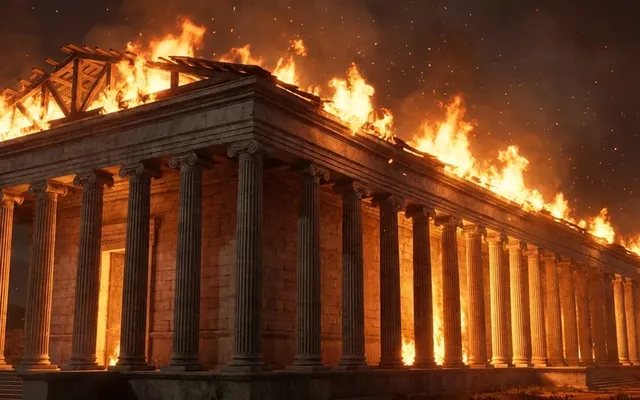
After his death his corpse was brought secretly into the gardens of the Lamia family on the Esquiline, burned there only half on a hastily erected pyre, and covered with turf. Later his sisters, who had returned from exile, dug it up again, burned it completely, and laid it in a tomb. Before that, says Suetonius, it was well known that the keepers of the gardens were disturbed by ghosts and that in the house where he was struck down not a night passed without a fearsome apparition, until the house burned down.
The editor of an online edition of Suetonius's texts suspects the story could be a pun. "Lamiae" were in the Roman imagination blood-drinking female spirits, and the haunting lay in the gardens of the family Lamia. That would be a joke that took on a life of its own as "it is well known." That is a conjecture, not evidence. But it shows how Suetonius works: he collects rumors and passes them on.
 AI
The apparition before Philippi
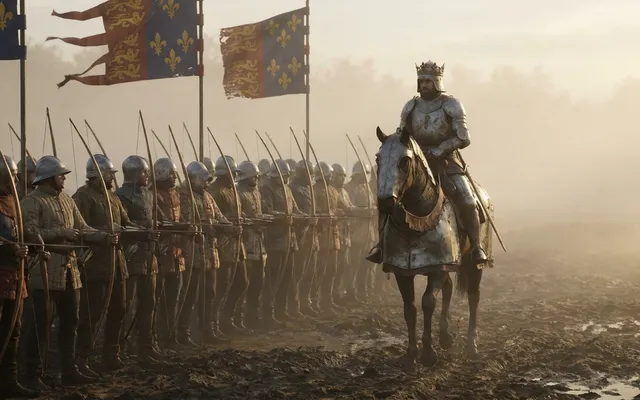
The most famous Roman apparition is in Plutarch. Brutus, the killer of Caesar, wanted in 42 BC to lead his army from Asia to Europe. He was a man who slept little and worked at night. It was very late, the tent dimly lit, the camp silent, when he thought someone entered. He saw a strange, terrible figure, monstrously large, standing silently beside him. He asked whether it was a god or a man and what it wanted. The apparition answered: "I am thy evil genius, Brutus, and thou shalt see me at Philippi." Brutus said calmly: "I shall see thee."
When the figure had vanished, he called his servants, but they had heard and seen nothing. In the morning he told Cassius of it. At Philippi, Brutus won the first battle over the enemy before him and plundered the camp of the young Caesar. Before the second battle the same figure appeared again, was silent this time, and Brutus understood what it meant. Plutarch interprets the apparition as a sign that the gods did not approve of Caesar's murder.
What Brutus really saw, we don't know. Lack of sleep, fear of the battle, and the burden of the murder are plausible explanations. Plutarch at any rate took the apparition seriously: he tells it twice, in the lives of Brutus and of Caesar.
Black beans at midnight
Against house ghosts there was a ritual, the Lemuria, celebrated on three days in May, the 9th, 11th, and 13th. The only detailed description is in Ovid's festival calendar "Fasti." The householder rose at midnight and walked barefoot through the house. He washed his hands three times with spring water and made with his thumb between his fingers a sign against ghosts. Then he took black beans in his mouth, threw them behind him over his shoulder without looking, and said nine times: "I send these; with these beans I redeem me and mine." Afterward he struck bronze and called on the spirits of his fathers to leave the house.
During the Lemuria the temples stayed closed and people did not marry. A Roman saying fits this: whoever marries in May marries badly. As the origin, Ovid names a murder: Romulus wanted to appease the shade of his brother Remus, whom he had killed. That is a founding legend and not evidence.
 AI
The friendly dead and the open door
Facing May stood February. From 13 to 21 February the Romans celebrated the Parentalia, a nine-day festival for the ancestors. The temples were closed, there were no weddings, and the magistrates wore no insignia because no business was done. Families visited the graves, and the dead received food. On the last day, the Feralia, the head of the household spoke at midnight to the malevolent sides of the dead, according to Ovid an older, more primitive custom. At other times too the dead were remembered, for example on the Kalends, Nones, and Ides, when lamps could be lit at the grave.
Added to that was the "mundus," a pit in Rome that was opened three times a year. The scholar Varro wrote that then "the door of the gloomy gods of the underworld stands open, as it were." On these days the Romans fought no battles, did not put to sea, and did not marry. The boundary between the living and the dead was thus a fixed part of the calendar, not a superstition at the margin.
Whoever wants to draw a line to Halloween can do so but must be careful. The Pantheon in Rome was on 13 May, the last day of the Lemuria, rededicated as a church for Mary and the martyrs. People have tried to draw a line from that to All Saints. A clear proof is missing, and the Lemuria lay in May, not in autumn.
Canidia and Sagana in the cemetery
Rome had witches too. In the eighth satire of his first book, Horace tells of two women, Canidia and Sagana, who enter at night the gardens of Maecenas on the Esquiline. There stood a wooden Priapus, a fertility god, as guardian, and he tells the story himself. The ground had earlier been a cemetery for the poor and the executed, with open pits, the "puticuli." Maecenas had turned it into a park in the course of the renewal of Rome under Augustus. Horace celebrates this: "Now one may live on the wholesome Esquiline." He describes how the ground was once white with bleached bones.
The two women come to fetch bones and herbs for spells. They dug a pit for a sacrifice to the gods of the underworld, burned figurines, and called on the shades. Priapus watches them, with a terror that ends in a crude punchline: with a loud noise at which the wooden figure splits, he drives the women off. The text is meant as satire, with humor, and the witches are literary figures. But it shows how the borderland between city and realm of the dead was imagined: the Esquiline was a hill where the dead still lay in the ground when the villas already stood. Maecenas bequeathed the gardens to Augustus at his death in 8 BC. The gardens of the Lamia lay nearby.
 AI
When the law wasn't enough
Besides ghosts and witches, the Romans had an entirely everyday magic: the curse tablet, Latin "defixio," "binding down." It was a thin sheet of lead, about the size of a postcard, into which a short text was scratched. Curse tablets were in circulation from about 500 BC to 500 AD and were found in Athens, Rome, Spain, Syria, and England. They were buried, thrown into water, or nailed to a wall.
The most famous collection comes from Bath, the Roman Aquae Sulis. There, in 1979 and 1980, about 130 tablets were found in the hot spring. Nearly all are "prayers for justice": bathers whose clothing, jewelry, or coins had been stolen in the baths gave the thief to the goddess Sulis Minerva. One tablet gives the goddess six lost silver coins, another demands punishment of the thief of a hooded cloak, whether slave or free, man or woman. Some wish the culprit to lose sleep, health, and wealth until he returns the item. One contains even a word in a Celtic language, the only one of its kind. The collection has long been part of the UNESCO Memory of the World register.
One can read the tablets as the justice of ordinary people: where no court helped, one called on gods. That they worked, people presumably believed. That the Romans took ghosts, curses, and gods more seriously than we do doesn't mean they were gullible. Pliny put his question to Sura for exactly that reason.
 AI
The overview at a glance
To wrap up, the short version, so fact and story don't blur.
| Category | What belongs here |
|---|---|
| Well documented | Pliny's letter to Sura (7.27) with the question about ghosts; the Lemuria on 9, 11, and 13 May (Ovid, Fasti 5) with the bean ritual, closed temples, and ban on weddings; the Parentalia from 13 to 21 February and the Feralia; Suetonius's account (Caligula 59) of the half-burned corpse and the apparitions; Plutarch's account of Brutus's apparition before Philippi; Horace's Satire 1.8 on Canidia in Maecenas's park on the Esquiline; the Esquiline as a former cemetery with open pits; about 130 curse tablets from Bath |
| Handed down | The ghosts themselves (haunted house in Athens, Caligula's ghost, Brutus's evil genius); that Athenodorus really found the bones; Ovid's origin of the Lemuria in the story of Remus |
| Open | Whether Pliny believed in ghosts and what Sura answered; whether the haunting at Caligula was a pun on "lamiae"; what Brutus really saw; whether the Lemuria are connected with All Saints or Halloween |
One picture from five angles
The Roman ghosts show how much worldview lies in a superstition. That's why every season in HistoryBytes is split into five categories, and this story touches all five: Pliny the Younger as a person, the Esquiline as a place, the apparition of Brutus before Philippi as an event, the belief in restless dead as an idea, the curse tablet as an object. That's how the Emperors of Rome season builds the whole picture of a world in which gods, the dead, and the law were tied together in everyday life.
The answer to Sura
Pliny wanted to know from Sura whether ghosts exist. No answer has survived, and perhaps that's good: the sources show a world in which people did both, believed in ghosts and argued about them. The philosopher in Athens kept writing while it clanked. Brutus said "I shall see thee." And the householder threw beans behind him in the middle of the night without turning around. If tomorrow you stand before a door with a pumpkin and a candle, you can remember these men. They were afraid, and they knew what to do: find the bones and bury them.
Experience the Roman Empire in HistoryBytes
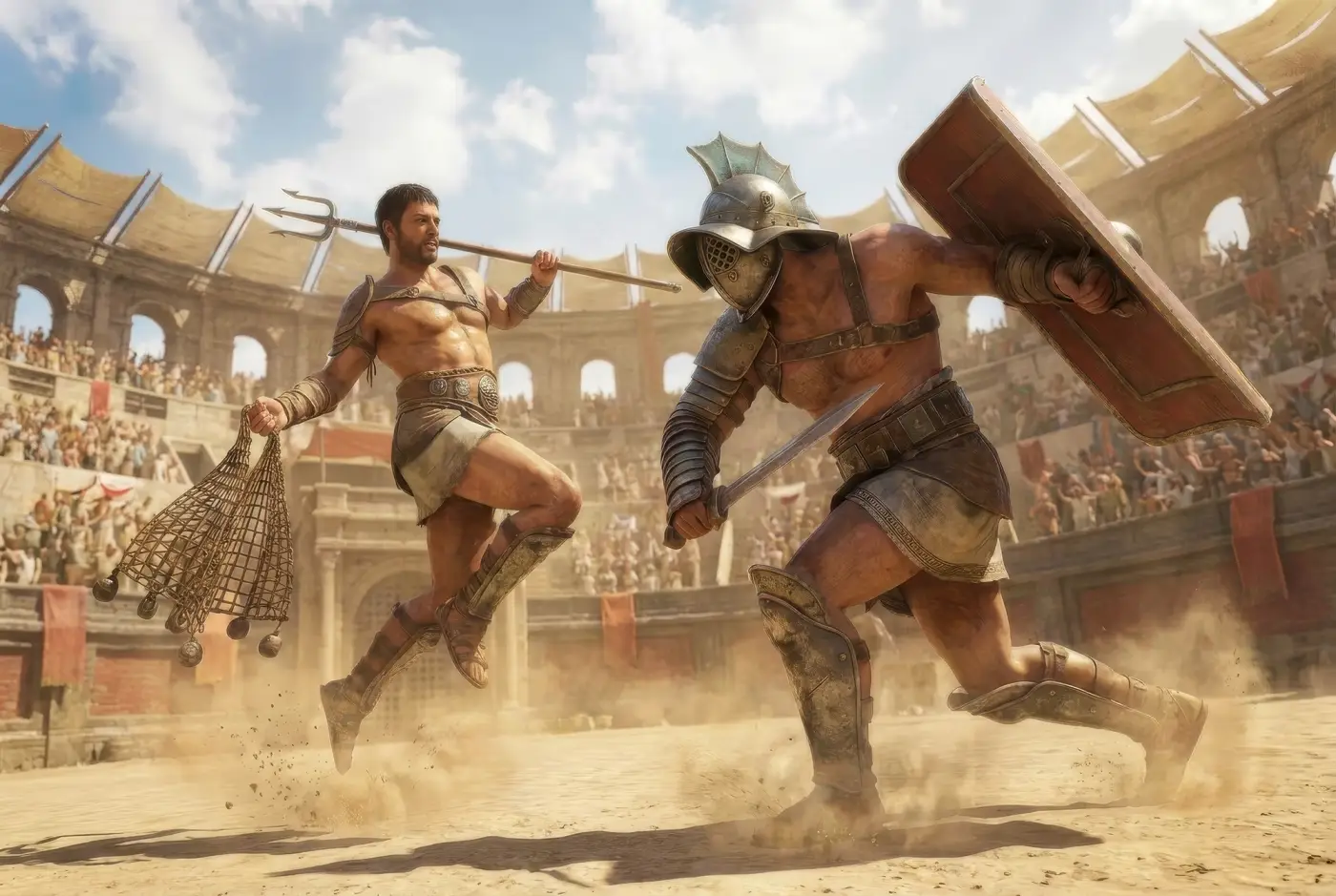
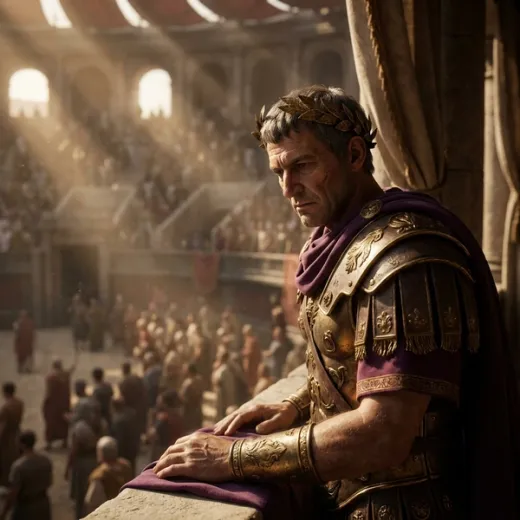
Emperors of Rome
From Caesar to Constantine — in the Emperors of Rome season, the age of the Roman emperors comes alive. Story campaigns, quizzes, and real immersion into a world of power, intrigue, and legions.
Completely freeEmperors of Rome is completely free and ad-free.