Was King Arthur Real? What the Sources Actually Say
 AI
Was King Arthur real?
Nobody knows for sure. No contemporary names Arthur, the earliest mentions date from the 9th and 10th centuries, and experts still disagree. A British war leader around 500 is possible. The king with Camelot, Excalibur, and the Round Table, though, is an invention of the Middle Ages, mostly by French poets.
Test your knowledge
That is the answer in brief. If you want to check it, you can answer questions about knights, castles, and tournaments in HistoryBytes, in the Tales of Chivalry season, with cards and a quiz, before or after you read the article.
This is HistoryBytes.
Short lessons, real duels, and immersive visuals from a world of history — download it now.
The most famous figure no contemporary mentions
A king who pulls a sword from a stone, a court called Camelot, knights at a round table: whoever thinks of chivalry often thinks of Arthur. Historians have been asking for centuries whether he existed, and there is still no uniform answer. Live Science noted in April 2026 that there is no consensus and each side sets out its reasons in books and papers.
In short: the sources show two different Arthurs. One is a British war leader who is said to have fought the Saxons around 500 and of whom we know almost nothing. The other is a king with a court, knights, and a love story whom poets of the 12th and 13th centuries created. Whoever wants to answer the question must therefore first settle which of the two he means.
Gildas names many names, but not him
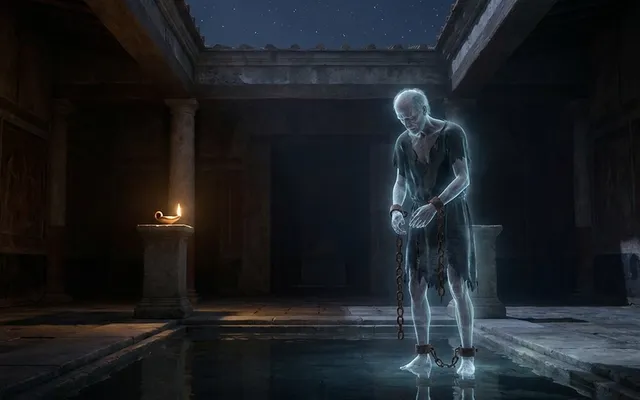
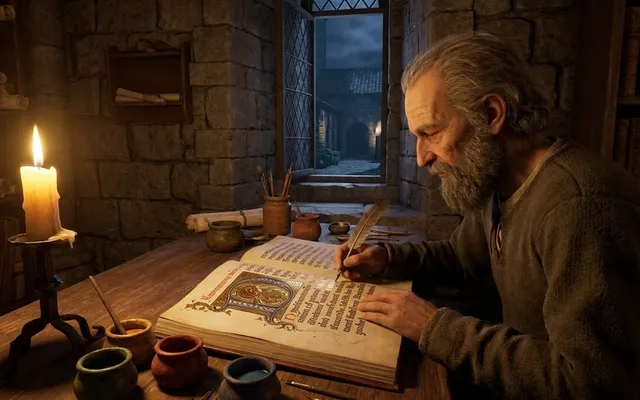
The most important source for the time around 500 is a monk named Gildas. Around 540 he wrote "De Excidio Britanniae," "On the Ruin of Britain," a tirade against the kings of his day. Gildas describes how the Britons defended themselves against the Saxons after the Romans left, and names a leader of Roman descent, Ambrosius Aurelianus. He also names a battle at Mount Badon in which the Britons won. But he never mentions Arthur, although he scolds the kings of his time by name.
For many researchers that is the strongest objection to a historical Arthur: Gildas lived, by today's estimate, only a few decades after the battle and would have had to name him if he was the victor. Bede, the historian of the English, who around 731 follows Gildas closely for this period, adds nothing about Arthur either. That doesn't mean he didn't exist. Helen Fulton points out that the era had no shortage of rulers: British kings and war leaders emerged from Roman rule and fought each other and the Saxons. But it means that the sources from his time are silent.
 AI
Nennius and the Welsh Annals
The earliest mention of Arthur stands in the "Historia Brittonum," the "History of the Britons," which arose around 829 in Wales, perhaps by a monk named Nennius. It calls Arthur not a king but a war leader, "dux bellorum," and lists twelve battles he is said to have won, the last at Mount Badon. In one of them, according to the text, he carried an image of the Virgin Mary on his shoulders. At Badon he is said to have killed 960 men alone in a single charge, a number historians read as a saga motif.
The second source is the "Annales Cambriae," the "Welsh Annals," of the 10th century. They contain two short entries: Badon in the year 516 and Camlann in 537, "in which Arthur and Medraut fell." Medraut is the later Mordred. The entry does not say the two fought each other. The oldest surviving manuscript dates from around 1100. According to recent research the annals go back to a chronicle begun at the end of the 8th century in Wales; whether the Arthur entries were part of it that early cannot be said for certain because of the tangled transmission.
Five positions, no consensus
In April 2026 Live Science let five specialists speak. Nicholas Higham, professor emeritus of early medieval history at Manchester, regards Arthur as an invention of the early 9th century: an author of the "Historia Brittonum" assembled him from earlier reports to give the Britons a model in the fight against the Saxons. In the early 9th century Anglo-Saxon kingdoms controlled much of Britain and were pressing into Wales, so an author would have wanted a figure who fought them successfully. In his 2018 book he calls the tradition "a ninth-century fiction," and an extraordinarily successful one. Helen Fulton, professor at Bristol, says she doesn't think Arthur existed because he stands in no early source.
On the other side is Bernard Mees of Monash University. In his book "King Arthur and the Languages of Britain" (2025) he writes that the two annal entries show spellings of the 6th century and were therefore composed then. Arthur must therefore have lived, probably as a prince or king. Ken Dark, an archaeologist at Cambridge, considers a historical Arthur probable without being able to say it for certain. The entry for the year 537 mentions a plague, and an epidemic, possibly the plague, reached the Mediterranean in 536, a detail that fits the events of the time, and the entry is brief and without legendary material. Moreover, between the middle of the 6th and the middle of the 7th century there were conspicuously many members of royal families named Arthur, who may have been named after a famous model. His qualification: such a man would have had nothing in common with the Arthur of legend.
Mary Bateman, a lecturer at Bristol, describes a third possibility: Arthur can be both real and invented, either a figure of history who attracted many myths, or a figure of myth who later took on traits of historical persons.
 AI
Tintagel, Cadbury, and Glastonbury
Several places are linked with Arthur, but none proves him. On Tintagel in Cornwall stands a castle of the 13th century above a settlement of the 5th to 7th century. The excavations showed a significant site that included pottery from the Mediterranean, a hint that Tintagel was more than a lonely outpost. With Arthur it has nothing to do: that an important settlement lay there in the 5th and 6th century fits the right time but proves no connection.
Cadbury Castle in Somerset is an Iron Age hillfort that was reused after the end of Roman rule and strengthened around 500 with timber defenses. The antiquarian John Leland called it "Camelot" in the 16th century. Here too size and time are close, but a direct pointer to Arthur is missing.
And Glastonbury: in 1191 the monks of the abbey reported they had found the grave of Arthur and Guinevere, seven years after a fire that had devastated the monastery. With the find came a lead cross with the inscription that here lay "the famous King Arthur with Guinevere, his second wife, in the Isle of Avalon." Afterward Glastonbury was regarded as Avalon. Whether the find was a forgery is a dispute of its own, and that a monastery after a fire needed pilgrims is a frequently voiced assumption.
 AI
The man who invented the king
The Arthur we know begins around 1136 with Geoffrey of Monmouth, a clergyman from Monmouth in Wales. His "Historia Regum Britanniae," "History of the Kings of Britain," makes the war leader a king over all Britain. Geoffrey gave him a father, Uther Pendragon, a birthplace at Tintagel, a wizard called Merlin, conquests in Europe, a last battle against the traitor Mordred, and a departure to Avalon. Most of that stands in no earlier source.
Geoffrey calls his book history, but scholarship calls it "fanciful." Alongside him stand Welsh tales such as "Culhwch and Olwen" around 1100, in which Arthur is a rough hero who hunts giants and mythical boars. Between the war leader of 829, the hero of Welsh saga, and Geoffrey's king there are thus three Arthurs, and the third prevailed.
The Round Table arose in France
The knights we associate with Arthur came later. The Anglo-Norman poet Wace invented in 1155 in his "Roman de Brut" the Round Table, at which no baron could claim a higher seat than another. Between 1170 and 1190 the French poet Chrétien de Troyes wrote five Arthurian romances. In them appear Lancelot, Camelot (at first only mentioned in passing and not described), and the quest for the Grail, with Perceval as hero. In Chrétien's romances Arthur holds court like a ruler of his time, in various cities and castles.
Galahad, the purest of all knights, Chrétien does not yet know. He appears in the 13th century in the French prose cycle about Lancelot and the Grail, which became the first coherent picture of the whole Arthurian legend. The English knight Thomas Malory gathered it around 1470 in prison in "Le Morte d'Arthur," which William Caxton printed in 1485. The knights we think of are thus figures of the High Middle Ages. They show how chivalry saw itself: courtly, loyal, loving, on a quest for the holy. With Britain around 500 they have nothing to do.
The Round Table was even reenacted: in 1344 King Edward III held a festival in Windsor modeled on the Round Table. The large table in the Great Hall at Winchester dates from the 13th century and was painted under Henry VIII.
 AI
Who might stand behind Arthur?
Whoever believes in a historical core names several candidates. Lucius Artorius Castus was a Roman officer we know from inscriptions in Croatia and who served in Britain, but centuries too early. The historian Geoffrey Ashe argued that Riothamus, a British king who fought in Gaul around 470, might stand behind the figure. Ambrosius Aurelianus, whom Gildas names as leader of the Britons, is also named.
None of these identifications is secure. That there are several shows above all how thin the sources are: for the time around 500 a few lines and some annals suffice, and every era has arranged its own Arthur to suit its needs.
 AI
Five open questions
First, the main question: was there a British war leader named Arthur around 500? Higham and Fulton say no, Mees and Dark consider it probable, Bateman leaves it open. Second, the age of the annal entries: whether the entries for 516 and 537 were written in the 6th century or only later is disputed, the oldest manuscript dates from about 1100. Third, the battle of Badon: Gildas knows it but names no victor, and its location is unknown.
Fourth, the places: Tintagel and Cadbury show significant sites of the right time but no Arthur. Fifth, Glastonbury: how the monks came to their find in 1191 is not clarified. And one thing remains certain: whatever a historical Arthur was, he was not a knight in armor with Camelot, Excalibur, and a Round Table.
The evidence at a glance, what a short answer doesn't show
To wrap up, everything at a glance, with fact and story kept apart.
| Category | What belongs here |
|---|---|
| Well documented | Gildas (around 540) names Ambrosius Aurelianus and Badon but not Arthur; Bede (731) adds nothing; Historia Brittonum (around 829) calls Arthur a war leader with twelve battles; Annales Cambriae (10th century) with Badon 516 and Camlann 537; Geoffrey of Monmouth (around 1136) makes him a king; Wace invents the Round Table in 1155; Chrétien de Troyes (1170 to 1190) writes Lancelot, Camelot, and the Grail; Malory (around 1470, printed 1485); Glastonbury 1191; Tintagel and Cadbury as significant sites of the 5th and 6th century |
| Handed down | Twelve battles; 960 men at Badon; Camelot, Excalibur, and the Round Table; the grave of 1191 with a lead cross; Merlin, Mordred, and Avalon |
| Disputed or open | Whether a historical Arthur existed (Higham and Fulton no, Mees and Dark probable, Bateman both); age of the annal entries; location of Badon; candidates like Riothamus; whether the find at Glastonbury was a forgery |
One picture from five angles
Arthur shows how a trace becomes a legend and how chivalry told itself. That's why every season in HistoryBytes is split into five categories, and this story touches all five: Geoffrey of Monmouth as a person, Tintagel as a place, the grave find at Glastonbury in 1191 as an event, the idea of a Round Table at which all are equal as an idea, the lead cross as an object. That's how the Tales of Chivalry season builds the whole picture of a world in which knights drew their ideals from stories.
Two Arthurs and a wish
Both are possible: there may have been a war leader of whom we know almost nothing, and there is a king whom poets invented and went on writing for centuries. The first was perhaps a man of the sword and the timber fort, the second a mirror for knights who wanted to see what a court should be. That we still ask today whether he existed speaks for how well the story works. Whoever wants to answer the question honestly says: an Arthur is possible, but the one we know was devised in the High Middle Ages.
 AI
Sources and date: 9 November 2026
Gildas, "De Excidio Britanniae" (around 540); Bede, "Ecclesiastical History of the English People" (731); "Historia Brittonum" (around 829); "Annales Cambriae" (10th century, oldest manuscript around 1100); Geoffrey of Monmouth, "Historia Regum Britanniae" (around 1136); Wace, "Roman de Brut" (1155); Chrétien de Troyes, Arthurian romances (1170 to 1190); Thomas Malory, "Le Morte d'Arthur" (1485, Caxton); Nicholas J. Higham, "King Arthur: The Making of the Legend" (Yale, 2018); Bernard Mees, "King Arthur and the Languages of Britain" (Bloomsbury, 2025); Owen Jarus, "Did King Arthur really exist?", Live Science (18 April 2026). This page is updated when new research is published.
Experience chivalry in HistoryBytes
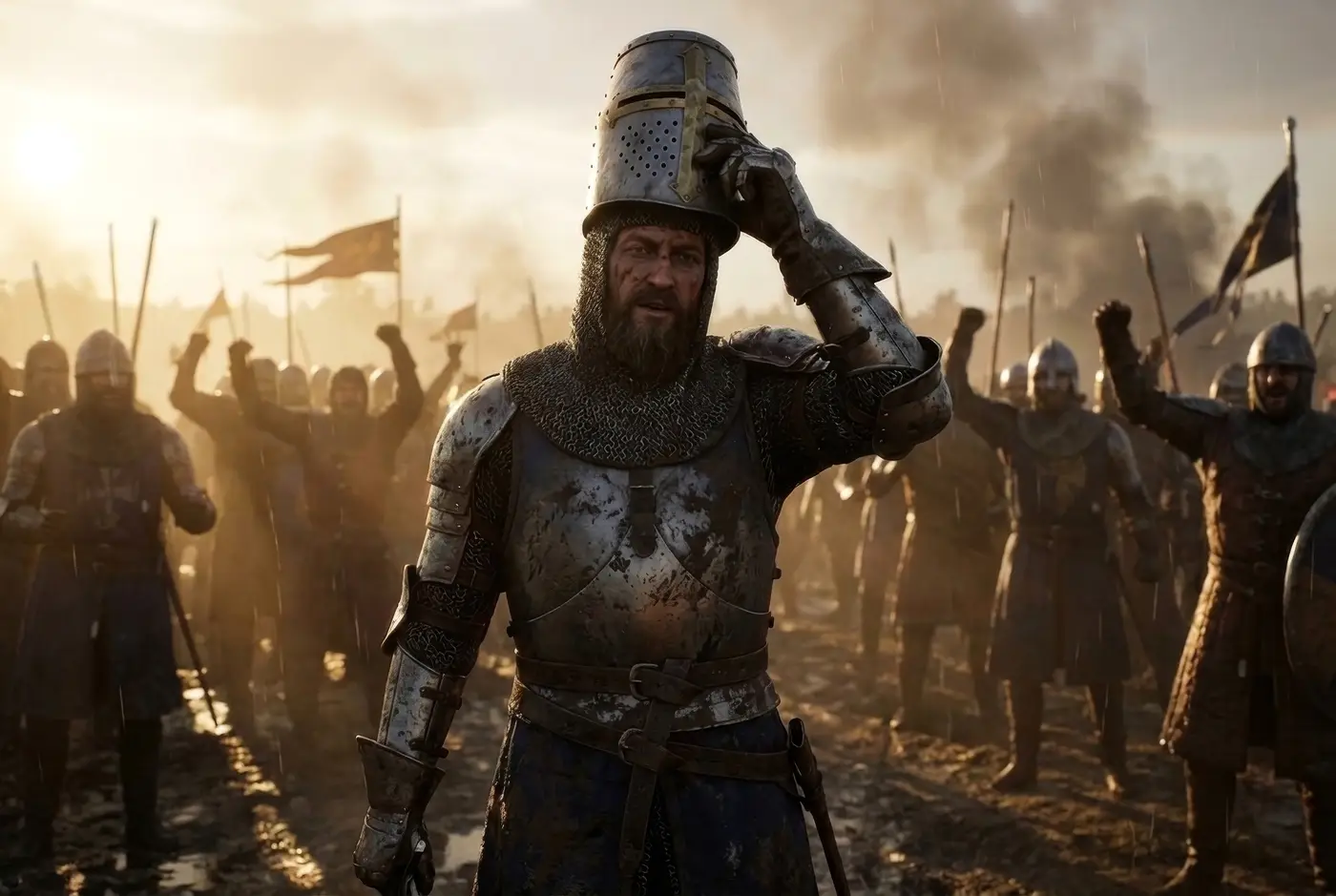
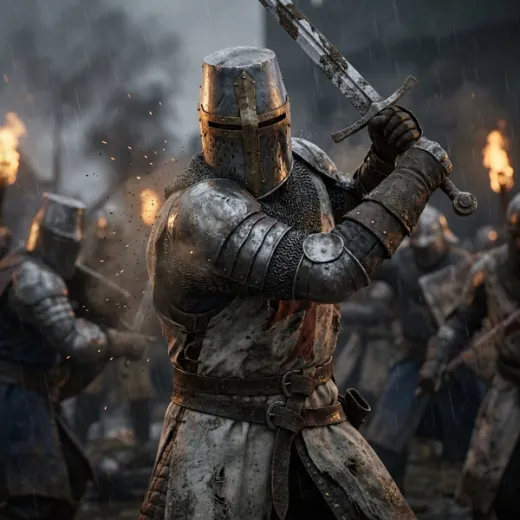
Tales of Chivalry
From squires to crusades — in the Tales of Chivalry season, the age of knights comes alive. Story campaigns, quizzes, and real immersion into a world of honor, castles, and battle.
5 episodes freeThe first 5 episodes are free, Premium unlocks the rest.