
 AI
AICastles and sieges
Walls, drawbridges and portcullises: castles were seats of power, homes and fortresses all at once. Taking one required patience, siege towers and sometimes months.
 AI
AIArmored riders, mighty castles and kings fighting for crowns and Jerusalem: experience the Middle Ages as they really were. From the first crusades to the end of the age of knights, with the people, places and ideas that shaped Europe.
High walls of gray stone defy time, while destiny rests on the point of a lance.
We take you to the heart of the iron continent: From the magnificent throne rooms of kings to the thundering charge on muddy fields of honor. Here, it is not the word that counts, but the oath, sealed in steel. Do you hear the echo of the horns? Don your armor. Your legacy is forged now.
AIWalls, drawbridges and portcullises: castles were seats of power, homes and fortresses all at once. Taking one required patience, siege towers and sometimes months.
 AI
AIIn 1095 Pope Urban II called for a crusade, and in 1099 Jerusalem fell. For nearly two centuries crusaders and Muslims fought over the Holy Land, with rulers like Baldwin IV, Saladin and Richard the Lionheart.
 AI
AIEngland against France for more than a century. At Agincourt in 1415, English longbowmen defeated the French knights, until Joan of Arc turned the tide.
 AI
AIA knight was meant to be brave, pious and courteous. He proved himself in tournaments, received the accolade and, in songs of courtly love, devoted himself to a lady he often could never have.
 AI
AIIn 1215, King John was forced to accept limits on his own power in the Magna Carta. Later, in the Wars of the Roses, the houses of York and Lancaster fought for England's crown.
 AI
AIFrom 1347 the Black Death killed around a third of Europe's population. With the printing press, the fall of Constantinople in 1453 and the voyage to America in 1492, the Middle Ages came to an end.
Swipe for more →
Few groups shaped our image of the Middle Ages like knights. Armored riders, mighty castles and the ideal of courage, faith and honor defined Europe from the 11th to the 15th century.
The Middle Ages are usually dated from around 500 to 1500. The great age of knights began around the year 1000 and ended in the 15th century.
A boy from a noble family usually served as a page at a lord's court from about the age of seven, and as a squire from about fourteen. At around twenty he could be knighted.
A late medieval suit of plate armor usually weighed between 20 and 30 kilograms. Because the weight was spread across the whole body, a trained knight could walk, mount his horse and fight in it.
In 1095, Pope Urban II called for the conquest of Jerusalem. In 1099 the crusaders took the city. Until 1291, when Acre, the last major stronghold, fell, crusaders and Muslim rulers such as Saladin fought over the Holy Land.
Between 1337 and 1453, England and France fought over the French throne. In battles like Crécy and Agincourt, English longbowmen showed how vulnerable knights had become. Joan of Arc became the symbol of French resistance.
Longbows, crossbows and eventually firearms made armored riders less dominant on the battlefield. Paid mercenary armies, the Black Death from 1347 and the printing press, which spread knowledge widely, all played their part. By around 1500, a new age had begun.
In HistoryBytes, you experience the Middle Ages in short episodes: the people, places, events, ideas and objects of the era. Piece by piece, you build the whole picture, from the Crusades to the end of the age of knights.
The first 5 episodes are free. Unlock the rest with Premium, together with every other season.
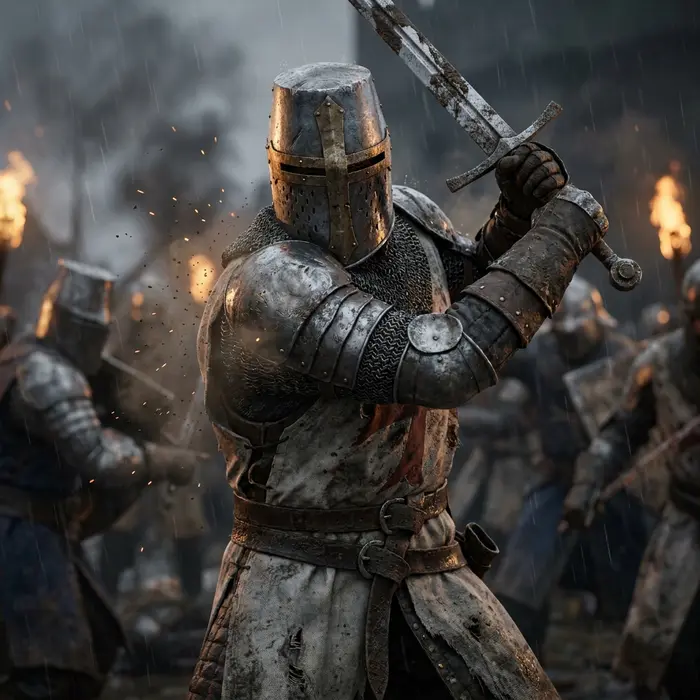
The first 5 episodes of Tales of Chivalry are free. Unlock all other episodes with Premium.
Tales of Chivalry has 204 episodes covering the people, places, events, ideas and objects of the era.
No. Every season is its own path, so you can start wherever you like.
iPhone, iPad and Android. Your progress is tied to your account and syncs across all your devices.


