Ragnar Lothbrok: Was the Famous Viking Hero Actually Real?
 AI
AIA face everyone knows, and a man nobody can reliably document
When most people picture a Viking today, they see one particular face: Travis Fimmel's as Ragnar Lothbrok in the series "Vikings," which premiered on 3 March 2013 and ended in late 2020 after six seasons. In it, Ragnar is a farmer from the village of Kattegat who sets out for England, rises to become king, and leaves behind a whole family of warriors.
The question many viewers ask afterward is simple and uncomfortable: did this man actually exist? The honest answer is: maybe, but certainly not the way the series shows him. The trail leads through Icelandic sagas from the 13th century, a documented attack on Paris in 845, and an army that landed in England in 865. And it ends at a question historians still disagree about.
In short: Ragnar Lothbrok is considered a semi-legendary figure. What is documented is a Viking leader named Reginherus before Paris in 845 and an army of men the sagas call Ragnar's sons in England in 865. Everything else, from the lindworm to the snake pit, comes from the sagas.
 AI
AIThe problem with the sources
The basic problem with Ragnar is quickly explained: almost everything we think we know about his life comes from stories written down centuries after the events. The Norse sagas were, by the usual estimate, written about 200 to 400 years after the events they describe. The key texts are the "Ragnars saga loðbrókar" from the 13th century, the "Tale of Ragnar's Sons," the death poem "Krákumál" put into his mouth, and the "Gesta Danorum" by the Danish historian Saxo Grammaticus around 1200.
The Vikings themselves barely wrote, and their enemies' chroniclers cared about other things. Contemporary sources therefore know mostly deeds, not a biography: the Frankish Annals of St-Bertin, kept in the 9th century itself, report a Viking leader named "Reginherus," and the Anglo-Saxon Chronicle describes a "great heathen army" but gives no reason for its arrival. Whether and how these threads belong to a single man named Ragnar is the real point of dispute.
 AI
AIA nickname instead of a family name
"Lothbrok" isn't a surname but a nickname: the Old Norse "loðbrók" means "shaggy trousers," from "loð," hairy or shaggy, and "brók," breeches. According to the sagas, he earned the name by killing an enormous lindworm to win the hand of the princess Thora. For the fight, he had a thick fur coat and shaggy trousers made specially.
Ragnar's origins also look different in the sagas than in the series: there he is the son of a king, Sigurd Ring, not a simple farmer. His wives come in several versions. Aslaug, in the saga the daughter of the dragon-slayer Sigurd from the Völsunga saga, is the mother of his most famous sons. Lagertha, Ragnar's first wife in the series, is known to us from Saxo's narrative, whose source value here is the same as for everything Saxo tells about this era: it's a story, not evidence.
 AI
AI
This is HistoryBytes.
Short lessons, real duels, and immersive visuals from a world of history — download it now.
A Viking leader named Reginherus
The firmest ground under Ragnar's legend is an event that really happened. In March 845, a Viking fleet sailed up the Seine, plundered Rouen, and stood before Paris. The leader is called "Reginherus" in the Frankish annals, a Latin form of Ragnar. He was apparently no stranger to the Franks: around 841, King Charles the Bald had given him land in Flanders, but he lost it again, along with the king's favor.
Charles was determined not to let the Abbey of Saint-Denis near Paris be destroyed and assembled an army, which he split across both sides of the river. The Franks still failed to mount an effective defense. The Vikings left only after Charles paid them 7,000 livres of silver and gold, which comes to roughly 2,570 kilograms. Whether this Reginherus really is the Ragnar of the sagas remains open. Some researchers equate the two, others see Ragnar as a saga figure into whom several real Viking leaders were merged.
 AI
AIHow several Vikings became one hero
How does one hero come out of several men? One overview names as possible building blocks Reginherus, who attacked Paris in 845 and is said to have fought under the Danish king Horik, Horik himself, and a Viking named Ragnall, who conquered Northumbria and the Isle of Man in the 10th century. More than a century lies between Reginherus and Ragnall: anyone who merges Ragnar into one person is stitching together events that never happened at the same time.
That fits what sagas do: they collect stories around a central figure until they become a life story that no single source documents. That is less an accusation of forgery than a description of the storytelling tradition. Each generation added what it wanted to tell about Viking heroes, and Ragnar became the vessel for it.
Two ships against an entire kingdom
The sagas tell Ragnar's end as a great story. When his sons had grown into famous warriors, Ragnar didn't want to be outdone and resolved to conquer England with just two ships. The plan went wrong: he fell into the hands of King Ælla of Northumbria and, according to tradition, was thrown into a pit of snakes. The death poem "Krákumál" puts a song in his mouth there, in which he looks back on his deeds, looks forward to the feast in Odin's hall, and predicts bloody revenge from his sons. The traditional year of death is 865. The song itself is suspiciously young, too: the "Krákumál" was probably composed in Iceland in the 12th century, a good three hundred years after Ragnar's supposed death, and is considered a romanticized rendition of his end.
Modern historians put big question marks exactly here: there is no contemporary evidence for Ragnar's encounter with Ælla, and even the link to the later invasion is, as one English overview puts it, "an enormously contentious issue." The story explains one thing very well: why the Vikings attacked England, at least in the version their descendants wanted to hear.
865: The landing no chronicler explained
Raids on Britain had been going on for almost a century, but in 865 a Viking army landed in England that was different: larger than any before it and ready to stay through the winter. The Anglo-Saxon Chronicle called it the "Great Heathen Army." Three of its leaders are known by name: Halfdan, Ivar, nicknamed "the Boneless," and Ubba, who according to the sagas were sons of Ragnar. The army wintered in 865/866 at Thetford in East Anglia, secured horses, and then moved north. In November 866, York fell.
The army met little resistance at first. The two rival kings of Northumbria, Osberht and Ælla, joined forces and attacked York on 21 March 867. Both were killed. The Anglo-Saxon accounts say Ælla fell in battle, while the Norse sagas tell of a crueler revenge for Ragnar's death. The campaign lasted until 878, until the Battle of Edington, and led to the Danelaw, the large Viking settlement area in eastern England. Whether revenge was truly the motive, nobody can prove, the chronicle names no reason.
 AI
AIFrom Ivar to the Mediterranean
Ironically, Ragnar's sons are easier to pin down than he is. Halfdan, Ivar, and Ubba appear as army leaders in English sources, and that they were brothers and Ragnar's sons comes from the sagas, which name six sons in total: Björn Ironside, Ivar, Sigurd Snake-in-the-Eye, Ubba, Hvitserk, and Halfdan. Why Ivar bore the nickname "the Boneless" is unclear. After 870 his name vanishes from the English accounts, and according to one tradition his remains lie in a mass grave at Repton in Derbyshire.
In 869, Ivar and Ubba returned to East Anglia and are regarded as the commanders under whom King Edmund was killed. What part Halfdan played is unknown. Later, a Great Summer Army under Bagsecg reinforced the troops, and Sigurd Snake-in-the-Eye fell in Frisia in 887.
Björn Ironside, in turn, is said to have led raids as far as the Mediterranean. Together, the sons give you what Ragnar alone cannot: a trail you can actually follow through annals and chronicles, and one that makes the father, real or invented, appear as the origin of an entire generation of Vikings.
 AI
AIKattegat didn't exist, and Ragnar wasn't a farmer
The series itself says it is inspired by the sagas, and that is meant honestly: the sagas were written down centuries after the events and are partly told freely. Comparing the two still turns up a few things. The village of Kattegat, where Ragnar lives and rules, is invented. The real Kattegat is the sea between Denmark and Sweden. Ragnar as a farmer who becomes king also doesn't match the sagas, in which he is a king's son.
Family ties are television too: Rollo, who is Ragnar's brother in the series, has no documented connection to Ragnar according to one assessment of the series. And the trip to England, Ragnar's rise to ruler of Kattegat, and his sequence of wives follow drama more than the sources. Ragnar himself is at the center only in the first four seasons, after which the series mostly tells the story of his sons. That doesn't make the series worse, but it shows how much of what we think we know about Ragnar is storytelling.
 AI
AIThe overview at a glance
Before the conclusion, the short version, so nothing gets lost among so many names and dates. With Ragnar, there are unusually many layers between what sources support, what historians debate, and what the sagas only add.
| Category | What belongs here |
|---|---|
| Documented | Viking attack on Paris in 845 under "Reginherus" with a 7,000-livre ransom; landing of the Great Heathen Army in 865; capture of York in 866; deaths of Osberht and Ælla in 867; Halfdan, Ivar, and Ubba as army leaders |
| Disputed | Whether Reginherus and Ragnar are the same person; whether the leaders were really Ragnar's sons; whether revenge was the motive for the invasion; whether Ragnar merges several men into one figure |
| Legend | The lindworm fight and Thora; the shaggy trousers; England with just two ships; snake pit and death song; Aslaug as mother of the sons |
Between annals and sagas
In the end, there's an answer in two halves. The historical half is sober: a Viking leader attacked Paris in 845 and collected 7,000 livres of silver, and in 865 an army landed in England, led by men the sagas call Ragnar's sons. The legendary half is gripping: a lindworm, shaggy trousers, two ships against a kingdom, a song in the snake pit.
That mixture is exactly what makes Ragnar so durable. He isn't simply a king about whom a few facts are known, but a figure into which later generations poured everything they imagined a Viking hero to be. Whether one man stood behind him, two, or five will probably never be settled.
 AI
AIOne picture from five angles
A legend like Ragnar shows why an era needs more than a single person. That's why every season in HistoryBytes is split into five categories, and Ragnar's story touches all five: he and his sons as people, York as a place, the siege of Paris as an event, the question of what the sagas are worth as an idea, the longship as an object. That's how the Viking Sagas season builds the whole picture of an era, how people lived, fought, and told stories, not just a list of famous names.
A name bigger than its bearer
Ragnar Lothbrok is perhaps the Viking who best shows how history and stories blend into one another. What's certain: the Vikings attacked Paris, they wintered in East Anglia, they took York. Whether a man named Ragnar set all of it in motion, whether he died in a pit or somewhere else entirely, whether he existed or was assembled from several figures, hasn't stopped posterity from celebrating him. What he remains for us is a piece of truth with a great deal of storytelling around it.
Experience the world of the Vikings in HistoryBytes
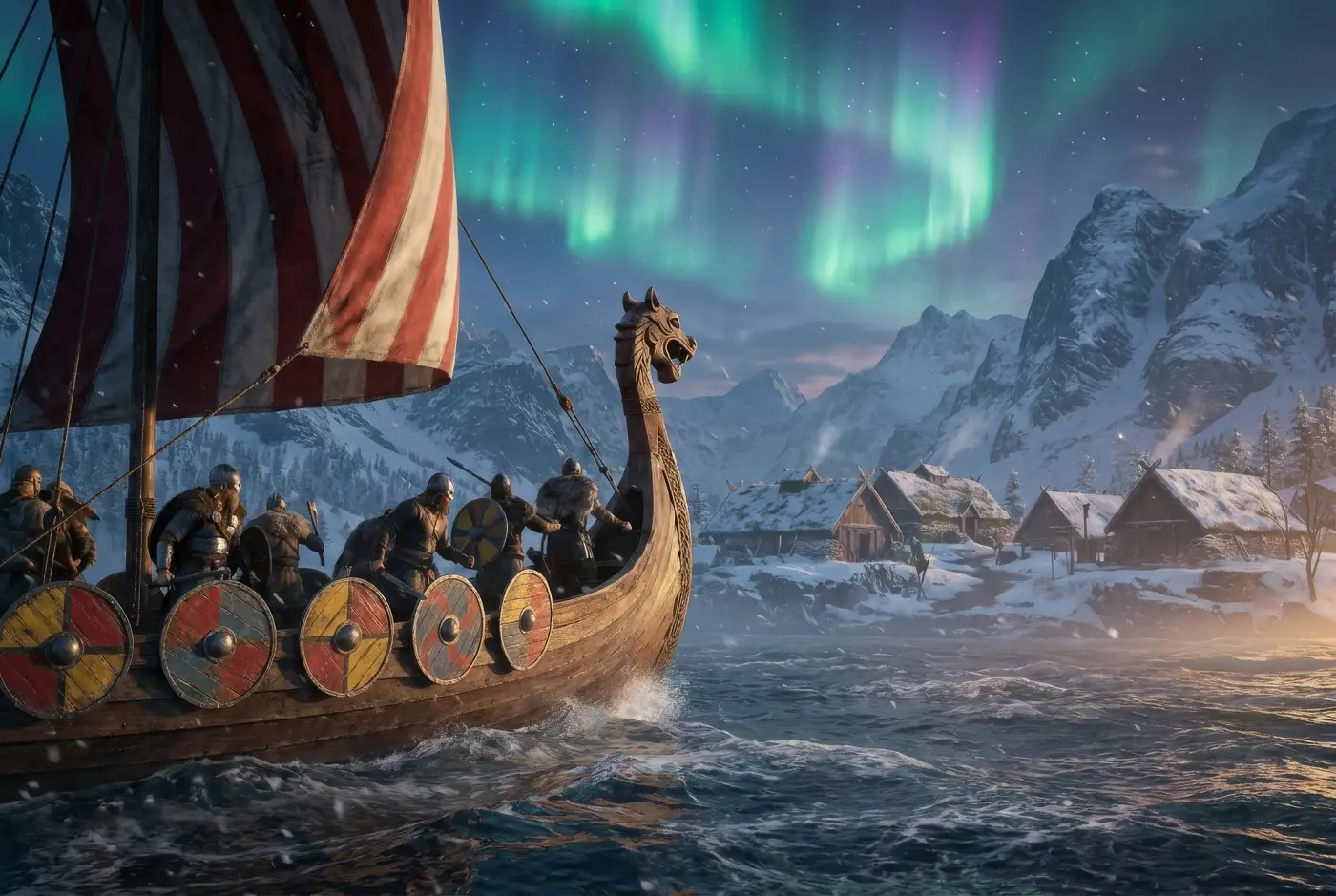
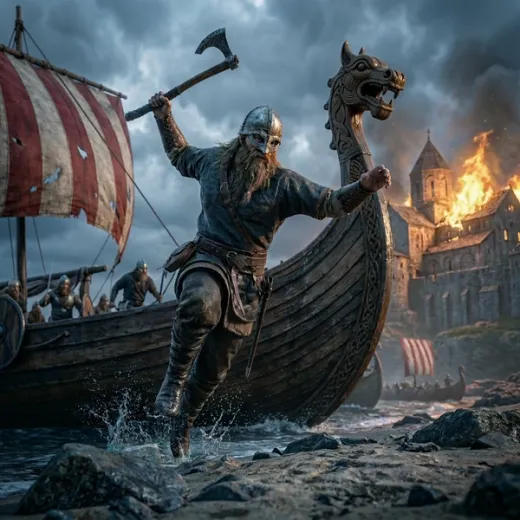
Viking Sagas
From power struggles to voyages of discovery — in the Viking Sagas season, the age of the Norsemen comes alive. Story campaigns, quizzes, and real immersion into a world of conquest, betrayal, and new horizons.
5 episodes freeThe first 5 episodes are free, Premium unlocks the rest.