Were Ninjas Real? What the Historical Sources Say
 AI
Were ninjas real?
Yes, but not as in the movies. Shinobi are documented from the 14th century as scouts, spies, and saboteurs serving warlords, not a separate class. Black suits, throwing stars, and secret villages were added later, mostly by theater and novels. Documented are the manuals of 1676 and 1681 and the destruction of Iga province in 1581.
Test your knowledge
That is the answer in brief. If you want to check it, you can answer questions about samurai, warlords, and the era of unification in HistoryBytes, in the Whispers of the Samurai season, with cards and a quiz, before or after you read the article.

This is HistoryBytes.
Short lessons, real duels, and immersive visuals from a world of history — download it now.
A job that never existed in that form
Say "ninja" and you think of black hoods, throwing stars, and men who run up walls. Almost none of it stands in the sources. At the same time the opposite question, whether ninjas existed at all, is just as wrong: men who worked as shinobi turn up in warlords' letters, in siege reports, and in diaries. They were real, just not as the cinema shows them.
In short: reality is less spectacular and in many ways more interesting. The shinobi of the 16th century were scouts who went into foreign castles, counted, listened, spread rumors, and set fires, and they often came from the same circles as the samurai they served. This article shows what the sources and Japanese research say today, where they disagree among themselves, and which images only theater, novel, and manga added.
A word that came late
The historical sources hardly speak of "ninja." They say "shinobi" or "shinobi no mono," those who act in secret. The word "ninja" became common in literature, according to the historian Yamada Yuji of Mie University, only at the end of the 1950s. A shinobi was also, as research presents it, not a profession but a task.
The earliest secure evidence dates, according to Yamada, from the 14th century, the era of the Northern and Southern Courts. After that shinobi were active until the end of the Edo period in 1868, and their main job was intelligence. They went into places one otherwise couldn't get into, counted weapons and supplies, overheard conversations, spread rumors, set fires, and guided armies through terrain they didn't know. Killing was not the core. On this reading of the manuals the ideal mission is one in which nobody notices a shinobi was there, and whoever was recognized as a shinobi had already failed.
Whoever expects more than spies will be disappointed here: there is no secret caste and no guild of assassins. Shinobi were not opponents of the samurai but worked for them.
 AI
Two mountain provinces, no secret academies
Two landscapes are especially tied to the shinobi: Iga in today's Mie Prefecture and Kōka (Kōga) in Shiga Prefecture, both in the hill country near Kyoto. They were not ninja academies. They were provinces in which local warriors, so-called jizamurai, lived and who largely governed themselves in the 15th and 16th centuries. In Iga the districts joined to form the "Iga Sōkoku Ikki," a kind of communal league, also called the Iga Republic. Yamada explains the significance of the region by the hard-to-reach terrain, the proximity to Kyoto, and a tradition of mountain ascetics, the Shugendō.
Not all researchers share this special role. Turnbull argues that covert warfare existed all over Japan, and that before 1581 only a single reliable report of such fighting in Iga and Kōka can be named. Added to that is a source problem: most texts from before the Edo period are considered lost because Oda Nobunaga's army devastated Iga in 1581. A theory of Yamada goes further still: the farmers of Iga may have allied with local outlaws to defend their self-government. The later "ninja" would then have been less mercenaries than defenders of a community. That is a theory, not a secure picture.
 AI
How Nobunaga destroyed Iga
The independence of Iga ended in autumn 1581. Already in 1579 Oda Nobukatsu, a son of Oda Nobunaga, had attacked Iga without success. His army of about 8,000 men fell into an ambush by shinobi from Iga at the Nagano Pass and was defeated. Nobunaga, who stood at the height of his power, did not let that stand. On 30 September 1581 he attacked himself, and the occasion was that two men from Iga had offered a month earlier in Azuchi to guide the army.
The sources speak of 40,000 to 60,000 men who attacked Iga from six directions, at a ratio of about ten to one. The defenders, by some accounts about 10,000, resisted, for example at Hijiyama Castle, which fell only after a long siege, but were overrun. The villages, shrines, and temples were burned, many people killed, and the self-government of Iga was destroyed. Some were able to flee.
After the Honnō-ji incident of 1582, in which Nobunaga died, the Iga families rose once more, and the war lasted until April 1583. In the same period Hattori Hanzō, according to tradition, advised Tokugawa Ieyasu to flee to Mikawa through the land of Kōka and Iga. Later Ieyasu is said to have recruited men from Iga and Kōka to guard Edo Castle and to gather intelligence. That is the historical core behind the legend of the ninja who saves the shogun.
 AI
The most famous shinobi who wasn't one
The best-known "ninja" in history was a samurai. Hattori Hanzō (1542 to 1596) came from a family from Iga, served Tokugawa Ieyasu as a commander, and is regarded as a spear fighter nicknamed "Demon Hanzō." That he was a shinobi is a picture of later times. A Japanese study examines how in novels and films up to 1964 he became "Ninja Hattori Hanzō."
Real is the institutional reward that the men of Iga received under the Tokugawa: a guard unit at Edo Castle. The gate where they stood is called Hanzōmon, "Hanzō Gate," to this day and still stands at the Imperial Palace in Tokyo. Hanzō's son Masanari, the third Hanzō, became captain of the guard, but the Iga troop under his command rebelled over his treatment, which humiliated him. To restore his reputation he went into battle in 1614 and 1615 at the siege of Osaka with 60 men from Iga. That is the real life of the "ninja" under the Tokugawa: gate duty and service regulations, no murder in the dark.
Written when the war was over
The most important sources are three manuals, all written after the fighting ended. The largest is the "Bansenshūkai" of 1676, according to Japan's National Diet Library compiled in 22 volumes by Fujibayashi Yasutake, who according to the text came from Kōka, by other accounts from a family with roots in Iga. It collects the secret teachings of the schools of Iga and Kōka and others. The title means roughly "Ten Thousand Rivers Flow into the Sea." Volumes 18 to 22 describe tools with drawings.
The "Shōninki" of 1681 was written by Natori Masazumi (also read Masatake), a military scholar in the service of the Tokugawa of Kishū. It has three volumes: techniques, dealing with people and their moods, and the deepest secrets of the shinobi mind, with disguises and implements. The "Ninpiden," four scrolls, is said by its own origin story to have been compiled in 1655 by members of the Hattori family, but whether that is true is unclear.
Whoever reads the books finds above all espionage: disguise, infiltration, memory, psychology. The Bansenshūkai justifies the need for shinobi with Sunzi's "Art of War" and stresses their moral character, possibly to show their importance in the state of the Edo period. One can therefore also read the book as a kind of application: it explains why an art was needed that in peacetime hardly anyone still needed.
 AI
What theater and novel invented
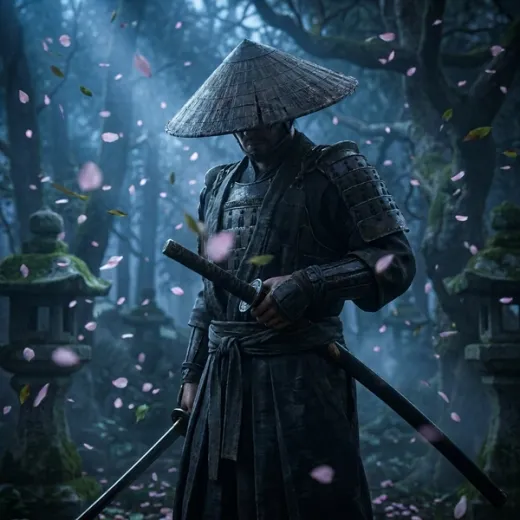
The black suit is the best-known image and the best refuted. In no manual, no war chronicle is a shinobi described in black clothing. The image comes from kabuki theater: there stagehands, the "kuroko," wear black to be invisible to the audience, and the convention later transferred to the ninja. The Iga Ninja Museum states that a "shinobi costume" never existed. According to Yamada there is also no reliable evidence for throwing stars, shuriken, in the hands of shinobi.
Not everyone agrees completely. Sean Askew, who researches the history of the Bujinkan traditions and studied Japanese and history in Tokyo, points to documents that in his words describe dark clothing for night raids. That is not the same as a suit, but it shows that the question isn't quite closed.
The "kunoichi," the female ninja, are also disputed. The term was popularized above all by the novelist Yamada Futarō in 1964. The Mie historians Yamada Yuji and Yoshimaru Katsuya conclude from the sources that there were no women who worked like their male colleagues as scouts and saboteurs. The manuals describe techniques "through the use of a woman," which Fujita Seiko reads as evidence of female ninja but which Yamada and Yoshimaru do not interpret that way.
 AI
Mie University and the "last ninja"
Since 2017 the International Ninja Research Center has existed at Mie University, the first of its kind, with a master's program from 2018. The historian Yamada Yuji, who works there, has changed the picture of the shinobi with books like "Ninja no Rekishi" (2016) and an interpretation of the Bansenshūkai (2020): away from the assassin, toward the expert in intelligence gathering and psychological warfare whose supreme goal was to come back alive.
Alongside there are practitioners who carry on a tradition. Kawakami Jinichi, 21st head of the Ban line of the Kōga school, held a research post at Mie University and is honorary director of the Iga museum. He is often called Japan's "last ninja," a label he did not choose and other practitioners dispute. Iga and Kōka have been jointly included as "Shinobi no Sato" in the program of "Japan Heritage" sites.
Five questions that leave even the experts divided
First, the special status of Iga and Kōka: Turnbull sees only one reliable report before 1581, Yamada ranks the two provinces as a center, and most sources from before are lost. Second, clothing: no manual knows a black suit, but Askew reads documents differently. Third, the kunoichi: whether women served as shinobi remains disputed between Fujita and Yamada.
Fourth, the Ninpiden: the age and origin of 1655 are not secure. Fifth, Hattori Hanzō: he was a samurai commander from Iga, whether and how far he led shinobi is open, and the picture of "Ninja Hanzō" is young. That these questions are open does not weaken the main statement: shinobi existed, and they were scouts. It only means that much of what one "knows" about them isn't in the sources.
 AI
The evidence at a glance, what a short answer doesn't show
To wrap up, everything at a glance, with fact and story kept apart.
| Category | What belongs here |
|---|---|
| Well documented | Shinobi as scouts and spies from the 14th century (Yamada); not a separate class; Iga Sōkoku Ikki as a self-governing community of jizamurai; ambush against Oda Nobukatsu in 1579; destruction of Iga by Oda Nobunaga from 30 September 1581; guard unit from Iga at Edo Castle (Hanzōmon); three manuals: Bansenshūkai (1676), Shōninki (1681), Ninpiden (allegedly 1655); black suit from kabuki; no reliable evidence for shuriken |
| Handed down | Hattori Hanzō's advice to Ieyasu to flee through Iga and Kōka after Honnō-ji; origin of the Bansenshūkai's author from Kōka or Iga; Hanzō as a ninja; Kawakami Jinichi as the "last ninja" |
| Disputed or open | Special status of Iga and Kōka (Turnbull against Yamada); dark clothing for night raids (Askew); female shinobi (Fujita against Yamada and Yoshimaru); age of the Ninpiden; theory of the Iga farmers as defenders of their self-government |
One picture from five angles
The story of the shinobi shows how much legend can hang on a single word. That's why every season in HistoryBytes is split into five categories, and this story touches all five: Hattori Hanzō as a person, Iga as a place, the destruction of Iga in 1581 as an event, the question of what "ninja" actually means as an idea, the manuals of 1676 and 1681 as an object. That's how the Whispers of the Samurai season builds the whole picture of an age in which warlords, village warriors, and scouts played together.
The best is the one nobody sees
If the manuals show one thing, it is this: the ideal shinobi did not stand out. He wore no mask but farmer's clothes, came into a castle, saw what he was meant to see, and left without anyone noticing. That is little for a film and much for history. It also explains why the legend grew so easily: whoever wants to be invisible leaves little behind, and what is missing, theater, novels, and manga fill in. Whoever wants to know today what shinobi really were reads the manuals, listens to research, and leaves the black suit in the kabuki theater, where it belongs.
 AI
Sources and date: 7 November 2026
National Diet Library of Japan, "Kaleidoscope of Books: Ninja in Fiction and in Reality," section on Bansenshūkai, Ninpiden, and Shōninki; Yamada Yuji, "Ninja no Rekishi" (Kadokawa, 2016) and "Ninjutsusho Bansenshūkai o yomitoku" (Yoshikawa Kōbunkan, 2020); Stephen Turnbull, "Ninja: Unmasking the Myth" and further works; Mie University, International Ninja Research Center; Yoshimaru Katsuya and Yamada Yuji on kunoichi; overviews of the Tenshō Iga wars (1579 to 1583). This page is updated when new research is published.
Step into the world of the samurai in HistoryBytes
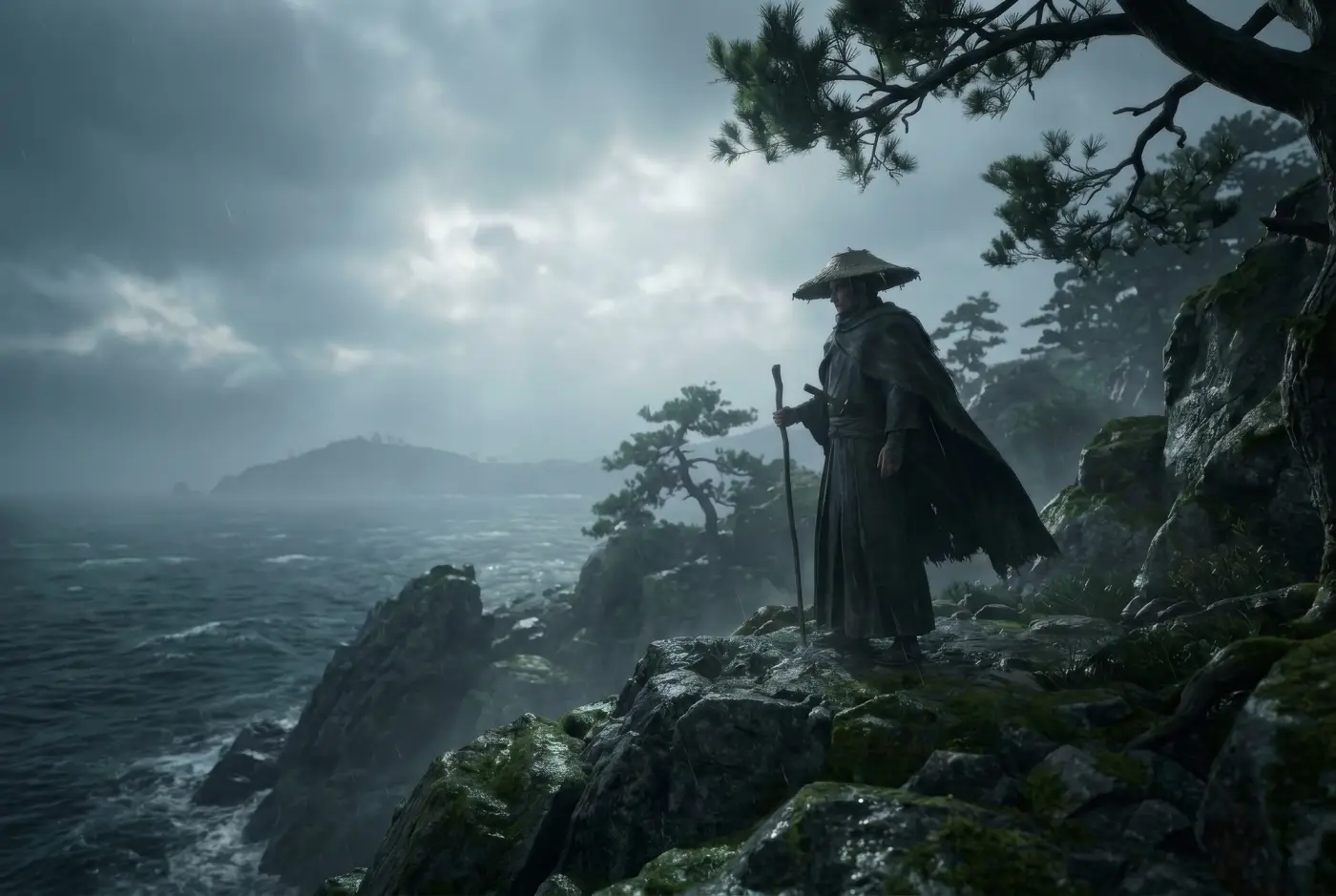
Whispers of the Samurai
From rising warlords to the battles that united a country — in the Whispers of the Samurai season, the age of the samurai comes alive. Story campaigns, quizzes, and real immersion into a world of power, betrayal, and change.
5 episodes freeThe first 5 episodes are free, Premium unlocks the rest.