
 AI
AIPyramids and the Sphinx
Around 2560 BC, Pharaoh Khufu built the Great Pyramid of Giza, originally about 146 meters tall. Thousands of workers moved millions of stone blocks, and the wonder of the world still stands today.
 AI
AIGod-kings, wonders of the world and a river that made it all possible: experience ancient Egypt from the first pyramids to Cleopatra. The people, places and secrets of a civilization that still fascinates us today.
The desert sand forgets nothing.
We take you into the heart of eternity: From the golden peaks of the pyramids to the deepest shadows of the burial chambers. Power here means defeating death itself. Do you dare to look beyond the veil?
AIAround 2560 BC, Pharaoh Khufu built the Great Pyramid of Giza, originally about 146 meters tall. Thousands of workers moved millions of stone blocks, and the wonder of the world still stands today.
 AI
AIMummification took around 70 days. In the judgment of the dead, the heart was weighed against the feather of the goddess Maat, and only a pure heart led to eternal life.
 AI
AIIn 1274 BC, Ramses II and the Hittites clashed at Kadesh in one of history's largest chariot battles. Years later, the two empires signed one of the oldest known peace treaties.
 AI
AIAkhenaten banished the old gods and worshipped only the sun disk Aten, with Nefertiti at his side and a new capital at Amarna. After his death, Egypt returned to the old gods under Tutankhamun.
 AI
AIThe yearly Nile flood made the land fertile and shaped the calendar. Fishermen, farmers and craftsmen lived by the river, and at Deir el-Medina workers staged the first recorded strike in history.
 AI
AIAfter Alexander the Great, the Ptolemies ruled from Alexandria, city of the lighthouse and the great library. With Cleopatra's death in 30 BC, Egypt became a Roman province.
Swipe for more →
Ancient Egypt was one of the longest-lasting civilizations in history. For around three thousand years, pharaohs ruled the land of the Nile, from its unification around 3100 BC to the death of Cleopatra in 30 BC.
The pharaohs were the kings of Egypt. They were seen as mediators between gods and people and were meant to uphold Maat, the order of the world. Among the most famous are Khufu, Hatshepsut, Akhenaten, Tutankhamun and Ramses II.
The Great Pyramid of Giza was built around 2560 BC for Pharaoh Khufu. Thousands of workers, not slaves as was long believed, moved millions of stone blocks using ramps, sledges and the Nile. For almost 4,000 years it was the tallest structure in the world.
The Egyptians believed in a life after death for which the body had to be preserved. Mummification took around 70 days. Afterwards, in the judgment of the dead, the heart was weighed against the feather of Maat.
Hieroglyphs are the picture script of ancient Egypt, with signs for sounds, words and ideas. Only in 1822 did Jean-François Champollion decipher them again, with the help of the Rosetta Stone.
Cleopatra VII was the last ruler of Ptolemaic Egypt. She allied herself with Julius Caesar and later with Mark Antony. After her death in 30 BC, Egypt became a province of the Roman Empire.
In 1922, Howard Carter found the almost intact tomb of the young pharaoh in the Valley of the Kings, with thousands of treasures and the famous golden death mask. It remains one of the most important archaeological finds ever made.
In HistoryBytes, you experience ancient Egypt in short episodes: the people, places, events, ideas and objects of the era. Piece by piece, you build the whole picture, from the first pyramids to Cleopatra.
The first 5 episodes are free. Unlock the rest with Premium, together with every other season.
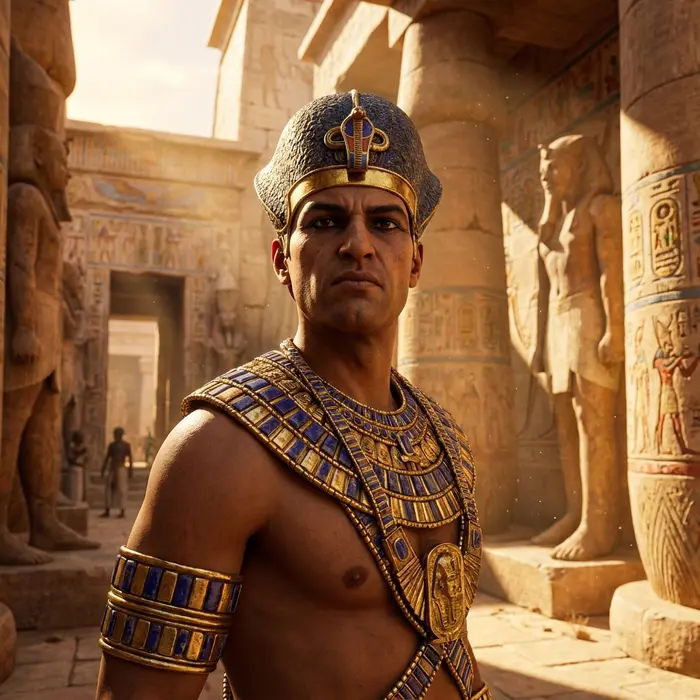
The first 5 episodes of Pharaohs of Egypt are free. Unlock all other episodes with Premium.
Pharaohs of Egypt has 205 episodes covering the people, places, events, ideas and objects of the era.
No. Every season is its own path, so you can start wherever you like.
iPhone, iPad and Android. Your progress is tied to your account and syncs across all your devices.


