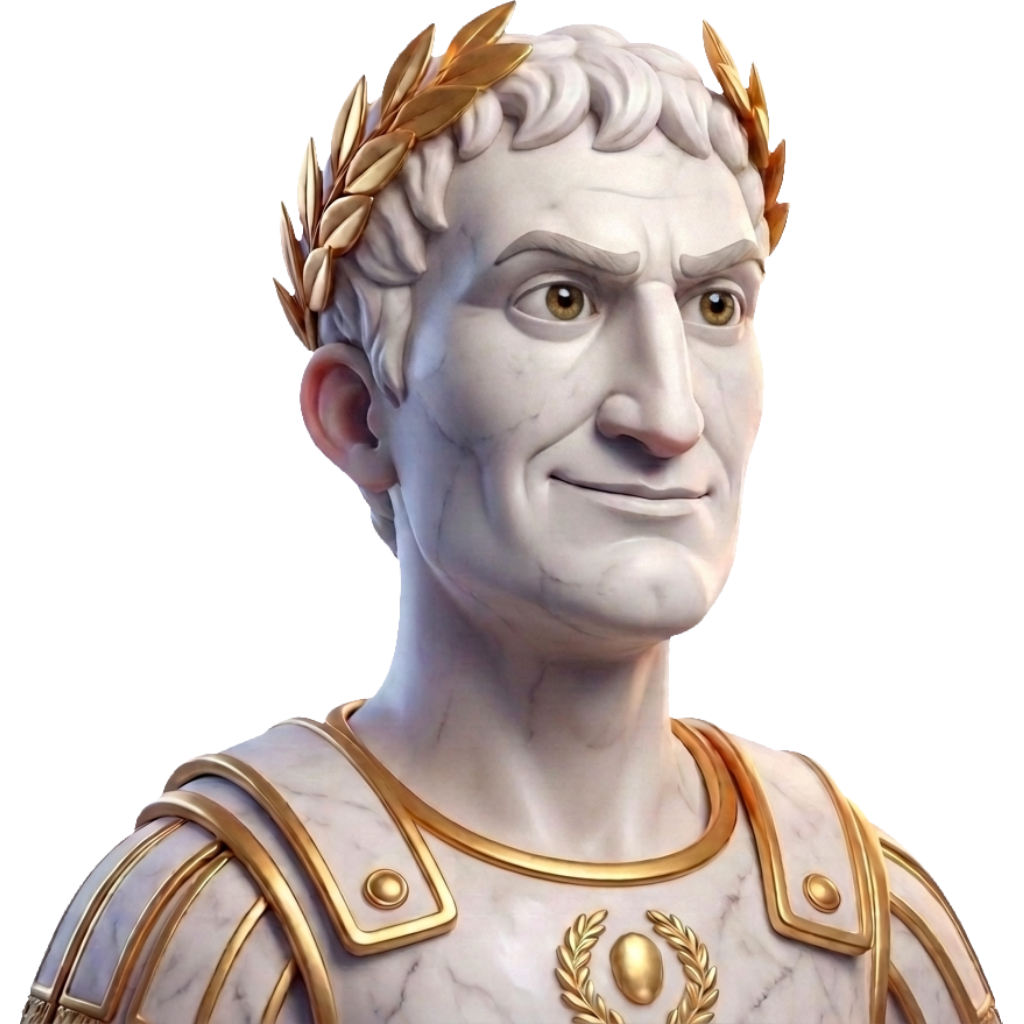

 AI
AITroy
For ten years the Greeks besieged Troy, until a trick got them inside the city. Homer made the war immortal, and the ruins of the real city still lie in Turkey today.
 AI
AIThe wooden horse at Troy, three hundred Spartans at Thermopylae, Socrates in the agora and a young king who marched all the way to India: discover the world of the Greeks, where myth and history flow into one another.
We ignite the fire: Journey into a world where gods walk among mortals and the human spirit breaks through the darkness.
Your journey leads from the burning walls of Troy through the philosophical schools of Athens to the edges of the known world under Alexander. Glory here means: Steeling the body like iron and sharpening the mind like a sword. Civilization or chaos – choose your destiny. Welcome to the cradle of the world.
AIFor ten years the Greeks besieged Troy, until a trick got them inside the city. Homer made the war immortal, and the ruins of the real city still lie in Turkey today.
 AI
AIAfter the fall of Troy, Odysseus needed ten years to sail home to Ithaca. Cyclopes, Sirens and the sorceress Circe stood in his way while Penelope waited for him at home.
 AI
AIOn Mount Olympus ruled Zeus and his family, moody, mighty and surprisingly human. At Delphi the Pythia spoke for Apollo, and even kings consulted her before going to war.
 AI
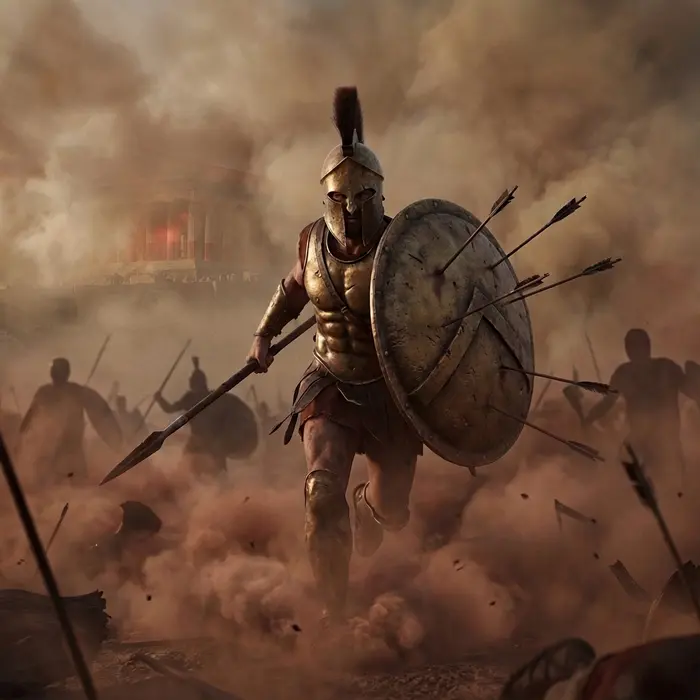
AIIn 480 BC, King Leonidas and his Spartans held back the Persian army at Thermopylae. Later, Athens and Sparta fought each other for almost three decades in the Peloponnesian War.
 AI
AISocrates asked uncomfortable questions, his student Plato founded the Academy, and Aristotle taught the young Alexander. Their ideas still shape the way we think today.
 AI
AIIn just eleven years, Alexander the Great conquered an empire stretching from Greece to India. The world he left behind produced wonders such as the Colossus of Rhodes, a bronze statue of the sun god Helios over 30 meters tall.
Swipe for more →
Ancient Greece is often called the cradle of Europe. Democracy, philosophy, theater and the Olympic Games all began here, and Greek myths are still told today.
Greek history stretches from the palaces of Mycenae in the Bronze Age through the classical period in the 5th and 4th centuries BC to the Hellenistic age after Alexander the Great. The era ended with the fall of the last Hellenistic kingdom in 30 BC.
Mount Olympus was home to the twelve Olympian gods, led by Zeus. Among them were Hera, Poseidon, Athena, Apollo and Aphrodite. The Greeks honored them with temples, sacrifices and festivals and sought advice from oracles such as the one at Delphi.
Yes. At the hill of Hisarlik in today's Turkey, Heinrich Schliemann began uncovering the ruins of a major city in 1870. Whether a war like the one Homer describes in the Iliad really took place there is still debated.
At the end of the 6th century BC, Athens developed a system of rule by the people. All free adult male citizens could vote in the assembly. Women, slaves and foreigners were excluded.
According to tradition, the first games were held at Olympia in 776 BC in honor of Zeus. Every four years, athletes from across the Greek world competed, and the winner received a wreath of olive branches.
Alexander was born in Macedonia in 356 BC and was taught by Aristotle. As king, he conquered an empire stretching from Greece through Egypt and Persia to India in just eleven years. He died in Babylon in 323 BC, aged only 32.
In HistoryBytes, you experience ancient Greece in short episodes: the people, places, events, ideas and objects of the era. Piece by piece, you build the whole picture, from Troy to Alexander the Great.
The first 5 episodes are free. Unlock the rest with Premium, together with every other season.
The first 5 episodes of Echoes of Olympus are free. Unlock all other episodes with Premium.
Echoes of Olympus has 205 episodes covering the people, places, events, ideas and objects of the era.
No. Every season is its own path, so you can start wherever you like.
iPhone, iPad and Android. Your progress is tied to your account and syncs across all your devices.


